
REVIEW · MODENA
The art of Parmigiano Reggiano and real Balsamic vinegar
The best part of this Modena food tour happens before breakfast: you watch cheese makers turn milk into Parmigiano Reggiano by hand, then see wheels aging like books in a cheese library. Later, at Acetaia Malagoli Daniele, you taste traditional balsamic vinegar and learn why DOP and IGP are not the same product.
I like the working-farm setting, where the production chain runs from alfalfa and cows to finished cheese. I also like the clear contrast between the two stops: Parmigiano is made in the morning, while balsamic vinegar is patiently aged for years. The main catch is transport. You need your own car or must arrange a paid transfer between the countryside locations.
Key points at a glance
- Start at 8:30 a.m. to see the cheese makers at work rather than an empty production room.
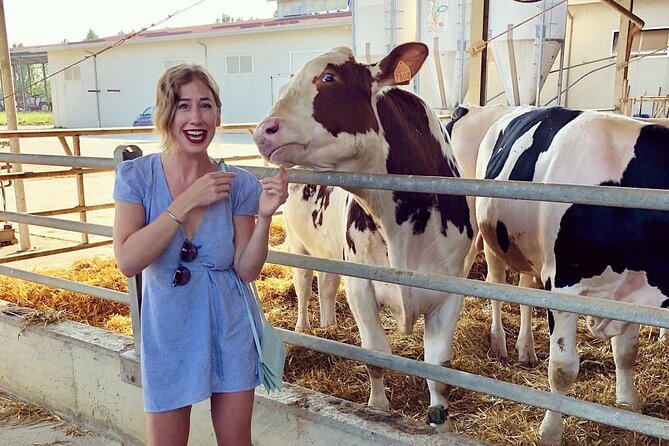
- Visit a full Parmigiano Reggiano farm, including cows, calves, the milking parlor, cheese making, and aging rooms.
- Compare DOP and IGP balsamic vinegar with a guide who explains the differences in grapes, ingredients, age, origin, and production.
- Taste both local specialties, with snacks, bottled water, and coffee or tea included.
- Expect a small group of no more than 15 people, with guides including Laura and Alessia praised for warmth and clear explanations.
- Plan your transport carefully, since both stops are in the countryside near Castelfranco Emilia.
Why this four-hour food tour works so well
Modena is famous for fast cars, but its most satisfying discoveries often happen at a slower pace. Parmigiano Reggiano takes time, skill, and physical work. Traditional balsamic vinegar takes even more patience. This experience puts both products in their proper setting, rather than presenting them as polished samples on a city-center food walk.
You spend about four hours visiting two producers in the countryside around Castelfranco Emilia. The price is $154.13 per person, which is not a small add-on to an Italy trip. Still, it includes admission, tastings, snacks, bottled water, and coffee or tea at two working food businesses. The value comes from seeing how the products are made and understanding what you are tasting.
I would not book this simply for a quick snack. I would book it if you want the story behind two foods that are easy to buy but easy to misunderstand. The morning timing is important, too. At 8:30 a.m., the dairy is active, and the cheese makers are in the middle of their work.
More Parmesan and Balsamic Tours in Italy:
- Tour Parmigiano Reggiano dairy and Parma ham
★ 5.0 · 601 reviews - Parma: Parmigiano Production and Parma Ham Tour & Tasting
★ 4.9 · 554 reviews - Guided group tour TastyBus: Parmesan Cheese and Parma Ham
★ 5.0 · 241 reviews
At Caseificio Bio Reggiani, cheese begins with the farm
The first stop is Caseificio Bio Reggiani on Via Francesco Baracca in Castelfranco Emilia. This is not just a room with finished wheels arranged for photographs. The farm handles the chain on site, beginning with feed for the cows and ending with seasoned Parmigiano Reggiano ready to taste.
You may see the cows, calves, and bull, along with the milking parlor. That gives the cheese a useful sense of place. Parmigiano Reggiano is not an abstract regional brand here. You can connect the finished wedge to the animals, milk, equipment, and people responsible for it.
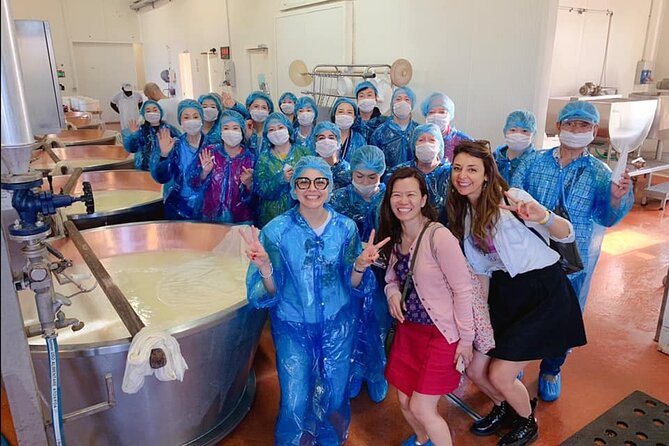
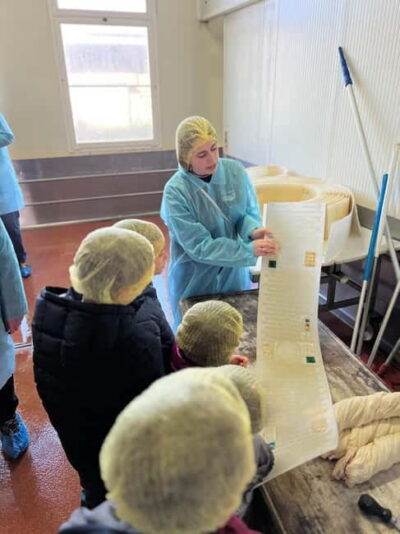
The early start lets you see the cheese makers at work. The process is manual and demanding, and that physical effort matters. A short tasting can make Parmigiano seem simple. Watching it being made gives you a better idea of why the cheese has such a high value and why producers protect its method and origin so closely.
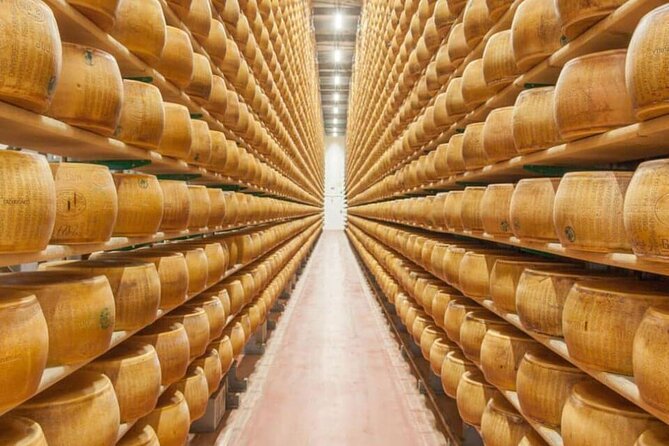
The most striking sight may be the aging room. Rows of cheese wheels sit in careful order, and one account describes the room as a library of Parmesan. That is a useful comparison. The wheels are not simply stored and forgotten. They are aged, checked, and held until the cheese reaches the right stage.
You will also taste the product during this part of the experience. The supplied snacks and drinks make the morning easier, especially since the tour starts early. If you are building a full day around Modena, this is a good meal-planning detail to remember: the tasting is substantial, but it is not presented as a full lunch.
What you learn by seeing the whole production chain
I like this stop because it answers questions that a supermarket label cannot. Where does the milk come from? What happens before the cheese enters the aging room? How much of the work is done by hand? The visit gives you direct answers instead of asking you to accept a brand name on trust.
The setting also helps explain the difference between an industrial food tour and a farm visit. You are seeing a place tied to animals, land, machinery, and skilled labor. That does not make the experience rustic theater. It makes the finished cheese easier to understand.
Your guide will explain the process as you move through the dairy. Laura has been especially praised for making technical details easy to follow while still answering detailed questions. Alessia has also been praised for her humor and friendly way of handling questions. The guide matters here because a cheese factory can otherwise become a quick walk past vats and shelves.
There is a practical point for families. One account describes a visit with two children that included both the tour and tastings. The experience is not limited to serious food experts. Children may get more from seeing cows and active cheese making than from a formal city museum, though parents should dress everyone for a working farm visit.
The aging rooms reveal why Parmigiano costs more
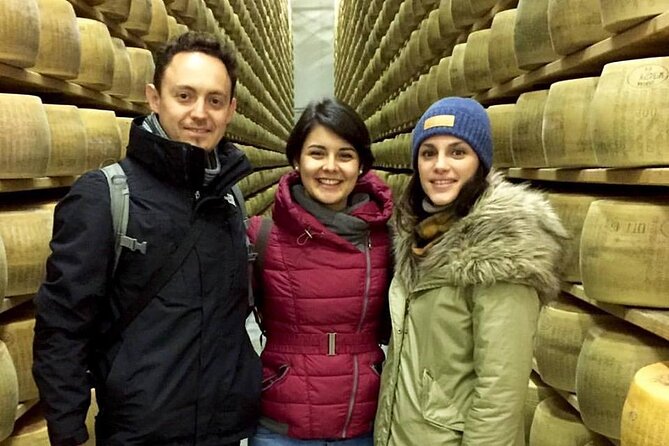
The cheese room is where the price of the finished product begins to make sense. A wheel must spend time aging before it is ready, and the producer must store, inspect, and care for it during that period. You are seeing a product whose value comes from both labor and waiting.
The word Parmigiano Reggiano also carries rules about production and origin. The point of the tour is not simply to tell you that the cheese tastes good. It shows how a protected regional product is made and why the process cannot be reduced to a generic hard cheese.
Pay attention during the tasting. Try to connect texture and flavor with age and production. The exact tasting selection can vary, so I would not promise a particular number of samples. What you can expect is a chance to taste the cheese at the place where it is produced, with the method explained first.
There is also a shopping angle. You may want to buy cheese to take home, so leave room in your luggage. A hard cheese is easier to transport than many fresh foods, but your available space still matters. The same advice applies to balsamic vinegar, which is likely to tempt you once you understand the difference between the everyday and traditional versions.
A few more cheese tours around Italy worth a look
- Authentic Farm Tour with Pizza, Cheese, Wine & Limoncello Tasting
★ 5.0 · 698 reviews - Sorrento Farm by Tuk Tuk: Cheese, Limoncello & Hands-On Pizza
★ 5.0 · 628 reviews - Cooking class with Pasta, mozzarella and Tiramisu with wine
★ 5.0 · 549 reviews - Amalfi: Make Fresh Pasta, Mozzarella & Tiramisù with wine
★ 5.0 · 503 reviews
At Acetaia Malagoli Daniele, patience is the main ingredient
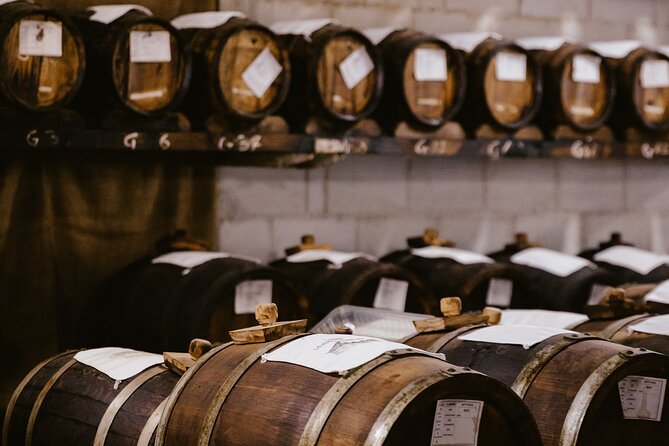
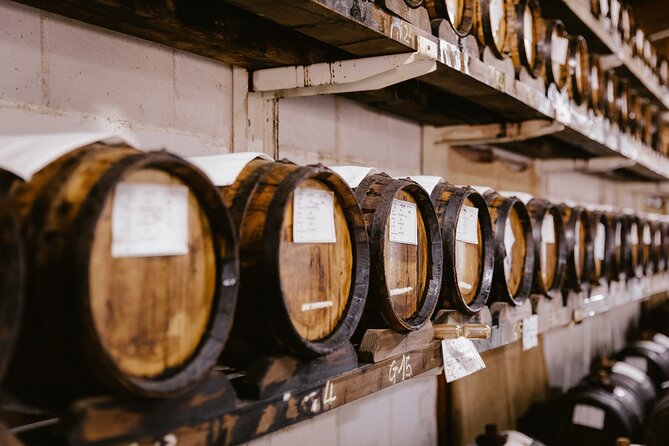
The second stop is Acetaia Malagoli Daniele on Via Celeste, also in the Castelfranco Emilia countryside. This is an acetaia, a place where traditional balsamic vinegar is aged in wooden casks over many years.
The room of barrels is a different kind of food setting from the dairy. At the cheese factory, the action takes place in the morning. At the acetaia, the defining work is time. The vinegar changes slowly as it moves through its aging process, and the casks give the visit its scent and character.
The guide explains the difference between two products that are often confused: Balsamic Vinegar of Modena IGP and Traditional Balsamic Vinegar of Modena DOP. Both can be good, but they are not interchangeable.
The distinctions involve the grapes, ingredients, origin, age, and production method. Traditional DOP balsamic vinegar has long been associated with family production and an older local tradition. It has not been made as a mass-market product that you can easily find everywhere. That is why many visitors arrive without a clear idea of what they are buying.
This explanation is one of the strongest reasons to choose the tour. You will leave better prepared to read a label and judge a bottle. A supermarket bottle may still be useful in the kitchen, but it should not be confused with a traditionally aged DOP product simply because both use the word balsamic.
Tasting balsamic vinegar with the label explained
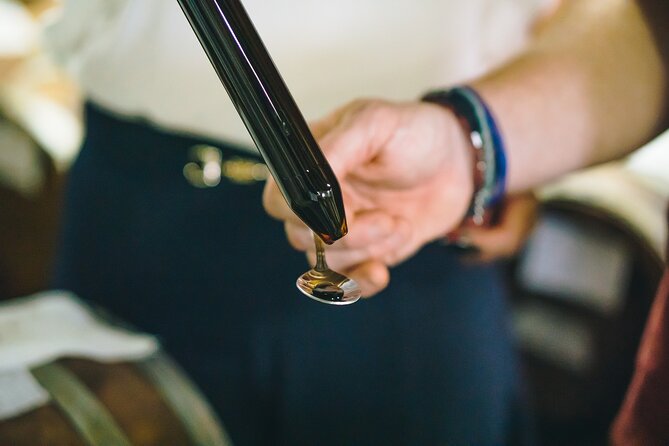
The tasting at Acetaia Malagoli Daniele is more useful after the explanation. You can think about the product in terms of method and age, not only sweetness or sharpness. The point is to give you a reference for traditional balsamic vinegar that you may not get from a restaurant drizzle.
The visit also has a strong connection to family practice and local culture. Traditional balsamic vinegar is presented as an old inheritance, not merely as a modern gourmet item. That context adds meaning to the casks and helps explain why production is limited.
Your guide may be Laura or Alessia, among the named guides associated with this experience. Laura is particularly praised for combining cultural, economic, and food knowledge with an engaging manner. That broad view is useful because balsamic vinegar is not only a condiment. It is also part of how Modena presents its land, work, and local identity.
Expect another tasting and the chance to shop. Bring luggage space and a way to protect bottles on the journey home. The tour does not promise a specific shopping discount or a particular bottle size, so treat purchases as an optional extra rather than part of the ticket value.
The transport issue deserves serious planning
This is the tour’s biggest practical weakness. The two stops are in the countryside, and transportation is not included at any point. You must get to Caseificio Bio Reggiani yourself, then drive to Acetaia Malagoli Daniele, and arrange your return afterward.
If you have a rental car, the logistics are much easier. Both meeting points are in Castelfranco Emilia, and the experience begins at the dairy at 8:30 a.m. Give yourself enough time to reach the first address without rushing. Comfortable clothing is recommended, and heels and flip-flops are not.
If you do not have a car, the provider can arrange a transfer for an extra fee. The listed prices are €65 from Castelfranco Emilia train station, €165 from Bologna, and €106 from Modena. You pay the driver directly, and these transfers are separate from the tour price.
Those fees change the value calculation. For a couple coming from Bologna or Modena, the added transport can be significant. For a small group splitting the ride, it may be easier to justify. Ask about the transfer in advance, especially if you need a lift, since the countryside location does not offer the simplicity of a central meeting point.
The end point is the acetaia, not your hotel, train station, or airport. Plan that last leg before booking. In one difficult situation involving a major conference in Bologna, the tour team helped arrange transport. That kind of help can be valuable, but I would not depend on an emergency solution. Sort out your transport before the morning begins.
How the group size and guide affect the morning
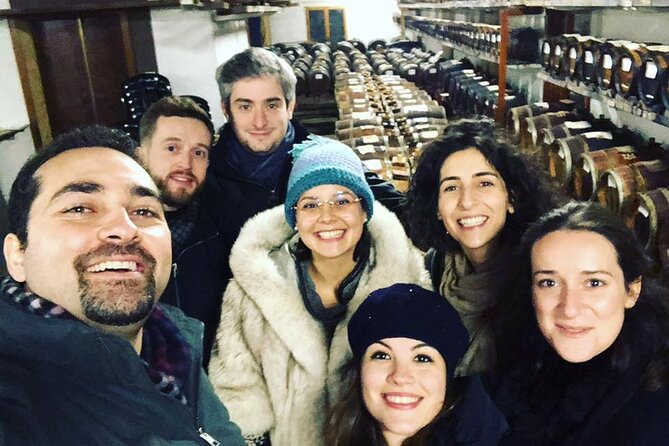
The maximum group size is 15 people. That is small enough for a personal feel without promising a private tour. Some departures may have fewer people, but you should book on the assumption that others will join you.
A good guide makes a real difference in both locations. The dairy has technical steps, and the acetaia has product rules that can sound confusing if they are rushed. Laura has been singled out for clear, detailed answers, while Alessia has been praised for warmth and humor. You are likely to get a guide who treats questions as part of the visit rather than an interruption.
The tour is offered in English and uses a mobile ticket. Confirmation arrives at booking. Most people can participate, but the practical setting matters more than a formal fitness requirement. Wear sensible shoes and clothes you can move around in. Flip-flops and heels are poor choices for a farm and production site.
The schedule is about four hours, with roughly 90 minutes at each main stop. That leaves some room for moving between sites, tasting, and questions. It is long enough to feel substantial but short enough to fit around an afternoon in Modena.
Is the $154.13 price fair?
At $154.13 per person, this is a specialty experience rather than a casual food stop. The price includes the two visits, tastings, snacks, bottled water, coffee or tea, and an English-speaking guide. It does not include private transportation, purchases, or a meal beyond the provided refreshments.
I think the price is fair if you value access and explanation. You are visiting two working producers, seeing the dairy at a useful time of day, and learning distinctions that are difficult to grasp from a menu or shop shelf. The price is less attractive if you only want to sample cheese and vinegar without caring how they are made.
The transport cost is the main factor that can push the total higher. Before you compare this with a city food tour, add the cost of reaching the farm and getting away from the acetaia. The experience offers something a central walking tour cannot, but that rural setting comes with a cost in time and transport.
Free cancellation is available if you cancel at least 24 hours before the start time. Changes or cancellations inside that window are not accepted for a refund. That gives you some room to adjust plans, but your 8:30 a.m. start still requires firm planning.
Who should book this Modena experience?
I would choose this tour for food-minded visitors who want production, not just presentation. It suits couples, families, and small groups who can arrange a car or are willing to pay for a transfer.
It is also a good fit if you have ever wondered why one bottle of balsamic vinegar costs a few euros while another costs far more. The DOP and IGP explanation gives you a practical lesson you can use long after the tour.
I would be cautious if you have only one short morning in Modena and no transport plan. The early start and countryside locations require commitment. This is not a hop-on, hop-off activity you can fit in by wandering from the train station.
Should you book it?
Book it if you want to see Parmigiano Reggiano made while the cheese makers are working, then connect that experience with the slow aging of traditional Modena balsamic vinegar. The farm setting, aging rooms, tastings, and guides such as Laura and Alessia give the morning real substance.
Skip it if you want a central city activity, a full meal, or transport included in the ticket. For everyone else, this is one of the better ways to understand why these two products matter to Modena. Just solve the car or transfer question before you pay.
FAQ
Where does the experience begin?
It begins at 8:30 a.m. at Caseificio Bio Reggiani, Via Francesco Baracca 6, 41013 Castelfranco Emilia, Italy.
Where does the experience end?
It ends at Acetaia Malagoli Daniele, Via Celeste 9, 41013 Castelfranco Emilia, Italy.
How long does the tour last?
The experience lasts approximately four hours. Each main stop is scheduled for about 1 hour and 30 minutes.
Is transportation included?
No. Transportation is not included between the two locations or to and from the experience. You need your own car, or you can arrange a transfer for an additional cost.
How much do arranged transfers cost?
The listed prices are €65 from Castelfranco Emilia train station, €165 from Bologna, and €106 from Modena. You pay the driver directly.
What products will I taste?
You will taste Parmigiano Reggiano and traditional balsamic vinegar from Modena. Snacks, bottled water, and coffee or tea are included.
Is the tour offered in English?
Yes. The experience is offered in English and uses a mobile ticket.
What happens if I need to cancel?
You can cancel up to 24 hours before the start time for a full refund. Cancellations or changes made less than 24 hours before the experience are not accepted for a refund.
Just added around Italy
- Wine Tasting with Cured Meats & Cheeses in Florence★ 5.0 · 2 reviews
- Tuscany: Ripalte Design Winery Wine and Cheese Tasting Tour★ 4.7 · 15 reviews
- Vico Equense: Tour in the dairy “Mozzarella Experience”★ 5.0 · 19 reviews
- From Parma/Cinque Terre: Truffle & Parmesan Picnic (Tasting)★ 5.0 · 2 reviews
- Turin: Gastronomy tasting through oil, wine and cheese★ 5.0 · 2 reviews
- The Valpolicella food & wine driving tour: cheese factory+ winery★ 5.0 · 6 reviews
- Prosecco Hills Wine and Cheese Gourmet Discovery★ 5.0 · 6 reviews
- Premium Cheeses and Gins Tour in the Prosecco hills. Full lunch!★ 5.0 · 3 reviews
Modena Cheese Tours, compared.
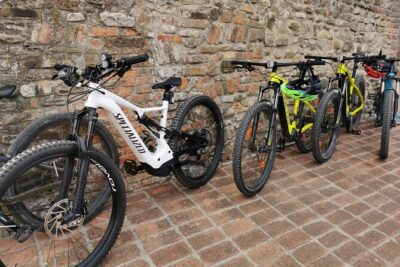
3 Hour E-bike Tour with Parmesan and Balsamic Vinegar
Read our review →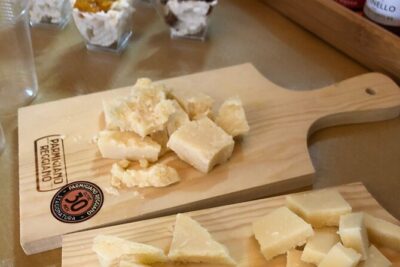
Small Group Reggio Half-Day Food & Wine Tour with Local Producers
Read our review →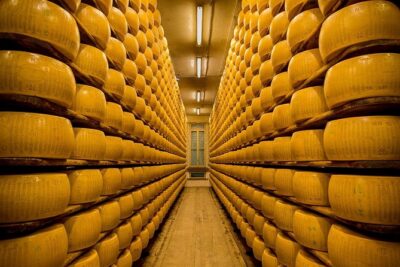
Parmigiano Reggiano Cheese Factory Tour & Tasting Experience
Read our review →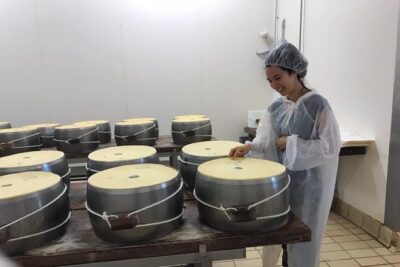
Parmigiano Reggiano & Aceto Balsamico tour with lunch
Read our review →
The Art of Parmigiano Reggiano & Aged Balsamic Vinegar
Read our review →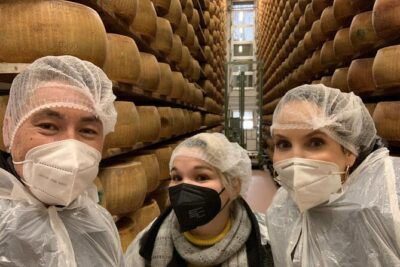
Private Balsamic vinegar & Parmigiano Reggiano factory visits
Read our review →
Parmigiano Reggiano, Balsamic Vinegar and fresh pasta tour
Read our review →Browse the lists this tour appears in