
REVIEW · FRANCE
Wine and Cheese Tasting
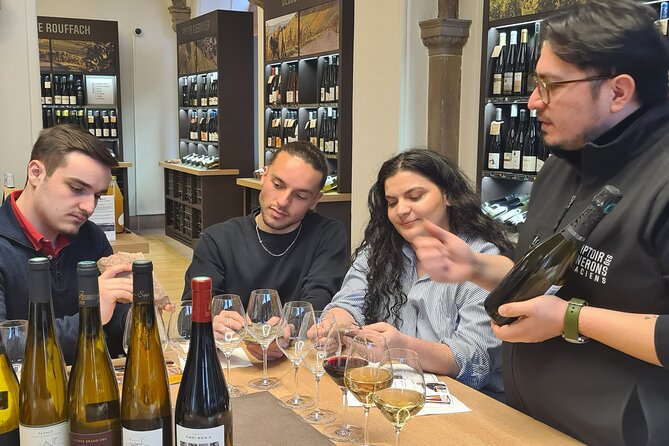
At Comptoir des Vignerons Alsaciens, wine and cheese are treated as a small lesson in Alsatian life, not just a quick snack. You taste five pairings while a wine merchant explains aromas, serving order, and the basic rules for building a good cheese board. The setting is in one of central Strasbourg’s handsome historic buildings, right on Place Gutenberg.
I like the focus on independent, family wineries, and I like that the session teaches you something useful for later meals at home. The main caution is language: English is offered, but one session reportedly gave much fuller explanations in French, with only shorter English comments. Bread supplies may also run short, and group size can reach 20.
Key points to know before booking

- Five pairings: Each tasting combines a cheese with a selected wine, giving you several chances to compare different styles.
- Central meeting point: You meet at 10 Place Gutenberg in Strasbourg, and the activity returns to the same place.
- Local producers: The wines come from independent, family-run wineries rather than a single large label.
- Useful tasting lesson: You learn tasting order, aroma profiles, and simple rules for planning a cheese board.
- Language matters: English and French are offered, but the balance between the two may vary by session.
- Check the timing: The summary lists about one hour, while the practical information says 1 hour 30 minutes.
A Strasbourg tasting built around five pairings

This experience begins at 10 Place Gutenberg, a convenient address in the heart of Strasbourg. You are not heading out into the vineyards for the afternoon. Instead, you enter a winemakers’ counter in the city and spend your time tasting, listening, and talking around a table.
That urban setting has a practical advantage. You can fit the session between sightseeing stops, and you do not need a car or a long ride into the countryside. Public transportation is nearby, and the activity ends where it begins.
The main event is a series of five cheese and wine pairings. You are not simply handed a plate and left to guess what goes with what. A wine merchant guides you through the order of tasting and explains why certain wines work with particular cheeses.
The selection is intended to show range. Some pairings are likely to feel familiar, while others are designed to surprise you. The point is not to declare one perfect match. It is to notice how a cheese can change the way a wine tastes, and how the wine can bring out different parts of the cheese.
That makes the session useful for a first introduction to Alsatian wine. You get a small sample of local wine culture without committing to a full winery tour or a long formal tasting.
More Wine and Cheese Tastings in France
- Paris: Montmartre Cheese, Wine & Pastry Guided Walking Tour
★ 4.8 · 2,255 reviews - Private Montmartre Food Tour with Wine, Cheese & Pastries
★ 5.0 · 1,027 reviews - Paris Le Marais Food Tour With 10+ Tastings, Cheese, Wine & More
★ 5.0 · 985 reviews
What the tasting teaches you
The strongest part of this activity is its practical lesson. You learn a basic tasting order, which matters because delicate wines and flavors can easily get lost after stronger ones. Starting with the right sequence helps you notice more rather than rushing from one sample to the next.
The wine merchant also discusses aromatic profiles. You may hear about the scents and flavors found in different wines, then compare those descriptions with what you actually detect in the glass. You do not need a trained palate. The useful part is learning how to pause, smell, taste, and put your impressions into simple words.
The session also gives you a few rules for creating a cheese board at home. That is a better souvenir than a list of grape names. Afterward, you have a clearer idea of how to vary textures and flavors, how to arrange a tasting, and how to avoid serving every cheese with the same wine.
This is an active tasting rather than a silent sampling. The format invites questions and conversation. A warm, informal atmosphere is part of the plan, and the limited maximum of 20 people keeps it smaller than a large public food event, though 20 is still enough for the room to feel full.
Why the independent wines matter
The wines are sourced from independent, family wineries. I consider that a real strength because it gives the tasting a connection to smaller Alsatian producers instead of limiting the experience to familiar supermarket labels.
You will not leave with a full tour of each family estate, since the information provided does not promise vineyard visits or detailed producer presentations. Still, tasting several wines from smaller makers can help you understand the range of Alsatian wine beyond a single famous bottle.
The focus is also well matched to the cheeses. Wine is not presented as an isolated product. Each glass has a job at the table, and the pairing gives you a reason to pay attention to the wine’s body, sweetness, acidity, and aroma.
If you already know a great deal about wine, you may find the introductory material basic. This is built for people who want a friendly starting point, not a professional certification class. I would book it for the chance to taste several local bottles in one sitting and to ask direct questions in a relaxed setting.
The five cheese pairings, step by step
The exact cheeses and wines are not listed in advance, so you should not book this expecting a fixed menu. What is clear is the structure: five pairings, presented in a guided order.
The first pairing should help set the pace. Early in a tasting, your palate is fresh, so lighter aromas and softer flavors can be easier to notice. The wine merchant uses the progression to show why tasting order matters.
As the session continues, the pairings introduce different contrasts. A cheese may make a wine seem rounder, sharper, sweeter, or more aromatic. You are encouraged to look for those changes rather than simply deciding if you like a particular bottle.
The unexpected pairings are part of the appeal. A match that sounds unusual on paper may make sense after one bite and one sip. This is where the session can move beyond standard food-and-wine advice. You are not just learning a list of safe combinations. You are seeing how taste depends on balance.
The final pairings give you a chance to compare what you have learned. By this point, you can think about the order, the aroma, and the role of texture with more confidence.
One practical note: bring your patience if the group is full. A 20-person maximum is not enormous, but a crowded table can make the presentation feel hurried. One account described the tasting as too full and somewhat rushed. If you prefer long, quiet explanations with plenty of time between samples, ask about the group size before committing if that option is available.
Same region, a different board:
- Paris: Wine and Cheese Lunch
★ 4.9 · 596 reviews - Cheese & Wine Tasting in Montmartre with Local Cheesemonger
★ 5.0 · 470 reviews - French Wine, Champagne And Cheese Tasting Paris SECRET WINE DOOR
★ 5.0 · 464 reviews - Paris Wine Tasting plus Cheese Lunch with an Expert Sommelier
★ 5.0 · 424 reviews
Language: the important question for English speakers

The experience is offered in English and French. That sounds clear, but the actual balance may depend on the people booked into your time slot.
At least one English-speaking couple found that the sommelier gave a much longer presentation in French and provided only a shorter English explanation. The host did offer information in English, but the English portion did not cover everything presented in French. If you speak only basic French, that could leave you missing some of the detail.
The provider explained that time slots include a multiple-choice language option, so check the language selection carefully when booking. Do not assume that an English option guarantees a fully equal bilingual presentation in every session.
This does not mean English speakers should automatically avoid the activity. The tasting itself is visual and hands-on, and the basic structure is easy to follow. But if the educational side is your main reason for booking, language is a serious consideration.
I would choose this experience if I could confirm that the scheduled session is intended to run primarily in English. If you understand French well enough to follow a longer presentation, the language concern becomes much smaller.
Bread, pacing, and the small details that affect comfort

Cheese needs bread, and one person found that the supply ran out during the tasting and was not replaced. That may have been a one-time service problem, but it is worth knowing because bread helps clear the palate between pairings.
You might want to eat a light meal before arriving rather than treating this as a full lunch. The activity centers on five small pairings, and the supplied information does not promise a substantial meal.
The tone is social. You share the table with people from different places, and conversation is part of the experience. That can make the hour or hour and a half more enjoyable, especially if you like meeting people while tasting local food. It can also make the event feel less private and less controlled than a one-on-one lesson.
The host has been described as personable, with a strong French accent in English. Listen closely, especially during explanations of grape varieties, aromas, or pairing rules. If you miss a point, ask for it again rather than nodding along.
The duration deserves a quick check. The tour summary gives an approximate duration of one hour, while the practical information says 1 hour 30 minutes. Plan for the longer time so you do not schedule a tight connection or an immediate museum reservation afterward.
Is the $42.05 price good value?

At $42.05 per person, the price is reasonable if you want guided instruction, five samples, and a central Strasbourg location. You are paying for more than the wine and cheese themselves. The value comes from the explanation, the tasting sequence, and the chance to compare several pairings in one sitting.
It is less attractive if you only want a glass of wine and a snack. Strasbourg has other ways to eat and drink, and a casual café stop may cost less. This experience makes more sense when you want to understand what you are tasting.
The independent winery selection improves the value for curious drinkers. You may encounter bottles and producers you would not have chosen on your own, and the pairing format helps you remember them.
The group size affects the calculation. In a small or moderate group, you have a better chance to ask questions and hear the explanations. With close to 20 people, the price still covers the five pairings, but the presentation may feel quicker and less personal.
For a visitor with limited time in Strasbourg, the central location is another plus. You do not spend half the day traveling to and from a vineyard. You get a compact introduction that can fit around the city’s other sights.
Who will enjoy this most?

I would recommend this to you if you meet several of these descriptions:
- You are new to Alsatian wine and want a guided introduction.
- You like cheese and want to understand pairings instead of simply sampling.
- You enjoy informal group activities and conversation.
- You want to learn how to arrange a cheese board at home.
- You prefer a central Strasbourg activity over a longer trip into the countryside.
- You can follow French if the English presentation is limited.
It may not suit you if you need a guaranteed, fully detailed English lecture. It is also not ideal if you want a private tasting, a vineyard visit, a large meal, or a fixed menu of named wines and cheeses.
The activity welcomes service animals and is near public transportation. Alcohol is served only to people aged 18 and older. Anyone under 18 receives grape juice, so families can attend, but the tasting experience will naturally be different for younger participants.
Booking, cancellation, and meeting details
You meet at 10 Place Gutenberg, 67000 Strasbourg, France. The activity returns to that same meeting point, which makes the end simple and removes the need to arrange a second pickup location.
Confirmation is provided at booking. Free cancellation is available up to 24 hours before the scheduled start time. If you cancel or make changes less than 24 hours before the start, the amount paid is not refunded, and late changes are not accepted.
The experience is offered in English and French, and mobile tickets are available. It is often booked well ahead of time, with an average booking lead time of 32 days. That suggests you should not leave it until the last morning if the language and timing are important to you.
Should you book this Strasbourg wine and cheese tasting?
Book it if you want a compact, friendly introduction to wine and cheese pairings in the city center, especially if you value independent family wineries and practical advice you can use at home. The five pairings give you enough variety to make the lesson worthwhile, and the price is fair for a guided tasting rather than a simple drink stop.
Before paying, check the selected language and allow up to 1 hour 30 minutes. If you need a fully equal English presentation, confirm that point directly. Also keep your expectations realistic: this is a social tasting with a group of up to 20, not a private sommelier session.
For curious food lovers who can handle a little uncertainty about pacing and language, this is a good way to add local flavor to a Strasbourg visit.
FAQ
Where does the wine and cheese tasting begin?
It begins at 10 Place Gutenberg, 67000 Strasbourg, France.
Where does the activity end?
The activity ends back at the meeting point at 10 Place Gutenberg.
How long does the tasting last?
The tour summary lists approximately one hour, while the practical information states 1 hour 30 minutes. Plan for the longer duration.
How many wine and cheese pairings are included?
The tasting includes five wine and cheese pairings.
Is the experience available in English?
English and French are offered. Check the selected time slot carefully because the amount of information delivered in each language may vary.
How many people can join the tasting?
The maximum group size is 20 people.
Can children attend?
People under 18 are served grape juice instead of alcoholic beverages. Alcohol is served only to people aged 18 and older.
Can I cancel for a full refund?
Yes. You can cancel up to 24 hours before the start time for a full refund. Cancellations and changes made less than 24 hours before the start are not accepted for a refund.
Just added around France
- Wine, Cheese and Charcuterie tasting★ 4.9 · 17 reviews
- Wine Masterclass & Cheese Tasting Workshop in Bordeaux★ 5.0 · 2 reviews
- Wine and Cheese experience★ 4.5 · 18 reviews
- Paris: Wine and Cheese Pairing★ 5.0 · 4 reviews
- Cheese food-tour through downtown Toulouse★ 4.5 · 7 reviews
- French Wine and Cheese Master Class Near the Eiffel Tower★ 5.0 · 6 reviews
- Private wine tour to Sancerre vineyards from Paris with Sommelier★ 5.0 · 11 reviews
- Paris Wine with Cheese Pairing & Tasting Small Group Class★ 5.0 · 6 reviews
France Cheese Tours, compared.
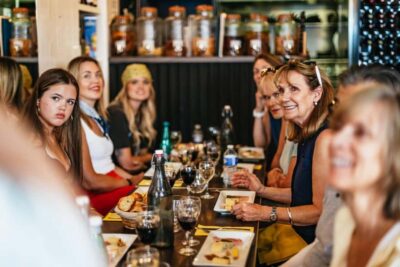
Montmartre Cheese, Wine & Pastry Guided Walking Tour
Read our review →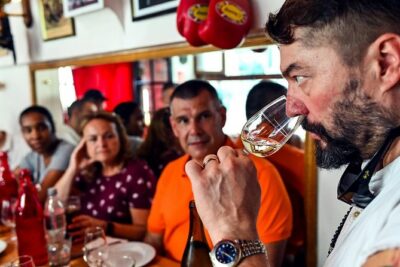
Private Montmartre Food Tour with Wine, Cheese & Pastries
Read our review →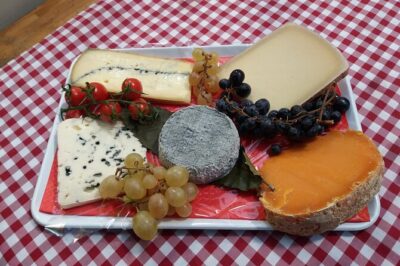
Paris Le Marais Food Tour With 10+ Tastings, Cheese, Wine & More
Read our review →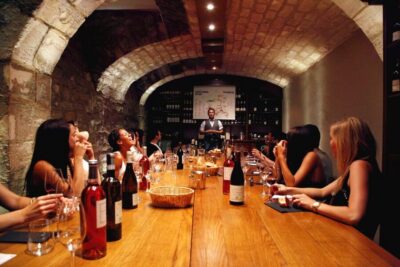
Cheese & Wine Tasting in Montmartre with Local Cheesemonger
Read our review →
French Wine, Champagne And Cheese Tasting Paris SECRET WINE DOOR
Read our review →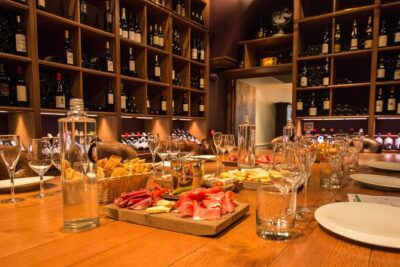
Paris Wine Tasting plus Cheese Lunch with an Expert Sommelier
Read our review →
Paris St Germain Food Tour with Cheeses, Foie Gras, Wines & More
Read our review →Browse the lists this tour appears in