
REVIEW · FRANCE
Visit to the property and wine/cheese pairing workshop
The best part of this visit is its personal scale. Château Cruzeau is a 12-hectare family estate run by the Luquot family for five generations, and owner Jessica Luquot may be the person leading you through the vines, cellar, and tasting. You get a close look at how grapes become wine, not just a quick pour at a counter.
I like the family connection and the clear look at the full wine-making cycle. I also like the three-wine, three-cheese format, which turns tasting into a useful lesson rather than a simple sip-and-smile stop. The main consideration is that the tour centers on red wines, so it may feel limited if you mainly want whites, rosés, or a large range of vintages.
Key points at a glance
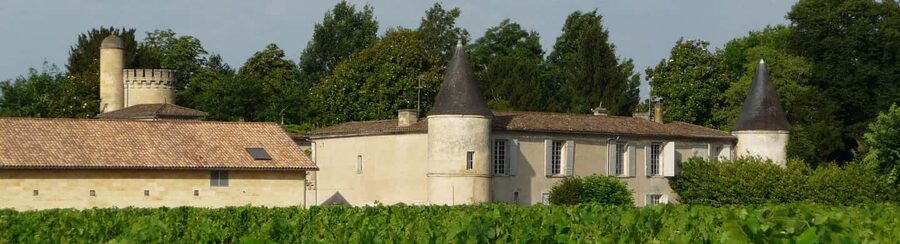
- Five generations at one family property: The Luquot family has managed Château Cruzeau for five generations.
- A useful location for wine lovers: The estate sits in the Saint-Émilion Grand Cru appellation, near the border with Pomerol and close to Libourne.
- Three stops before the tasting: You visit the property, walk through the vineyards, then see the vat room and barrel cellar.
- Jessica Luquot may guide the visit: Her warm, personal approach gives the tour a less commercial feel.
- Three reds with three French cheeses: The pairings give you a simple way to compare how food changes the taste of wine.
- Good value at $21: Two hours of guided time, a property visit, and six tasting elements make this a modestly priced introduction to Bordeaux wine.
A family estate between Saint-Émilion and Pomerol
Château Cruzeau is in Nouvelle-Aquitaine, in the Libourne area, on the border of two famous Bordeaux wine zones: Saint-Émilion and Pomerol. The property belongs to the Saint-Émilion Grand Cru appellation, so the setting gives you useful context before you taste anything.
I like this location because it connects the visit to the wider Bordeaux wine story without requiring a full day of château-hopping. You are not simply tasting a bottle labeled Saint-Émilion. You are seeing one working property and learning how its soil, vines, harvest, cellar work, and family decisions fit together.
The estate covers 12 hectares. That is large enough to show a real wine operation, but still small enough for the family connection to remain central. The tour is not built around grand rooms or formal showmanship. Its appeal comes from meeting the people responsible for the vines and bottles.
The meeting point is the reception area of the property at 152 Avenue de l’Épinette. From there, the visit returns to the same address after roughly two hours. You should allow the full two hours, since the guided portion is listed at about an hour and a half, followed by the tasting and pairing workshop.
More Cheese Making Workshops in France
- Paris Cheesemaking Workshop including Wine and Cheese Tasting with an Expert
★ 5.0 · 141 reviews - Dijon: Cheese and Burgundy Wine Tasting Workshop
★ 4.8 · 122 reviews - Paris: Butter and Cheesemaking Workshop
★ 4.9 · 103 reviews
Walking the vines and learning the estate’s approach
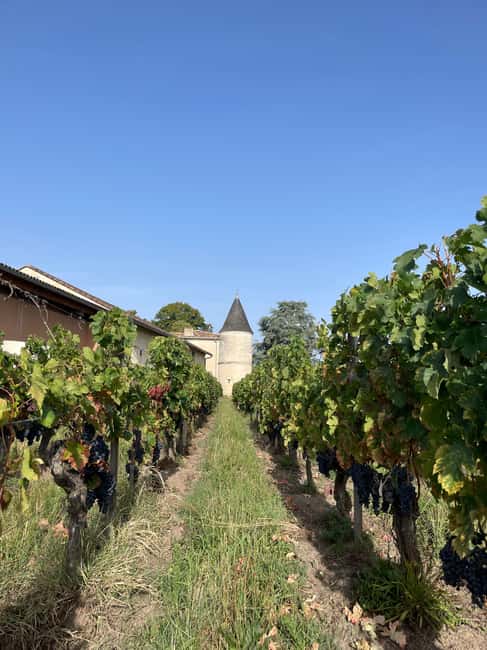
The visit begins with an introduction to Château Cruzeau and the Luquot family’s way of working. You then head into the vineyard to learn about the property’s growing practices and general approach to the vines.
This part matters because wine tasting can become a guessing game if you do not understand where the wine begins. The vineyard walk gives you a chance to connect the finished drink with the place and the work behind it. You learn about the transformation cycle from the point of view of a family producer, rather than only hearing broad regional facts.
The supplied details do not specify the exact grape varieties, farming certifications, or seasonal tasks covered during the walk. Do not expect a technical master class on every vineyard decision. Instead, expect an accessible introduction to how the estate grows its grapes and thinks about its land.
That makes the visit suitable for mixed groups. If one person in your party already knows Bordeaux wine and another is just starting to learn, the family-led format can work well. The explanations are intended to be clear, and the setting gives you something concrete to look at while you listen.
The vineyard portion also brings a sense of place that a cellar-only tasting misses. You can better understand why a bottle from Saint-Émilion is tied to its growing area, even if you are not yet comfortable discussing appellations, vintages, or winemaking terms.
From harvest to bottle in the vat room
After the vineyard, the tour moves into the vat room. This is where the guide explains the next stage in the wine’s life, after the grapes have been picked and brought in for production.
You will learn how the wine changes during its transformation from harvested grapes to a finished red wine. The information provided does not list each process in technical detail, so the depth may depend on the questions you ask and the season of your visit. Still, this stop gives structure to the tasting that follows.
I find this part especially useful for people who often enjoy wine but feel lost when producers talk about fermentation, aging, or bottling. Instead of treating the wine as a mysterious final product, the tour breaks the process into stages.
The explanations are also practical. You can ask about the working parts of the estate and see where production takes place. That personal access is one reason this experience feels different from a quick commercial tasting room visit.
The next stop is the barrel cellar. Here, you follow the wine farther along its path and learn how time in barrel fits into the overall cycle. The visit does not promise a dramatic underground maze or a large collection of historic rooms. Its value lies in seeing the actual production spaces at a family property.
If you want a highly technical tasting focused on barrel types, toast levels, extraction, or vintage comparisons, this may not go far enough. If you want a friendly explanation of how a Bordeaux wine moves from grape to bottle, it should give you a solid foundation.
Three red wines and three French cheeses
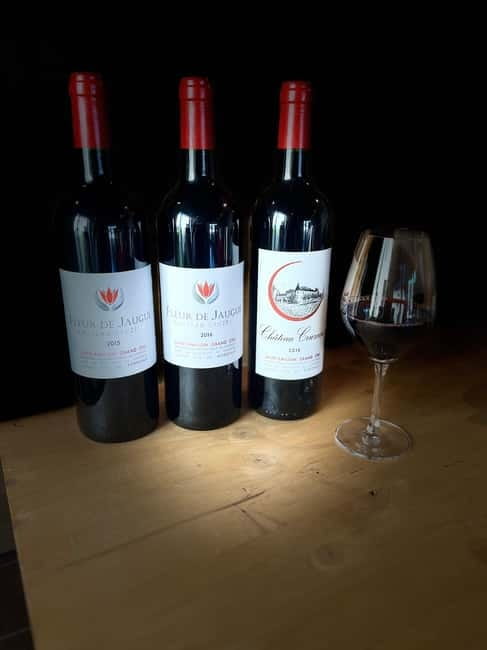
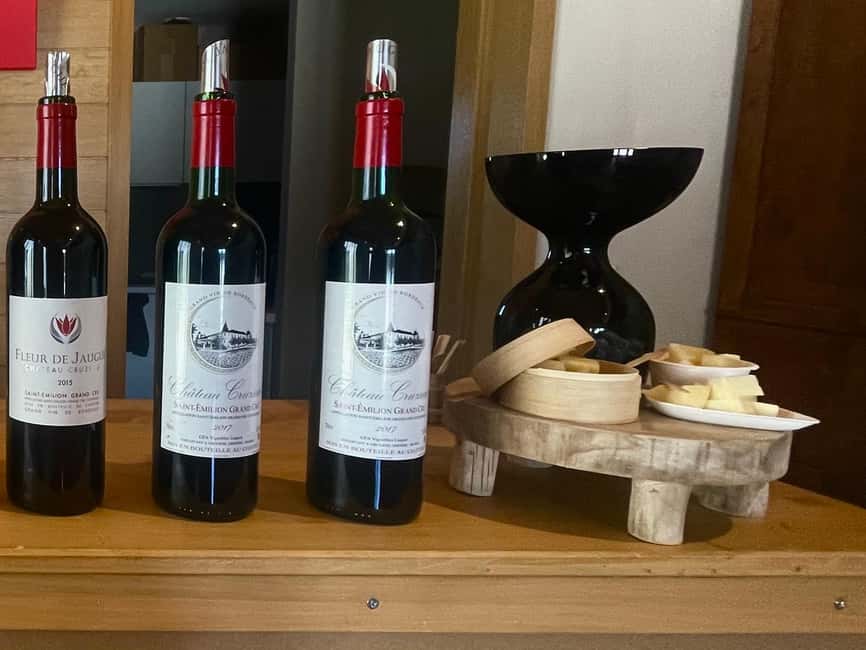
The visit ends with the main tasting: three red wines paired with three French cheeses. This is not just an add-on snack. The pairing workshop is designed to show how food changes your impression of wine.
The format is simple and effective. Taste the wine on its own, try it with the cheese, and pay attention to what shifts. A cheese can soften a wine’s sharper edges, bring out fruit, or make its structure feel firmer. You do not need a trained palate to take part. You only need to notice what you like.
The specific wine labels, vintages, and cheese varieties are not provided, and they may change. That is worth knowing if you are hoping to taste a particular bottle or a famous Bordeaux vintage. The focus is on the pairing lesson, not on a fixed menu of named wines.
The three-wine structure also gives you enough comparison without turning the tasting into a blur. Three reds let you notice differences in texture, aroma, and finish while keeping the session manageable. The three cheeses add a second point of comparison.
I like the balance here. You get more than one sample, but the experience remains social and easy to follow. It is a good fit for someone who wants to understand French wine without sitting through a long formal lecture.
The tasting is also where the family character comes through most clearly. Jessica Luquot has been described as passionate about the château, its history, the winemaking process, and the wines themselves. Her role as owner gives the conversation a direct link to the property. You are not only hearing a prepared script. You may be speaking with someone involved in the daily life of the estate.
More Wine and Cheese Tastings in France
- Paris: Montmartre Cheese, Wine & Pastry Guided Walking Tour
★ 4.8 · 2,255 reviews - Private Montmartre Food Tour with Wine, Cheese & Pastries
★ 5.0 · 1,027 reviews - Paris Le Marais Food Tour With 10+ Tastings, Cheese, Wine & More
★ 5.0 · 985 reviews - Paris: Wine and Cheese Lunch
★ 4.9 · 596 reviews
Why the personal guide matters
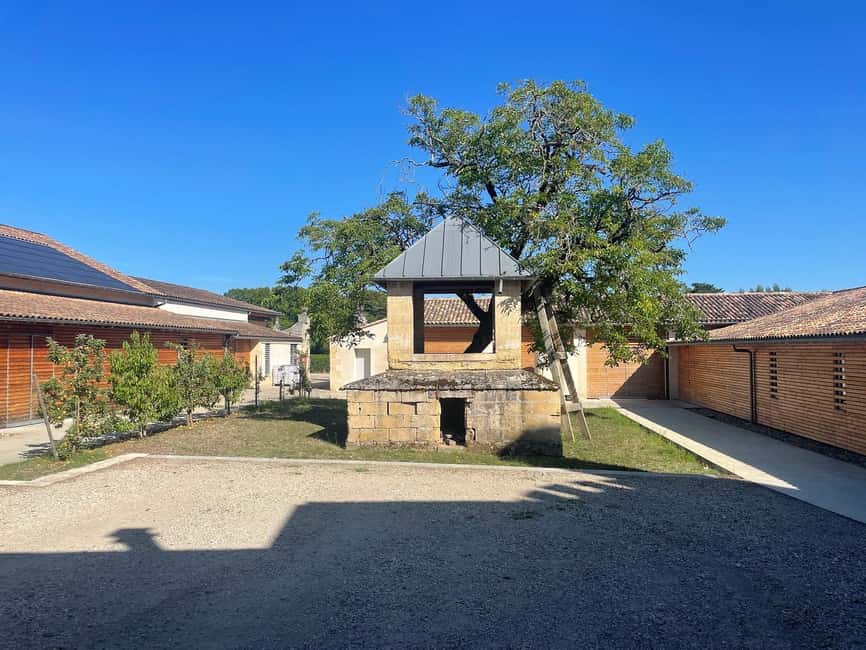
A family property can offer something large commercial estates often cannot: direct conversation. At Château Cruzeau, Jessica Luquot leads the visit in some cases, and the small-group setting allows time for questions.
The available experience information confirms live guiding in French and English. That is important if you are visiting Bordeaux without strong French skills. You can follow the main explanation in English and ask about the details that interest you.
The group size is not fixed in the information provided. One small visit had three people, while another had seven. That suggests the atmosphere can be intimate, though you should not assume every departure will be private or tiny.
A smaller group changes the experience. You can ask why a particular step matters, how the family manages the estate, or what the guide recommends you notice in the glass. You are less likely to feel rushed through a standard sequence.
The tone also appears friendly rather than stiff. That suits people who want a conversation about wine, not a test of wine vocabulary. You can enjoy the visit even if you cannot identify tannins, acidity, or oak with confidence.
What the $21 price really buys you
At $21 per person, this is priced as an accessible introduction to a Bordeaux family estate. For two hours, you receive a property visit, a guided look at the vineyards and production areas, and a tasting of three wines with three French cheeses.
That is strong value if you would otherwise pay separately for a cellar tour and a tasting. The workshop also gives you a practical skill you can use later: comparing wine with food instead of judging a bottle in isolation.
The price is less compelling if you only want a quick tasting or if you already know the Bordeaux production process well. You are paying for the story of the property, the vineyard walk, and the explanations, not simply for the amount of wine in each glass.
You should also keep expectations sensible. This is a family-estate visit, not a full-day wine course or an expansive tasting across several châteaux. The experience focuses on one property and three red wines.
For many visitors, that focus is exactly the point. You leave with a clearer sense of how one Saint-Émilion Grand Cru producer works, rather than a stack of broad facts about Bordeaux that are hard to remember.
Who will enjoy Château Cruzeau most
I would recommend this experience to:
- First-time Bordeaux wine visitors who want a clear introduction
- Couples looking for a relaxed food and wine activity
- Small groups interested in meeting a producer
- People who prefer family-run places to polished, large-scale attractions
- Wine drinkers who want to learn how cheese changes a red wine
- Visitors staying in or near Libourne, Saint-Émilion, or Pomerol
It should also suit mixed-ability groups. You do not need advanced wine knowledge, and the English option makes the visit easier for international visitors.
You may want to choose another activity if you are looking for a long vineyard trek, a broad tasting of many Bordeaux estates, a focus on white wine, or a highly specialized technical class. Château Cruzeau offers a focused family-property visit, and its strengths come from that limited scale.
The property is wheelchair accessible, which makes it a practical choice for many visitors. The information does not specify the exact surface or accessibility of every vineyard section, so you may want to confirm any particular mobility needs before booking.
Timing, language, and flexible booking
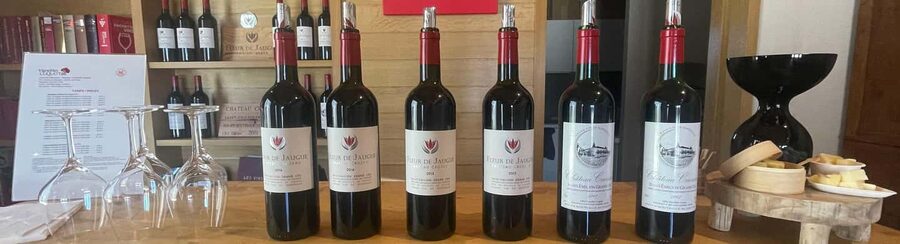
The experience lasts two hours, with a guided tour of about one and a half hours before the tasting portion. Starting times vary, so you need to check availability for the date you want.
The meeting point is the property reception at 152 Avenue de l’Épinette. Since the experience begins and ends there, plan your transport around that address rather than expecting a town-center departure.
A live guide is available in French or English. That makes the visit easier to follow than a self-guided cellar stop, especially when the discussion turns to production and pairing.
You can cancel up to 24 hours before the start for a full refund. A reserve-now, pay-later option is also available, which helps if your Bordeaux plans are still shifting.
Should you book this wine and cheese visit?
Book it if you want a friendly, reasonably priced introduction to a real family property near Saint-Émilion. The strongest reasons are the five-generation Luquot connection, the chance to see the vineyard and production spaces, and the three-wine, three-cheese lesson.
I would give it extra weight if Jessica Luquot is leading your departure. Her personal link to the estate adds warmth and gives you a better chance to ask questions about the family, the work, and the wines.
Skip it if your priority is a large portfolio of bottles, a named vintage, or a highly technical course. For everyone else, $21 buys a useful two-hour look at how Bordeaux wine is grown, made, and enjoyed with food.
FAQ
Where does the Château Cruzeau visit begin?
The meeting point is at the reception of the property, located at 152 Avenue de l’Épinette. The experience returns to the same address.
How long does the experience last?
The total duration is two hours. The guided property visit takes about one and a half hours, followed by the wine and cheese tasting workshop.
How many wines and cheeses are included?
The tasting includes three red wines and three French cheeses.
Is the visit available in English?
Yes. The live guide can lead the experience in French or English.
Is Château Cruzeau wheelchair accessible?
Yes, the activity is listed as wheelchair accessible.
Can I cancel or pay later?
You can cancel up to 24 hours in advance for a full refund. A reserve-now, pay-later option is also available.
Just added around France
- Wine, Cheese and Charcuterie tasting★ 4.9 · 17 reviews
- Wine Masterclass & Cheese Tasting Workshop in Bordeaux★ 5.0 · 2 reviews
- Wine and Cheese experience★ 4.5 · 18 reviews
- Paris: Wine and Cheese Pairing★ 5.0 · 4 reviews
- Cheese food-tour through downtown Toulouse★ 4.5 · 7 reviews
- Wine and Cheese Tasting★ 4.5 · 17 reviews
- French Wine and Cheese Master Class Near the Eiffel Tower★ 5.0 · 6 reviews
- Private wine tour to Sancerre vineyards from Paris with Sommelier★ 5.0 · 11 reviews
France Cheese Tours, compared.
Montmartre Cheese, Wine & Pastry Guided Walking Tour
Read our review →
Private Montmartre Food Tour with Wine, Cheese & Pastries
Read our review →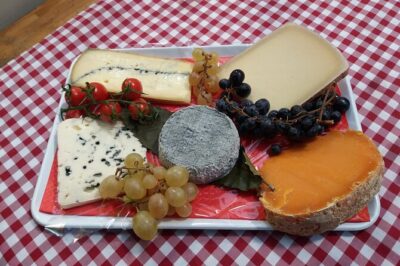
Paris Le Marais Food Tour With 10+ Tastings, Cheese, Wine & More
Read our review →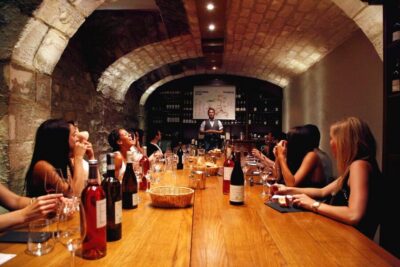
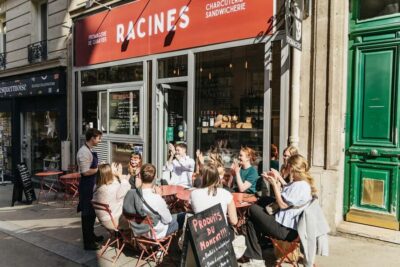
Cheese & Wine Tasting in Montmartre with Local Cheesemonger
Read our review →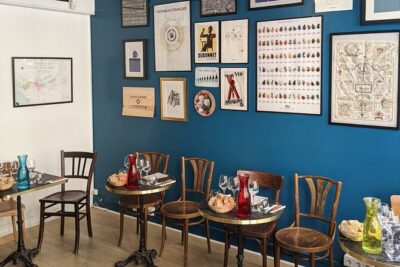
French Wine, Champagne And Cheese Tasting Paris SECRET WINE DOOR
Read our review →
Paris Wine Tasting plus Cheese Lunch with an Expert Sommelier
Read our review →
Paris St Germain Food Tour with Cheeses, Foie Gras, Wines & More
Read our review →Browse the lists this tour appears in