
REVIEW · GOUDA
Gouda: Museum Gouda Entry Ticket
Museum Gouda packs six centuries of city life into a former 14th-century guest house. Its best surprises are the altar paintings that survived the 16th-century iconoclasm, plus a huge interactive model showing Gouda as it looked in 1562. You get art, local history, and a sharper sense of the town beyond its famous cheese.
I especially like the rare religious paintings and the museum’s focus on things made in Gouda, from clay pipes to decorative pottery. The works linked with Ferdinand Bol, Isaac Israels, and the names Vermeer and Rembrandt add wider Dutch art context. The main drawback is that you should not count on a guide or audio guide, so some objects may take more effort to understand.
Key things to know before entering

- The 1562 city model gives you a clear picture of old Gouda before you study the smaller objects.
- Surviving altar paintings show what escaped the iconoclasm that swept through the Netherlands in the 16th century.
- Gouda pottery, or Gouds plateel, explains how a local craft became part of the city’s identity.
- Ferdinand Bol and Isaac Israels represent the museum’s wider Dutch and European art connections.
- A one-day ticket lets you visit at your own pace and include temporary exhibitions.
- English and Dutch support is available, but the museum may feel less rewarding if you need a spoken explanation for every work.
A 14th-century setting with a local story

The building matters here. Museum Gouda occupies a former guest house dating from the 14th century, so your visit begins in a historic setting rather than a plain modern gallery. The rooms help frame Gouda as a working city with religious, civic, artistic, and commercial interests.
The collection covers roughly 600 years. That broad range is useful because the museum is not limited to one painter, one period, or one type of object. You move from religious art to civic portraits, then to 19th-century paintings and 20th-century pottery.
I like this approach for a short city visit. You do not need a separate lecture on Gouda’s past to understand why each section matters. The objects themselves show how the city changed, what its citizens valued, and which local products made its name known beyond South Holland.
Still, this is a collection museum, not a tightly scripted guided tour. You should expect to set your own pace and pay attention to the labels and displays. A French visitor specifically found the number of works impressive but wished for more explanation because no guide or audio guide was available. That is a fair warning, especially if you prefer museums that tell you exactly what to notice.
More Windmill and Cheese Tours in Gouda:
- Gouda: Gouda Cheese Experience Entry Ticket
★ 4.6 · 578 reviews - Gouda: Historical Canal Cruise
★ 4.3 · 158 reviews - Gouda: Open Boat City Canal Cruise
★ 4.4 · 156 reviews
Start with Gouda in 1562
The large interactive maquette of Gouda in 1562 is one of the most useful stops in the museum. It gives you a bird’s-eye view of the city at a moment when its streets, buildings, waterways, and defenses were arranged very differently from those of a modern town.
I would make this an early stop, even if the museum does not require a fixed route. Once you have seen Gouda as a whole, the later displays make more sense. You can connect religious buildings, civic spaces, and production areas with the city’s place in the wider story.
The model is also a good choice if you are visiting with children or with someone who does not usually spend hours looking at paintings. It turns urban history into something you can inspect from several angles. The interactive element gives you a break from conventional cases and framed art.
Do not treat it as a quick decorative display. Spend time looking for the features that explain why Gouda developed as it did. The supplied information does not specify every interactive function, so the exact experience may depend on the current presentation, but the purpose is clear: to show what Gouda looked like in 1562.
The altar paintings that survived iconoclasm

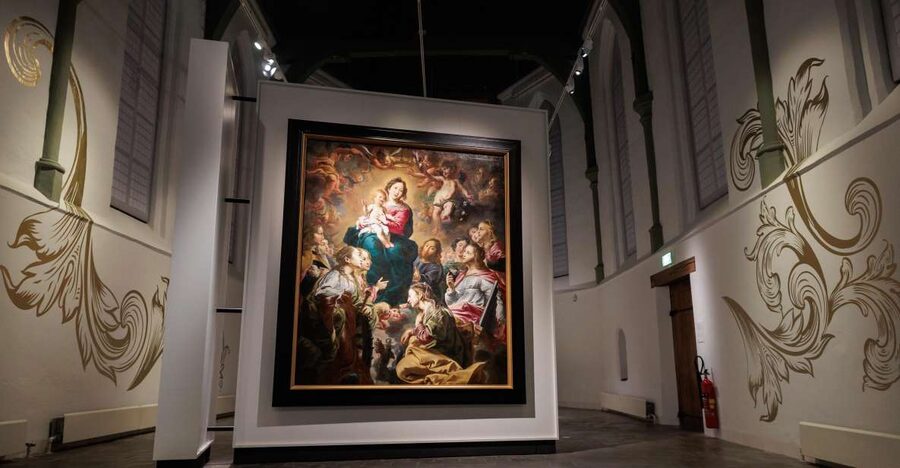
The museum’s religious art is among its most important material. During the 16th-century iconoclasm in the Netherlands, many church artworks were destroyed or removed. The altar pieces in Museum Gouda are valuable partly because they survived that period.
You are not simply looking at old religious paintings. You are seeing objects that made it through a major break in Dutch religious and political life. That gives the paintings a second meaning beyond their subject matter. Their survival tells you something about chance, preservation, and the changing use of churches.
The collection includes a 16th-century triptych, a three-part altar painting that rewards close attention. If you are accustomed to Dutch art museums focusing on later secular painting, this section offers a different route into the country’s artistic past.
The museum also connects these works with master painters. The information provided does not name every artist represented in the altar collection, so do not arrive expecting a full list of household names. Instead, focus on the workmanship, the religious setting, and the fact that these pieces are among the few altar works to have survived.
This is where the lack of an audio guide may matter most. If you want detailed explanations of the imagery, dates, and artists, ask about current English or Dutch information when you arrive. Otherwise, allow extra time with the labels and do not rush through the paintings.
Civic guards, militia portraits, and the public face of Gouda

The 17th-century civic guard pieces shift the mood from religious devotion to public identity. These works show militia groups and civic guards, people connected with the defense and governance of the city.
Group portraits can seem formal at first glance, but they tell you how citizens wanted to be seen. Clothing, posture, weapons, and the arrangement of figures all carry clues about status and responsibility. The pictures are also a reminder that Dutch cities were organized around local institutions, not just famous rulers and painters.
I find this section valuable because it gives Gouda a human scale. The city is not presented only through grand art. It appears through its officials, defenders, and community groups.
Look for the differences between the individual figures. Group portraits often hide small details in a crowded composition, and those details can be more revealing than the central subject. Since the museum includes both civic guard pieces and militia group portraits, you can compare how public service was presented across the collection.
More Museum Visits in Gouda:
- Guided Visit to the Estrella Galicia Museum with Cheese Pairing
★ 5.0 · 218 reviews - Paris: Living Cheese Museum Guided Tour with Cheese Tasting
★ 4.8 · 182 reviews - Day Tour Parmigiano, Ferrari Museum, Balsamic, Lambrusco, Lunch with Transfer
★ 5.0 · 45 reviews - Guided visit of the Cheese Museum with Tasting Included
★ 4.5 · 37 reviews
From Ferdinand Bol to Isaac Israels

Museum Gouda’s painting collection reaches beyond local subjects. Ferdinand Bol represents the 17th-century Dutch tradition, while Isaac Israels brings you into the 19th and early 20th centuries. Their presence gives the museum a wider art-history frame without losing its Gouda focus.
You may also encounter works connected in the display or visitor experience with famous names such as Vermeer and Rembrandt. The supplied information identifies these names as especially impressive parts of the visit, but it does not specify that original paintings by both artists are on display. Check the labels carefully so you know whether a work is by the artist, linked to the period, or presented in another context.
The museum also includes 19th-century French and Dutch works. This section can appeal to you if you want a change from religious art and civic portraits. It shows how the collection moved with wider artistic currents rather than remaining fixed in Gouda’s earlier centuries.
Do not expect a single superstar painting to carry the whole visit. The appeal is the range. One room may explain Gouda’s civic life, another its religious past, and another its connection with Dutch and French painting. That variety makes the museum a sensible choice for anyone who wants more than a single-artwork attraction.
Gouda pottery and the city’s working traditions

Gouds plateel, the decorative pottery associated with Gouda, is one of the clearest links between art and local industry. The pottery tells you how the city became known for making and selling attractive everyday and decorative objects.
This part is especially useful because it broadens your idea of what belongs in an art museum. The collection is not only about paintings by recognized artists. Ceramics, clay pipes, and other manufactured objects also show the skill, taste, and business life of the city.
The Gouda clay pipe adds another practical detail. It points to a time when local production served ordinary habits as well as decorative tastes. Together, the pottery and pipe displays help you see Gouda as a place where goods were made, traded, and used, not simply as a pretty historic town.
If pottery is your main interest, you may want to give this section more time than the ticket price initially suggests. The museum’s treatment of Gouds plateel is one of the best reasons to choose this visit over a museum focused only on major Dutch painters.
Temporary exhibitions and how to plan your visit

Your ticket includes entry to the museum, and temporary exhibitions are worth checking before you go. Their subject and size can change, so I would not plan your entire day around a particular exhibition unless you confirm what is showing.
The ticket is valid for one day, with availability and starting times shown during booking. That gives you useful flexibility. You can visit without treating the museum as a timed race, then spend more attention on the model, altar paintings, or pottery depending on your interests.
The entry price is listed at $19 per person. For that amount, the value depends on how much time you give the collection. A fast walk through the rooms may feel expensive if you only want one famous painting. A careful visit that includes the city model, religious art, civic pieces, Dutch and French paintings, pottery, and a temporary exhibition makes the price easier to justify.
Food and drinks are not included, and parking is not included. The experience is the museum admission itself, so plan any meal, coffee, or parking separately.
The museum is wheelchair accessible. English and Dutch are the available languages, and the host or greeter support is listed in those languages. Since a guide or audio guide may not be available, visitors who need detailed spoken interpretation should check the current arrangements before booking.
Who will get the most from Museum Gouda?

I would recommend this museum to you if you want to understand Gouda as a city, not just visit for cheese, canals, or a quick photograph. The collection connects local objects with national art history in a way that gives the town more depth.
It also suits art lovers who enjoy seeing less familiar religious and civic works alongside better-known Dutch names. The surviving altar pieces, 17th-century group portraits, and later French and Dutch paintings offer several different ways into the collection.
Families and mixed-interest groups may appreciate the 1562 maquette. It gives you a clear shared point of reference, even if not everyone in your group wants to read long labels or compare painting techniques.
You may want to skip it if you need a fully guided experience in English or expect a museum built around a large number of internationally famous original masterpieces. The collection’s strength is its connection to Gouda and its range, not a single blockbuster room.
The best visit is a thoughtful one. Give yourself enough time to read, compare, and connect the objects to the city model. If you only have a few spare minutes in Gouda, the museum may feel too broad. If you can give it a proper visit, it can change how you see the town outside the museum walls.
Should you book the Museum Gouda ticket?

Book it if you want a compact but varied look at Gouda’s past, especially the 1562 city model, surviving altar paintings, and Gouds plateel. At $19, it offers good value when you use the full day and include the temporary displays.
I would be more cautious if you depend on an audio guide or a live explanation for every room. The museum may require you to read, look closely, and build your own understanding. You can cancel up to 24 hours in advance for a full refund, and the reserve-now-pay-later option keeps your plans flexible.
FAQ
How long is the Museum Gouda ticket valid?
The ticket is valid for one day. Check availability for the applicable starting times when booking.
How much does entry to Museum Gouda cost?
The listed price is $19 per person.
What languages are available at Museum Gouda?
English and Dutch are available. The host or greeter support is also listed in English and Dutch.
Is Museum Gouda wheelchair accessible?
Yes, the museum is wheelchair accessible.
Does the ticket include food, drinks, or parking?
No. Food, drinks, and parking are not included.
Can I cancel the booking?
Yes. You can cancel up to 24 hours in advance for a full refund.
Just added around Gouda
- Self-Guided Walking Tour of Gouda: Canals, Colonies, and Cheese★ 5.0 · 3 reviews
- Gouda Cheese and Delft Blue: Full-Day Private Tour★ 5.0 · 4 reviews
- e-Scavenger hunt Gouda: Explore the city at your own pace★ 4.5 · 19 reviews
- Discover Gouda with a self-guided Outside Escape city game tour!★ 5.0 · 13 reviews
- Explore Gouda with Self-Guided GPS and Audio Tour★ 4.0 · 2 reviews
- Historical Gouda: Private Tour with Local Guide★ 5.0 · 2 reviews
- Escape Xperience in Gouda: The Legend of Jacoba★ 5.0 · 2 reviews
- 90 Minutes Self-Guided Family Friendly Walking Tour in Gouda★ 5.0 · 2 reviews
Gouda Cheese Tours, compared.
Entry Ticket to Church of St. John with Audioguide
Read our review →
Discover Gouda with a self-guided Outside Escape city game tour!
Read our review →Browse the lists this tour appears in