
REVIEW · PARIS
Paris: Butter and Cheesemaking Workshop
Making cheese in Paris is a fine change from simply eating it. In this two-hour workshop at the Living Cheese Museum, you learn to turn simple ingredients into tomme fraîche and butter, then sit down to taste the results. I like the hands-on work and the friendly, informal teaching style reported from instructors including Agathe, Paul, Romain, and Gabriele. The small group keeps the class personal.
I also like that the workshop explains French cheese rather than treating it as a quick tasting. You learn why tomme fraîche has a mild, slightly acidic taste and why it melts so well in traditional dishes. The main thing to check before booking is the meeting location, since one recent participant noted that the museum was preparing to move.
Key points at a glance
- You make two French staples: Prepare tomme fraîche and traditional butter with all equipment supplied.
- The class stays small: Groups are limited to 10 people, giving you room to ask questions and take part.
- You taste more than your own work: The closing session includes a selection of cheeses, bread, your creations, and a glass of wine.
- English instruction is provided: Guides such as Agathe, Paul, Romain, and Gabriele have led sessions with clear explanations and plenty of humor.
- Families can take part: Children as young as 5 joined one group, though the activity is not suitable for wheelchair users.
- The price is $82: For two hours of instruction, hands-on making, equipment, and tastings, this is a fair price if cheese is central to your idea of a Paris meal.
Why this small Paris workshop is worth your time
Paris gives you endless chances to buy cheese. This class gives you a better understanding of what is on the plate. You are not only sampling Brie, tomme, or other French varieties. You are handling the ingredients, following a method, and seeing how texture and flavor change during the process.
That makes this a good choice for people who like food with a story behind it. You will leave knowing more about how butter separates, how fresh cheese is formed, and why some cheeses are made for melting rather than aging.
The class takes place at the Living Cheese Museum, or Musée Vivant du Fromage. You meet the cheese master and the rest of your group there before entering the cheese-making room. The exact address should be checked carefully before you go, especially because the museum was preparing to relocate in 2025.
The group limit of 10 matters. A cheese workshop can become frustrating if you are standing at the back while one person handles every step. Here, the small format should give you a fair chance to participate, watch the technique closely, and ask about French cheese.
More Cheese Making Workshops in France
- Paris Cheesemaking Workshop including Wine and Cheese Tasting with an Expert
★ 5.0 · 141 reviews - Buffalo Milk Mozzarella Workshop
★ 5.0 · 2 reviews - Dijon: Cheese and Burgundy Wine Tasting Workshop
★ 4.8 · 122 reviews
Entering the cheese-making room
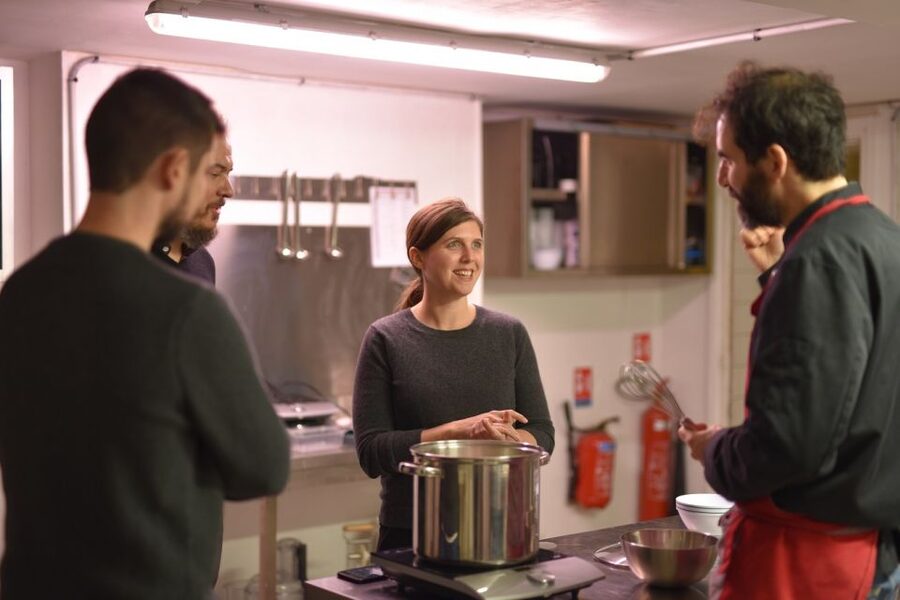
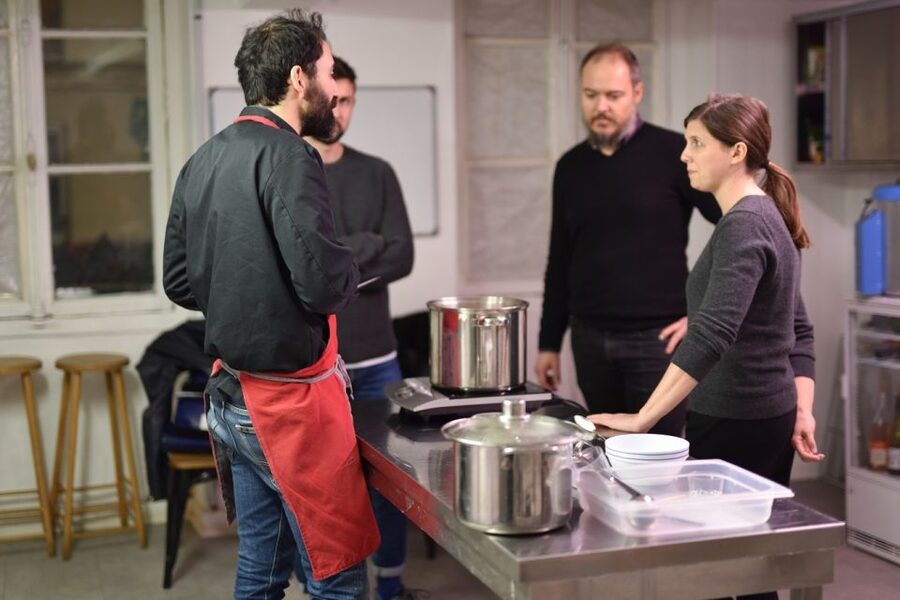
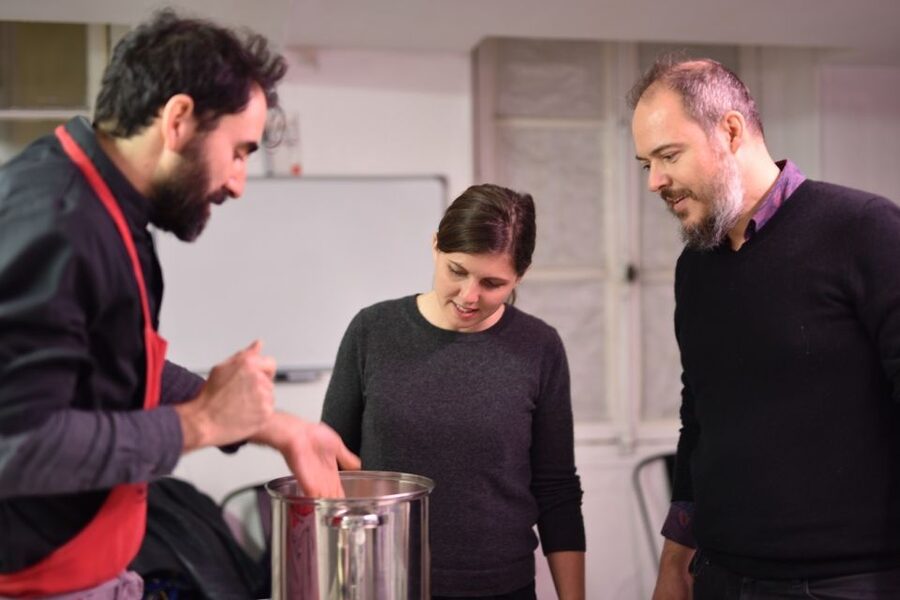
The activity begins with an introduction to different French cheeses and the basic ideas behind making them. Your instructor explains the methods in English, using practical demonstrations rather than leaving you with a tasting plate and a list of names.
Guides have included Agathe, Paul, Romain, and Gabriele. The strongest teaching comments describe an instructor who is patient, funny, clear, and happy to answer questions. That matters here because cheese-making can sound technical at first. A good teacher keeps the process simple enough for a first-timer while still giving food lovers something useful to take home.
You should expect the mood to be relaxed. This is not a formal culinary examination, and you do not need previous kitchen experience. The point is to take part, learn the basic process, and enjoy the group setting.
The museum setting also gives the class a cultural angle. French cheese is not just a restaurant course. It is part of daily food life, local production, regional identity, and the rhythm of a French meal. In two hours, you get a short, practical look at that tradition.
Making tomme fraîche by hand
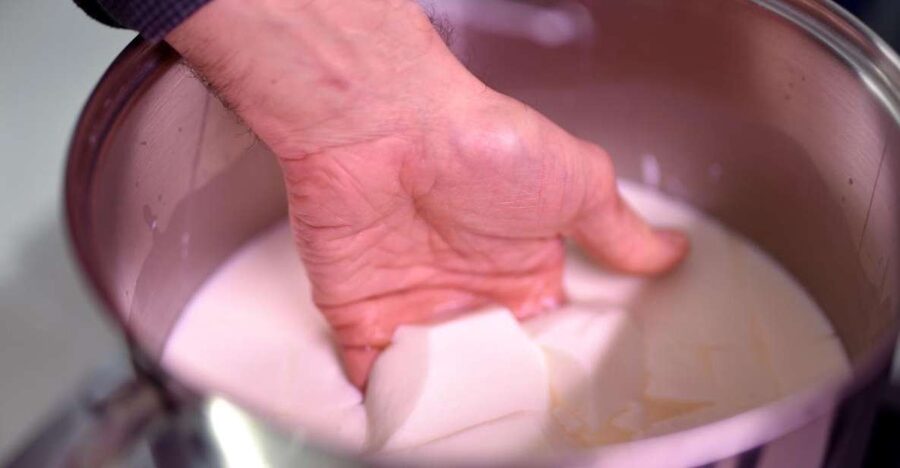
The main cheese project is tomme fraîche, a young cheese with a slightly milky, acidic taste. It is especially useful for melting into traditional dishes, so this is not simply a cheese made to look good on a plate.
You follow the process with the instructor and use the equipment provided. The information available does not specify every technical step or ingredient, so you should not expect a full professional cheesemaking course. Instead, think of it as a clear introduction that lets you see how fresh cheese comes together.
The hands-on part is the reason to choose this activity over a standard tasting. You are not watching a demonstration from across a room. You help create the cheese, see its texture, and later taste what you made. Several participants found the method approachable enough that they planned to try making cheese at home.
That is a useful sign for curious cooks. You will not leave with a professional qualification, but you can gain a process you understand well enough to repeat. The workshop turns an unfamiliar craft into something less mysterious.
Tomme fraîche is also a smart cheese for a short class. An aged cheese may require weeks or months before it is ready. A fresh cheese gives you a result within the two-hour session, which keeps the experience satisfying and immediate.
Churning your own traditional butter
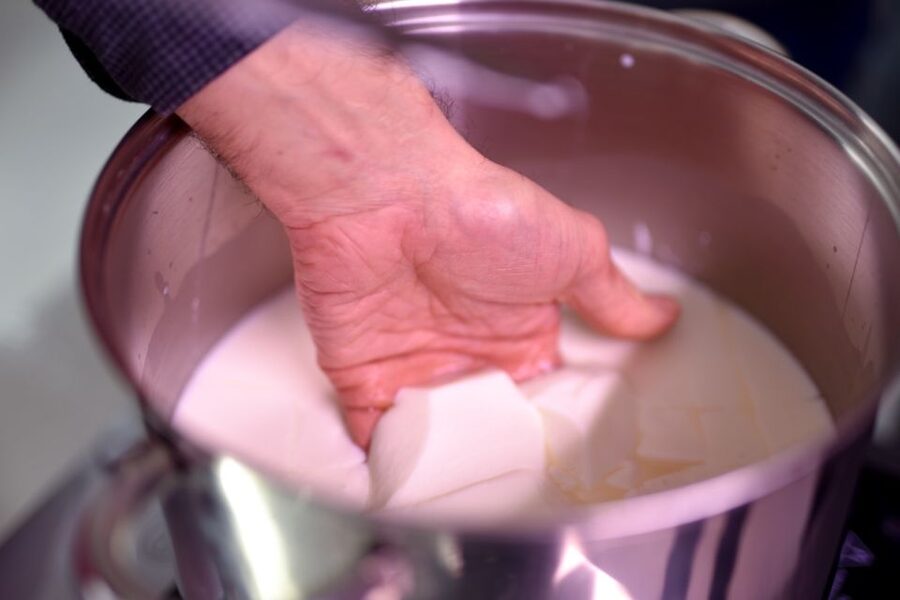
The butter-making section adds variety and gives you another clear example of how a familiar food is produced. You work through the method with the instructor, then taste the finished butter along with the cheese.
The butter is one of the workshop’s most practical features. Some groups were able to take the remaining butter with them, so bring a suitable way to carry it if your instructor permits this on the day. The supplied information does not promise take-home portions for every session, so treat that as a possibility rather than a guarantee.
I like the contrast between the two projects. Cheese-making introduces you to curd, texture, acidity, and melting. Butter is a simpler reminder that a staple food can begin with a basic transformation. Doing both in one short class gives the workshop a good rhythm.
This is also an activity that can work across generations. One family brought children aged 5, 7, 14, and 17, along with older relatives, and everyone took part. Younger children may enjoy the physical, practical side, while older children and adults can focus on the food science and French traditions.
More Cheese Making Workshops in Paris:
- Fuerteventura: Artisan Goat’s Cheese Making at Local Farm
★ 4.9 · 112 reviews - Troodos Mountains Halloumi Making: All Inclusive Workshop & Tour
★ 5.0 · 109 reviews - Sangria Workshop and Tasting with Local Cheese
★ 5.0 · 86 reviews - Central Madrid: Sangría Workshop & Tasting with Local Cheese
★ 4.8 · 82 reviews
The final tasting with cheese, bread, and wine
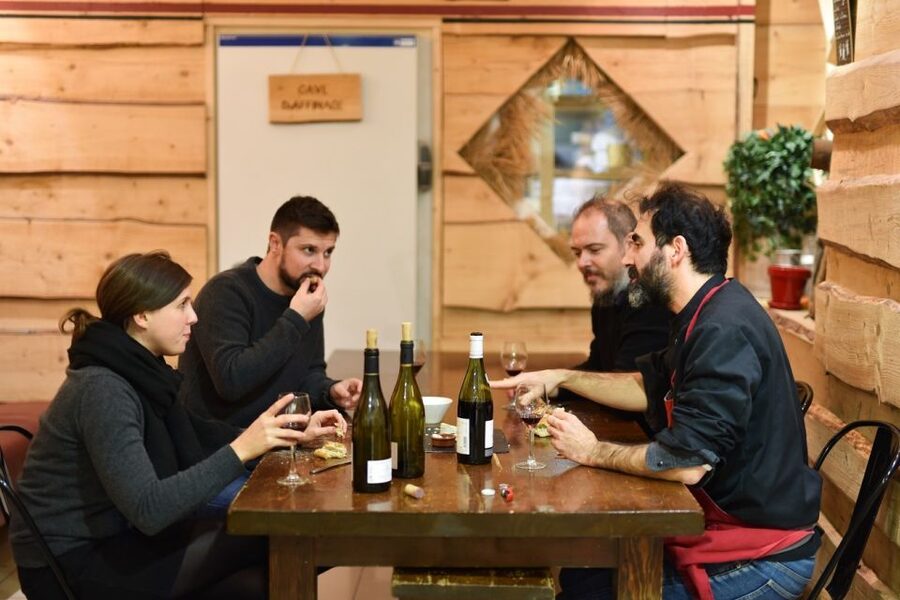
The best part comes at the table. After making the cheese and butter, you taste your own work with a glass of wine. The session also includes other cheese tastings, and some participants ate their handmade cheese with bread.
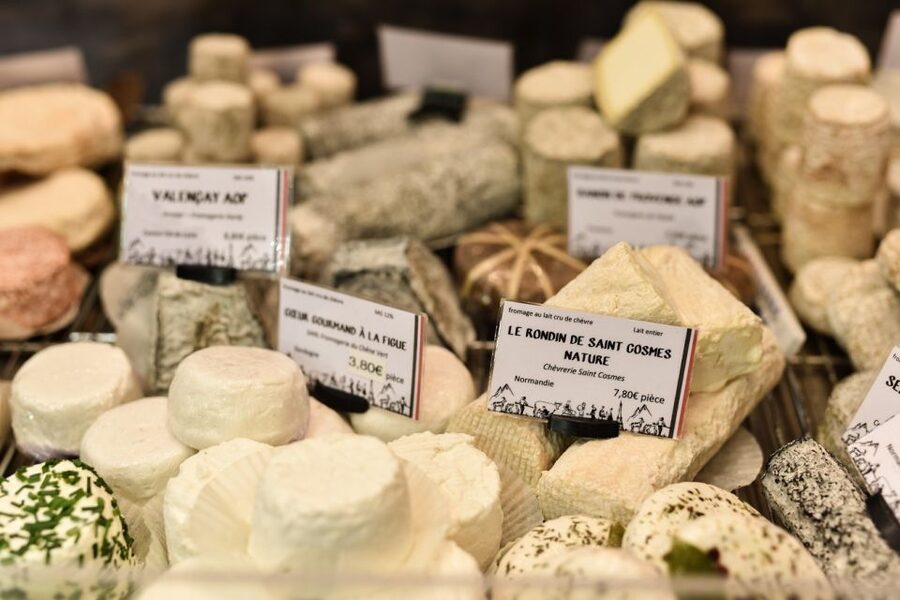
This closing meal gives the workshop a proper French finish. You can compare the fresh cheese you made with other varieties and notice how different age, texture, and flavor can be. Your own cheese may not taste like a shop-bought specialty, and that is part of the point. You are tasting the result of your work, not judging it against a factory product.
Wine is included, but one participant specifically noted that the experience also works well if wine is optional for you. The supplied information does not explain the exact arrangement for non-drinkers, so ask the instructor if you prefer not to drink alcohol.
The tasting is not described as a full lunch. You should think of it as a generous conclusion to a workshop, not a substitute for a meal. If you are hungry afterward, plan another food stop in Paris.
What the $82 price really covers
At $82 per person, this is more expensive than simply visiting a fromagerie and buying a few pieces of cheese. The value comes from the instruction and the participation. You are paying for a small English-speaking class, the equipment, the cheese-making activity, the butter-making activity, and all tastings.
For a food lover, that is a reasonable package. You receive an experience you cannot get from a cheese shop counter, plus a better understanding of French dairy traditions. The class also gives you a social activity that is less formal than a cooking school and more substantial than a short tasting.
The price may feel high if you only want to sample cheese. Paris has cheaper ways to do that. You should book this if you want to learn a method, make something yourself, and spend two hours with a small group.
There is no hotel pickup or drop-off. You make your own way to the Musée Vivant du Fromage, so include local transport and a little extra time when planning your day. Because the venue was preparing to move, confirm the current meeting point before setting off.
Who will enjoy it most
I would recommend this workshop to:
- Cheese lovers who want more than a plate of samples.
- Home cooks looking for a simple project to repeat after returning home.
- Families with children who enjoy practical activities.
- Couples and friends who want a food experience with a social ending.
- Visitors on a rainy day who prefer an indoor activity with a clear two-hour timetable.
- Repeat Paris visitors who have already covered the major sights and want something different.
It is less suitable if you need step-free access, since the activity is not suitable for wheelchair users. It may also disappoint you if you expect a long market visit, a full meal, or an advanced professional course.
The activity is listed for English instruction, which is helpful if you do not speak French. The guide names can change, but the classes have been led by several instructors with a warm and engaging approach.
Timing, group size, and planning advice
The workshop lasts two hours, with starting times dependent on availability. That makes it easy to fit into a morning or afternoon, but you should not plan a major attraction immediately afterward. A small delay at the start or a leisurely tasting can make the schedule less exact.
Arrive at the stated meeting point, the Living Cheese Museum. Since the location may have changed during its relocation, check your booking details shortly before the class.
Wear something you do not mind using in a food-preparation setting. The activity provides the equipment, but the supplied information does not specify clothing or storage for finished butter. Ask the instructor about taking food away before the session begins.
Pets are not allowed. Wheelchair users should choose another activity because this workshop is not considered suitable for them.
The cancellation policy is practical: you can cancel up to 24 hours ahead for a full refund. You can also reserve now and pay later, which helps if your Paris schedule is still shifting.
Should you book the butter and cheesemaking workshop?
Book it if you want to make something, not just eat something. The small group, English instruction, friendly guides, and final cheese-and-wine tasting give the two hours a good balance of learning and fun.
I especially like the combination of tomme fraîche and butter. You get two different food-making projects, and both produce something you can taste before leaving. The class also works for a mixed-age family, a couple, or anyone who wants a break from museums and monuments.
Pause before booking if access is a concern, if you want a full meal, or if you are only looking for the cheapest way to taste French cheese. Also confirm the current museum address because of the reported relocation.
For the right visitor, $82 is fair. You leave with a better sense of how French cheese is made, memories of a shared table, and possibly some butter to enjoy later. That is a more lasting souvenir than another photograph of a cheese plate.
FAQ
Where does the workshop take place?
The meeting point is the Musée Vivant du Fromage, also called the Living Cheese Museum, in Paris.
How long does the activity last?
The workshop lasts two hours. Starting times depend on availability.
What will I make?
You will learn to make tomme fraîche and traditional butter.
Is the workshop taught in English?
Yes. An English-speaking instructor leads the activity.
Is wine included?
Yes. The final tasting includes a glass of wine, along with cheese tastings and your creations.
Is the workshop suitable for wheelchair users?
No. The activity is listed as not suitable for wheelchair users.
Can I cancel or pay later?
You can cancel up to 24 hours in advance for a full refund. The booking option also allows you to reserve your place and pay later.
Just added around Paris
- Paris: Wine and Cheese Pairing★ 5.0 · 4 reviews
- French Wine and Cheese Master Class Near the Eiffel Tower★ 5.0 · 6 reviews
- Private wine tour to Sancerre vineyards from Paris with Sommelier★ 5.0 · 11 reviews
- Paris Wine with Cheese Pairing & Tasting Small Group Class★ 5.0 · 6 reviews
- Paris Wine and Cheese Tastings Class near Le Marais★ 5.0 · 4 reviews
- Wine & Cheese in Montmartre: A True Taste of France 6-ppl Max★ 5.0 · 6 reviews
- Paris Wine and Cheese Pairing Private Masterclass in a Bistrot★ 5.0 · 7 reviews
- Paris Marché d’Aligre Walking Tour with Chocolate and Cheese Tasting★ 3.5 · 24 reviews
Paris Cheese Tours, compared.
Montmartre Cheese, Wine & Pastry Guided Walking Tour
Read our review →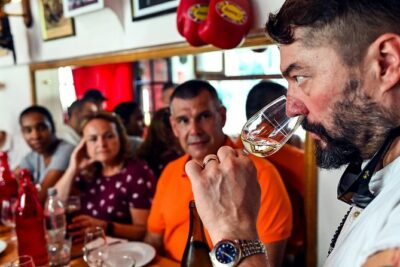
Private Montmartre Food Tour with Wine, Cheese & Pastries
Read our review →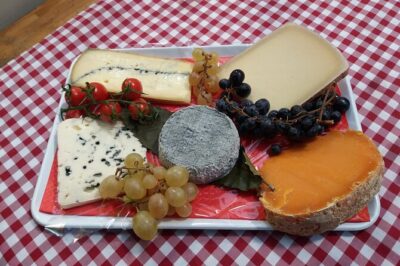
Paris Le Marais Food Tour With 10+ Tastings, Cheese, Wine & More
Read our review →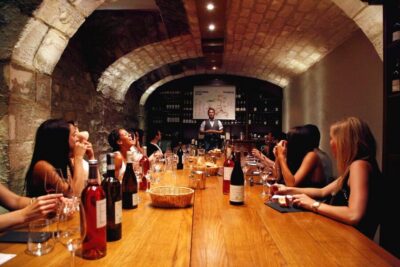
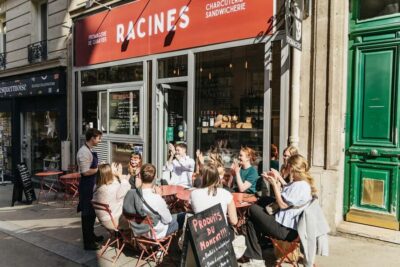
Cheese & Wine Tasting in Montmartre with Local Cheesemonger
Read our review →
French Wine, Champagne And Cheese Tasting Paris SECRET WINE DOOR
Read our review →
Paris Wine Tasting plus Cheese Lunch with an Expert Sommelier
Read our review →
Paris St Germain Food Tour with Cheeses, Foie Gras, Wines & More
Read our review →Browse the lists this tour appears in