
REVIEW · ROME
Testaccio: Exclusive tasting of PDO wines, cheeses, and cured meats from Lazio
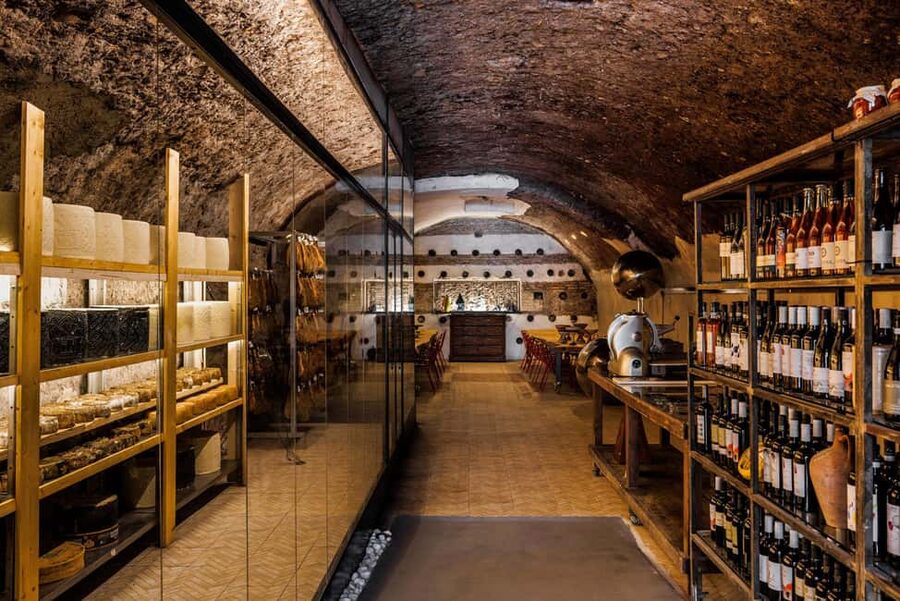
The unusual setting is the main event here: you taste Lazio cheeses and cured meats inside a thousand-year-old Roman cave beneath Monte dei Cocci. I like the clear regional focus, with five PDO cheeses and five artisan meats from small Lazio producers, and I like that the tasting comes with a real look at how cheese ages in the cave.
I also like the scale. At $47 per person for an hour, this is a compact food experience rather than a long restaurant meal, and the private-group format should make it easier to ask questions. The main drawback is practical: the entrance can be hard to spot, so arrive about five minutes early, and bring a jacket because the cave stays between 10 and 15 degrees Celsius.
What makes this tasting worth your time
- Ancient storage space: Taste food among Roman amphora fragments in a cave beneath Monte dei Cocci.
- Five Lazio PDO cheeses: Compare protected regional products and learn how their flavors change with aging.
- Five artisan cured meats: The selection focuses on small local producers rather than standard supermarket brands.
- Two wine pairings: Two glasses of local wine accompany the food, with the pairing explained as part of the tasting.
- A private, one-hour format: This suits visitors who want a focused activity without giving up half a day.
- More than food: Contemporary art exhibitions add a modern layer to the archaeological setting.
Finding the Cave in Testaccio
Testaccio is one of Rome’s best neighborhoods for eating like a local. It has a strong connection to food, old working-class traditions, and a less polished feel than the city center. This tasting fits that character well because it leads you away from the usual restaurant circuit and into a space most people would not see on their own.
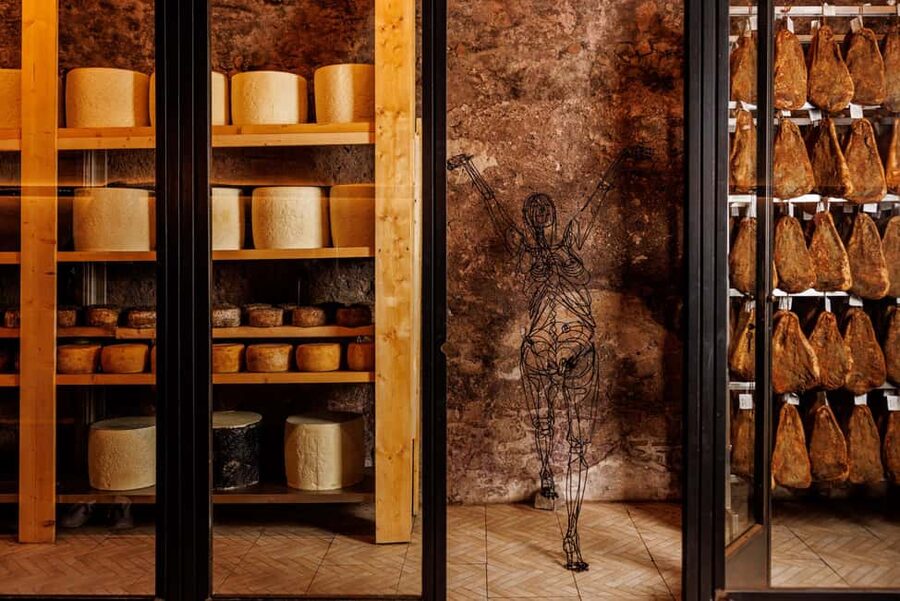
The location is under Monte dei Cocci, the artificial hill formed from fragments of ancient Roman amphorae. Inside the aging cave, pieces of old pottery appear in the walls and shadows. You are not simply seated in a modern shop with a few historic objects added for decoration. The cave itself is part of the experience.
Allow yourself a little extra time to find the entrance. One practical detail comes through clearly: the location is not perfectly marked. Arriving five minutes early is sensible, especially if you are trying to locate it after walking through unfamiliar streets.
The cave is wheelchair accessible, which makes this unusual setting available to more people than many archaeological food venues. You should still tell the operator about any mobility needs or dietary restrictions when booking.
More Wine and Cheese Tastings in Italy
- Authentic Farm Tour with Pizza, Cheese, Wine & Limoncello Tasting
★ 5.0 · 698 reviews - Cooking class with Pasta, mozzarella and Tiramisu with wine
★ 5.0 · 549 reviews - Amalfi: Make Fresh Pasta, Mozzarella & Tiramisù with wine
★ 5.0 · 503 reviews
A Constant Temperature Made for Cheese
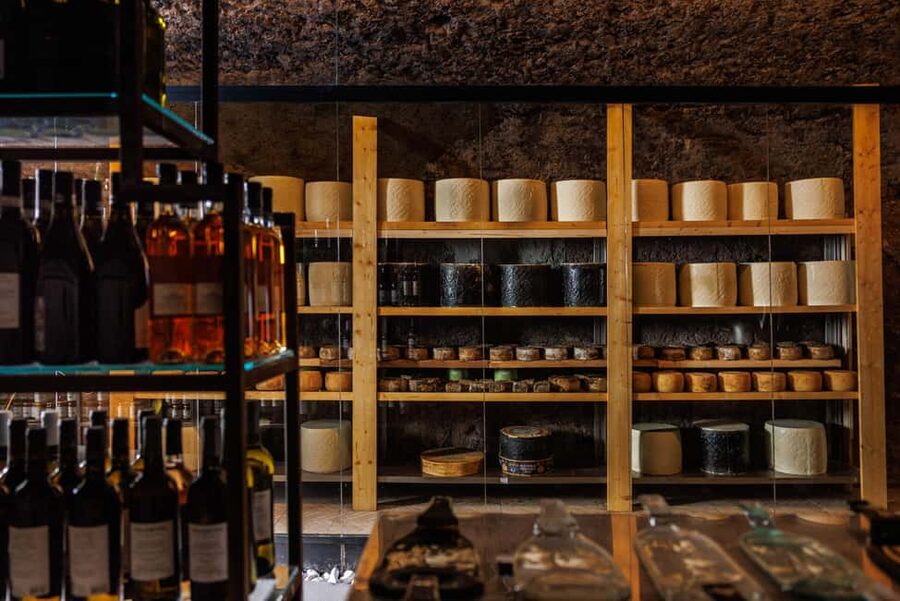
The cave stays naturally cool, between 10 and 15 degrees Celsius. That steady temperature helped make underground storage useful in Roman times, and it now gives the cheeses a controlled place to mature.
Bring a jacket. This is not a token suggestion. You may be comfortable at street level in Rome and still feel a chill once you sit underground for an hour. A light layer is enough for most people, but the cave should feel cool compared with the city outside.
The setting also explains why this is more than a standard cheese board. Aging is not only about placing cheese on a shelf and waiting. Temperature, time, and storage conditions affect texture and flavor. During the tasting, the guide explains the aging process and the differences between the main PDO cheeses from Lazio.
That context helps you taste with more attention. Instead of asking only if you like a cheese, you can notice how firm it is, how strong its aroma becomes with age, and how the wine or cured meat changes the flavor.
Five PDO Cheeses From Lazio
The tasting includes five PDO cheeses from Lazio. PDO, or Protected Designation of Origin, means the product follows rules connected to a particular place and method of production. For you, that gives the tasting a clear purpose: you are comparing regional cheeses, not sampling an unrelated mix of Italian imports.
The exact cheeses can vary, so you should think of the selection as a guided comparison rather than a fixed menu. The emphasis is on rare or less commonly found products from small producers. That matters if you have already tasted the usual supermarket pecorino and want a broader view of Lazio’s dairy traditions.
The guide explains where each cheese comes from and how it is made and aged. You may find that the tasting moves from milder flavors toward stronger ones, though the precise order is not specified. The two local wines help show how different cheeses behave with a drink.
This is also a useful stop for people who buy cheese at home. You can ask which styles travel well, how to serve them, and which products are worth seeking out elsewhere in Lazio. The experience includes the option to buy local products afterward, including cheeses, cured meats, wines, oils, legumes, and local spirits.
Five Cured Meats From Small Producers
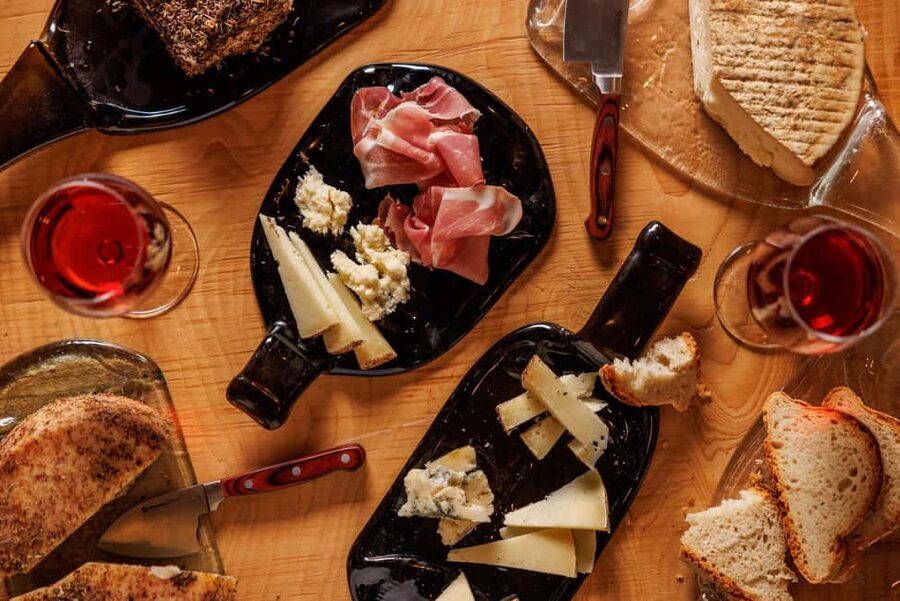
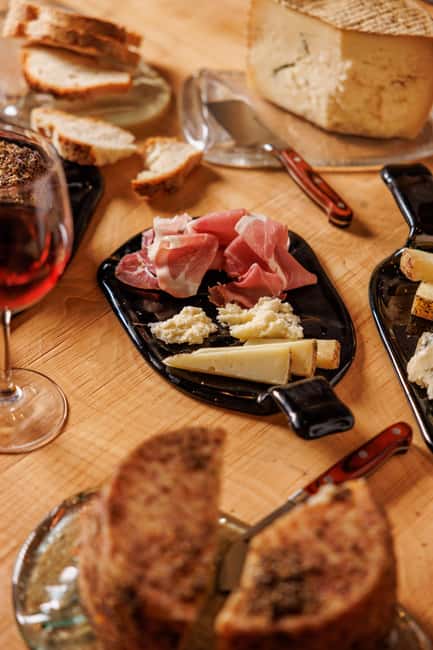
The meat selection includes five artisan cured meats from Lazio. The point is not sheer quantity. Five varieties give you enough range to compare seasoning, texture, and production style without turning the hour into a rushed parade of samples.
The products come from small local producers, and the guide explains their origins. That producer focus is one of the strongest reasons to choose this experience over a generic aperitivo. You are learning about the food’s place in the region and the people who make it.
The meats are paired with the cheeses and wines, rather than served as an isolated plate. A salty cured meat can sharpen a mild cheese, while a more strongly aged cheese may need a different wine or a plain slice of meat beside it. These combinations are practical knowledge you can use later when ordering food or assembling a small meal at home.
The portions are described as generous for two people, so the tasting may work well as a substantial snack or a light meal. The listed format is five meats, five cheeses, and two glasses of wine. Anyone with a restricted diet should contact the provider before arriving, since the food is central to the experience and substitutions are not specified.
Same region, a different board:
- Sorrento Farm by Tuk Tuk: Cheese, Limoncello & Hands-On Pizza
★ 5.0 · 628 reviews - Tour Parmigiano Reggiano dairy and Parma ham
★ 5.0 · 601 reviews - Parma: Parmigiano Production and Parma Ham Tour & Tasting
★ 4.9 · 554 reviews - Sorrento: Farm Tour with Cheese Tasting & Pizza Making Class
★ 5.0 · 503 reviews
Two Local Wines and a Regional Story
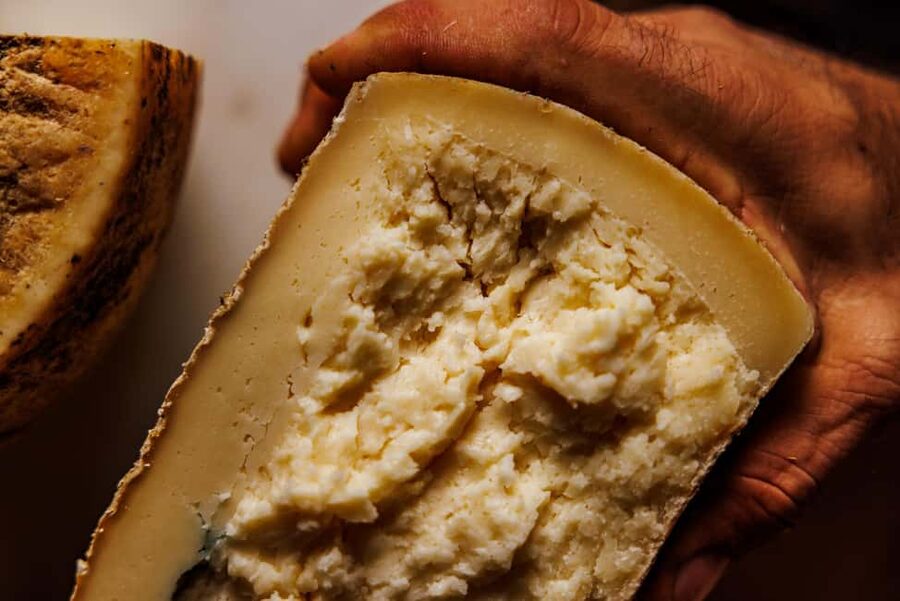
Two glasses of wine are included. The tasting has featured both red wine and sparkling wine, though the exact bottles can vary. That is useful because the pairings are not limited to one predictable Roman red.
Wine is used here to connect the products rather than simply to add a drink to the price. The guide explains which flavors work together and how the pairing reflects Lazio’s food traditions. You may also get the chance to try regional olive oil, as that has been part of the tasting experience.
The wine component remains modest. You receive two glasses, not a full wine flight, so this is not the right choice if your main goal is a detailed study of Lazio’s vineyards. It is a food-led activity where wine supports the cheeses and meats.
The one-hour duration keeps the experience easy to fit into a day of sightseeing. You can schedule it between visits to other parts of Rome without surrendering an afternoon. On the other hand, the short format means the guide has to keep the pace moving. If you want long conversations about each producer, you may need to use the private setting to ask questions as you go.
Ancient Amphorae and Contemporary Roman Art
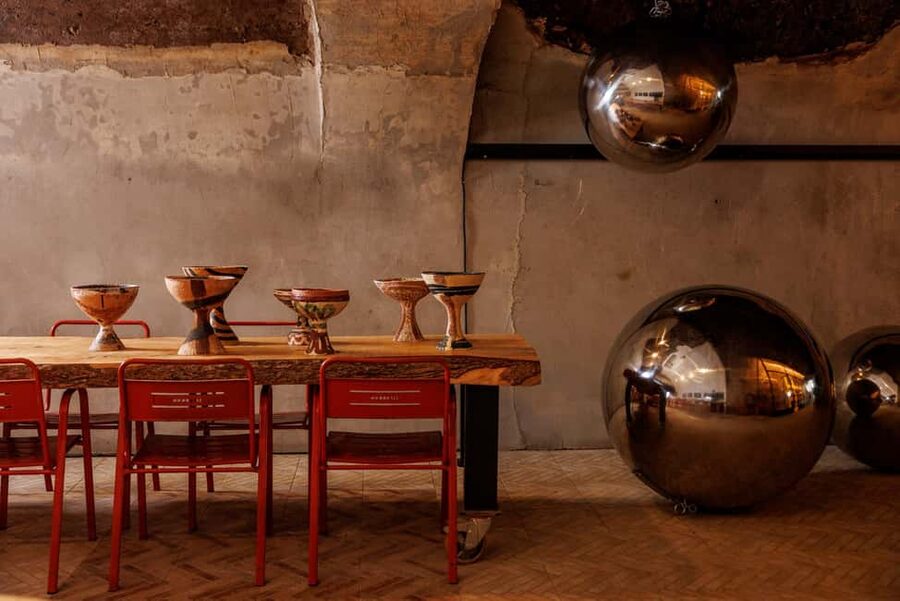
The cave’s archaeological details give the tasting its strongest sense of place. Fragments of amphorae remain visible in the walls, linking the storage space to Rome’s ancient trade and food systems.
The setting is not frozen in the past. Periodic exhibitions by emerging Roman artists bring contemporary art into the cave. That contrast works well: old pottery, aging cheese, and current Roman creativity share the same room.
I would not book this expecting a formal archaeological tour. The cave visit supports the tasting, and the guide connects the site to Roman identity and culinary traditions. You will hear stories about the place and its food, but the main focus remains what is on the table.
That balance is a strength. You get more context than at a normal food stop, without spending an hour listening to a lecture before tasting anything.
Meeting Alessia, Vincenzo, and the Local Producers
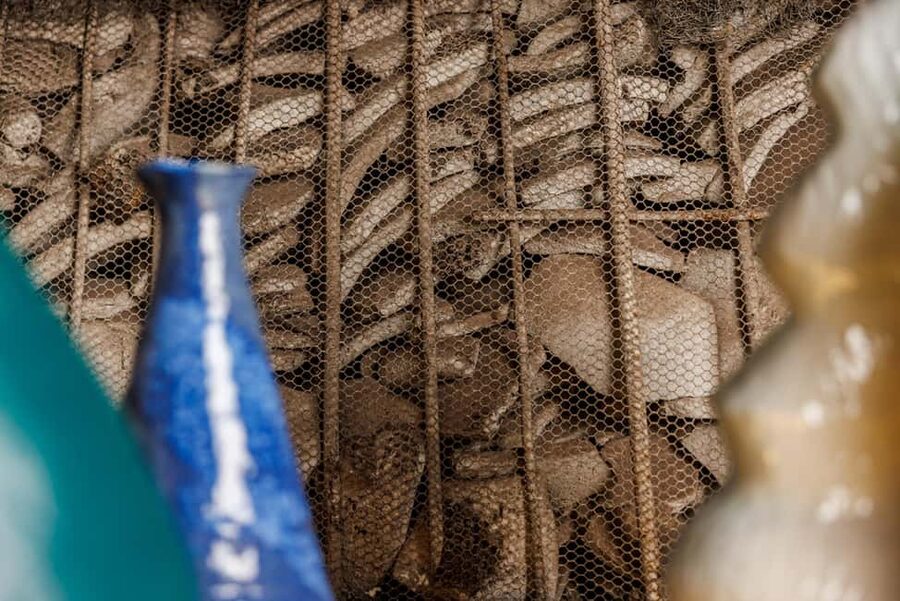
The hosts named for this experience are Alessia and Vincenzo. Their role is important because the value of the tasting depends on how clearly the food and cave are explained.
You can expect a guide in Italian or English. The presentation covers the cheeses, cured meats, wine pairings, aging methods, and the connection between food, archaeology, and Roman life. Some content may be shown in its original language, so ask for clarification if a term or explanation is not clear.
The human side of the experience is one of its best features. Alessia and Vincenzo are described as passionate about the cave, the products, and the work of small producers. That passion matters most when you want more than a list of ingredients. A good host can explain why one cheese is unusual, how long it has aged, and what makes a small producer’s method different.
Because the activity is offered as a private group, you should have more freedom to ask questions than in a large public tasting. The precise maximum group size is not given, so do not assume the group will be limited to only two or four people.
What the One-Hour Visit Looks Like
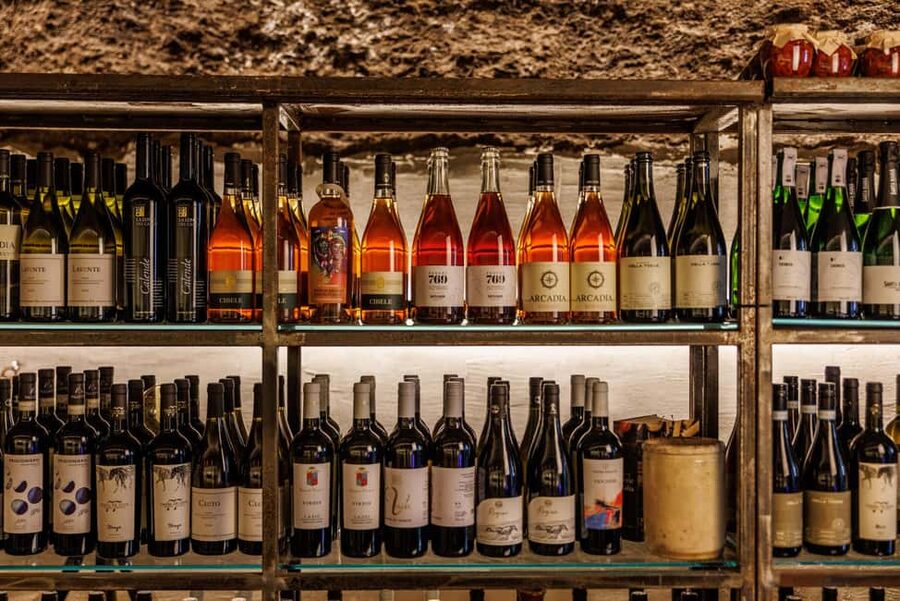
The visit begins with entry into the historic cheese-aging cave. The guide introduces the space, points out ancient amphora fragments, and explains its role beneath Monte dei Cocci.
The food portion follows with five PDO cheeses and five artisan cured meats. As each item is presented, you learn about its origin, production, and aging. The tasting is designed to show the differences among Lazio’s cheeses rather than simply provide a large plate.
Two glasses of local wine accompany the food. The guide discusses pairings and may include olive oil as another regional product to taste. The exact wine and product order can change, so keep your expectations flexible.
The experience ends with the chance to purchase local goods for home. Available products include cold cuts, cheeses, wines, oils, legumes, local spirits, and boxes for preparing amatriciana or carbonara at home. Purchases are optional and are not included in the $47 price.
Is $47 a Fair Price?
At $47 per person, this costs more than a casual Roman aperitivo, but the comparison is not quite fair. The price includes ten food samples, two glasses of wine, a guide, and access to a cave that is not freely open to the public.
The archaeological setting carries real value. You are paying for access to a special place as well as for food, and the private-group structure adds a more personal feel. If you already plan to eat a full dinner afterward, the tasting may feel like a costly snack. If you treat it as lunch or an early evening meal, the generous food selection makes the price easier to justify.
I find the value strongest for people who care about how food is made. You get regional products, a lesson in aging, and a chance to buy items you may not find in ordinary tourist shops. The value is weaker for anyone who mainly wants a large meal, a broad wine tasting, or a long historical tour.
Free cancellation up to 24 hours before the experience and a reserve-now, pay-later option make it easier to fit into a changing Rome schedule. Those policies are useful, but the decision should still come down to your interest in food and the unusual setting.
Who Will Enjoy This Most?
This is a good choice for cheese lovers, food-focused visitors, and anyone who wants a neighborhood experience with a strong local connection. It also suits repeat visitors to Rome who have already seen the major monuments and want something different.
The private format can work well for couples, families, or small groups who prefer to ask questions rather than follow a large crowd. Since the experience lasts one hour, it is also practical for a busy sightseeing day.
You should think twice if you dislike cured meats, avoid dairy, or have serious allergies. Dietary restrictions and allergies must be shared in advance, and there is no promise of alternative products. The cave temperature is another small concern for anyone sensitive to cool rooms.
This is not a general Roman food tour. It focuses tightly on Lazio, with cheese and cured meats at the center. That focus is a benefit if you want depth in one subject, but it will not cover pizza, pasta, gelato, or a wide range of Roman dishes during the tasting itself.
Should You Book the Cave Tasting?
Book it if you want an unusual setting, small-producer food, and a short activity that combines eating with a sense of place. The strongest reasons are the Roman cave, the five PDO cheeses, and the chance to taste products that are not standard supermarket fare.
Skip it if you want a full meal, a long wine course, or a broad tour of Roman cuisine. For the right person, $47 buys more than a cheese board. It buys access to a cool old cave, a focused lesson in Lazio food, two local wines, and a chance to meet the people who care for this small corner of Testaccio.
FAQ
Where does the tasting take place?
It takes place in a historic cheese-aging cave beneath Monte dei Cocci in the Testaccio neighborhood of Rome.
How long does the experience last?
The tasting lasts one hour.
How much does it cost?
The price is $47 per person.
What food is included?
You taste five PDO cheeses from Lazio and five artisan cured meats from small local producers.
How much wine is included?
Two glasses of local wine are included. The exact wines can vary, and both red and sparkling wine have been served.
Is the experience available in English?
Yes. The live guide is available in Italian and English.
Is the cave wheelchair accessible?
Yes, the experience is listed as wheelchair accessible.
Should I bring anything?
Bring a jacket because the cave stays between 10 and 15 degrees Celsius.
Can I buy local products afterward?
Yes. You can buy cheeses, cured meats, wines, oils, legumes, local spirits, and boxes for preparing amatriciana or carbonara at home.
Just added around Italy
- Wine Tasting with Cured Meats & Cheeses in Florence★ 5.0 · 2 reviews
- Tuscany: Ripalte Design Winery Wine and Cheese Tasting Tour★ 4.7 · 15 reviews
- Vico Equense: Tour in the dairy “Mozzarella Experience”★ 5.0 · 19 reviews
- From Parma/Cinque Terre: Truffle & Parmesan Picnic (Tasting)★ 5.0 · 2 reviews
- Turin: Gastronomy tasting through oil, wine and cheese★ 5.0 · 2 reviews
- The Valpolicella food & wine driving tour: cheese factory+ winery★ 5.0 · 6 reviews
- Prosecco Hills Wine and Cheese Gourmet Discovery★ 5.0 · 6 reviews
- Premium Cheeses and Gins Tour in the Prosecco hills. Full lunch!★ 5.0 · 3 reviews
Rome Cheese Tours, compared.
Private Wine Tasting in Rome with Delectable Meats and Cheeses
Read our review →
Private 2-Hour Italian Cheese and Wine Tasting in Rome
Read our review →
A day with the shepherd milking sheeps and making cheese in the National Park of Abruzzo
Read our review →
Wine Tasting Cold cuts and Rare Cheeses in Grotta a Testaccio
Read our review →Browse the lists this tour appears in