
REVIEW · AMSTERDAM
Cheese making workshop next to De Hallen, heart of Amsterdam
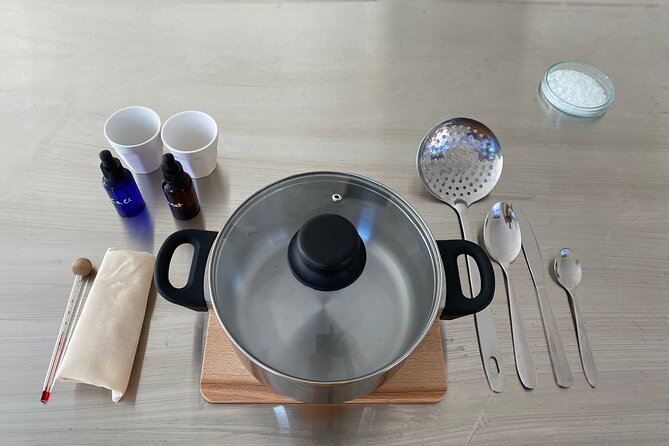
The best part of this Amsterdam experience is that you do not just taste Dutch cheese, you learn the basic craft behind it. At De Kaasserie, a food design studio near De Hallen, you make two fresh cheeses by two different methods, then take both home.
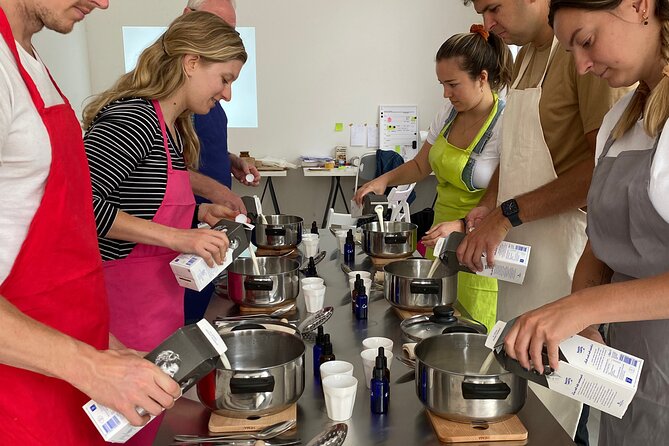
I like the small maximum of eight people, which keeps the class personal and gives you room to work. I also like the practical finish: you receive basic tools and recipes by email, so the class can continue in your own kitchen.
The main drawback is the price, $144.49 per person. That is a serious splurge for a three-hour activity, especially if you only want a quick tasting. It makes better sense for curious cooks and food lovers who value a hands-on skill.
Key points at a glance
- Make two cheeses in two ways: Learn one method using rennet and another using acid.
- Work in a group of no more than eight: The format is suited to questions, guidance, and hands-on practice.
- Personalize the acid-coagulated cheese: Add herbs and colors as you finish your cheese.
- Take home more than a sample: Your two cheeses, basic tools, and emailed recipes go with you.
- Finish with a tasting and drink: Sample homemade cheeses served with herbs and spices.
- Meet near De Hallen and Ten Katemarkt: The setting places the class in one of Amsterdam’s useful food neighborhoods.
Making cheese beside De Hallen
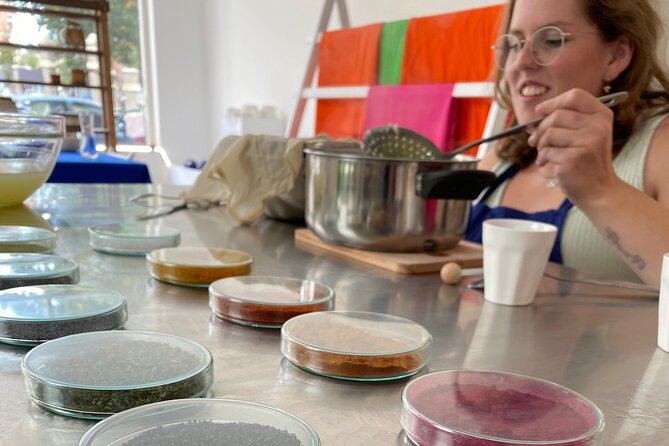
Amsterdam is full of food tours, but this one asks you to do more than follow a guide from one bite to the next. You spend the core of the three-hour session making cheese in a food design studio at De Kaasserie, located at Bellamystraat 8, near De Hallen.
That location matters. De Hallen is one of the city’s best-known food and culture areas, while Ten Katemarkt adds a more everyday market setting to the surrounding neighborhood. The experience is not a grand tour of Amsterdam’s dairy industry, but it gives you a practical food connection in a part of the city where eating and shopping fit naturally into the day.
You meet at the studio and finish back there. The activity is offered in English, which keeps the instructions clear for international visitors. Since the class has a maximum of eight people, you should expect something closer to a workshop around a shared table than a large demonstration where you stand at the back and watch.
The setting also helps the class feel local. You are not being rushed through a tourist attraction. Instead, you are spending several hours with a craft, a teacher, ingredients, and the people in your small group.
More Cheese Making Workshops in Amsterdam:
- Private Farmhouse Cheesemaking Workshop
★ 3.5 · 2 reviews - Paris Cheesemaking Workshop including Wine and Cheese Tasting with an Expert
★ 5.0 · 141 reviews - Dijon: Cheese and Burgundy Wine Tasting Workshop
★ 4.8 · 122 reviews
Two methods, two different kinds of fresh cheese
The class teaches two fresh cheeses, and the contrast between them is the heart of the experience. The first is coagulated with rennet. The second is coagulated with acid.
You do not need prior cheesemaking experience. Ingredients and materials are included, and the class is designed for beginners. Still, the session is not simply a cooking demonstration. You take part in the creation process and learn why the two cheeses come together in different ways.
Rennet and acid produce different results, and making both gives you a useful first look at how cheesemaking works. You get to compare methods rather than learn one recipe in isolation. For someone who has always wondered how milk turns into cheese, that comparison gives the activity real value.
The work is also manageable within a three-hour format. You are not attempting a complicated aged cheese that needs weeks or months before it can be eaten. These are fresh cheeses, so the reward comes during the class and at the end of it.
That makes the experience a good fit for a short Amsterdam stay. You can learn a new skill without giving up an entire day. At the same time, three hours gives the subject more room than a brief market tasting or a quick cooking lesson.
Adding herbs and color to your own cheese
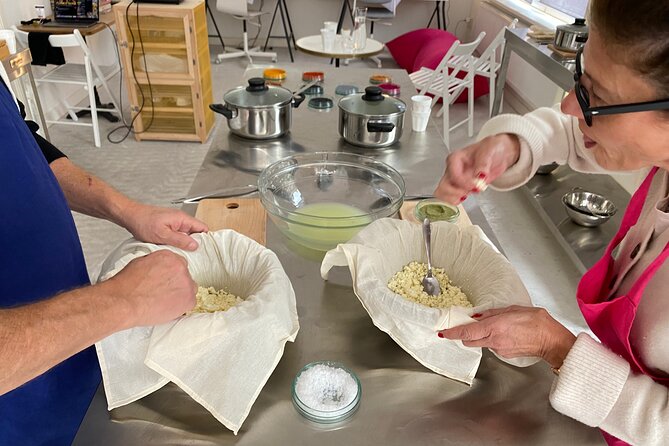
The acid-coagulated cheese gives you a chance to experiment. As you finish it, you can try herbs and colors, which changes the mood from following instructions to making something personal.
This is a small detail, but it is one of the most enjoyable parts of the class. A beginner can learn the basic method while still making choices about flavor and appearance. You are not expected to produce a perfect professional cheese. You are encouraged to see what happens when you add your own ideas.
Herbs and spices also connect the practical work to the tasting at the end. The cheese becomes something you can discuss and compare, not just a finished object in a container. If you enjoy cooking by feel, this is likely to be your favorite stage.
The class is also a good option for people who like food design. The studio setting and the chance to use color make it broader than a strictly technical lesson. You learn a craft, but you also get room to play.
Keep your expectations reasonable. The information provided does not promise a large selection of flavor options or a professional cheesemaker’s full production setup. Think of this as a friendly introduction to fresh cheese, with a creative finish.
A tasting that puts your work in context
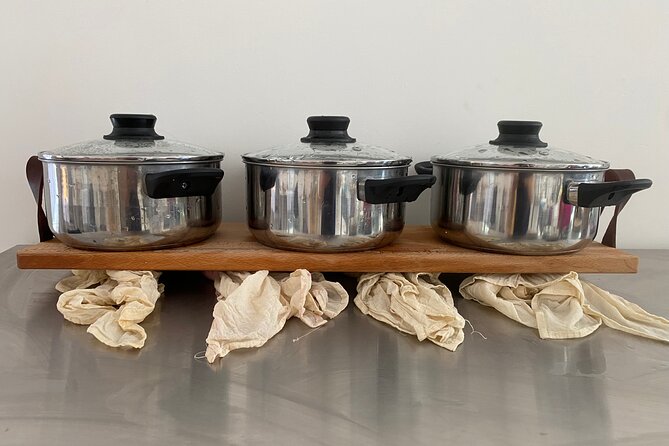
At the end, you sit down for a tasting of homemade cheeses made by the host. They are served with herbs and spices, and a drink completes the session.
This closing tasting is useful because it gives you a reference point. After making your own cheese, you can taste another homemade version and think about texture, seasoning, and presentation. It turns the lesson into a full food experience rather than a class that ends as soon as the ingredients are packed away.
The reviews describe the atmosphere as calm and peaceful, with a patient teacher and plenty of laughter. That combination matters for beginners. Cheesemaking can sound technical, but a relaxed setting makes it easier to ask questions and accept that your first attempt may not look exactly like the example.
The tasting also gives the small group a natural chance to talk. One person may focus on herbs, another on color, and another on how to repeat the method at home. The class has a social side, but it is not built around a loud party atmosphere.
You should not book this mainly for a large meal. The tasting is part of the workshop, not a substitute for lunch or dinner. If you want a filling food tour, this will not be the right choice. If you want to understand and taste a craft you have just practiced, the finish fits well.
A few more cheese tours around Amsterdam worth a look
- Amsterdam Classic Saloon Boat Cruise with Drinks and Cheese
★ 5.0 · 31,825 reviews - Amsterdam: Classic Saloon Boat Cruise with Cheese & Wine
★ 4.6 · 27,035 reviews - Amsterdam: Guided Zaanse Schans, Windmills & Cheese Tour
★ 4.4 · 4,826 reviews - Zaanse Schans Windmills, Clogs and Dutch Cheese Small-Group Tour from Amsterdam
★ 4.5 · 2,369 reviews
What you take home from De Kaasserie
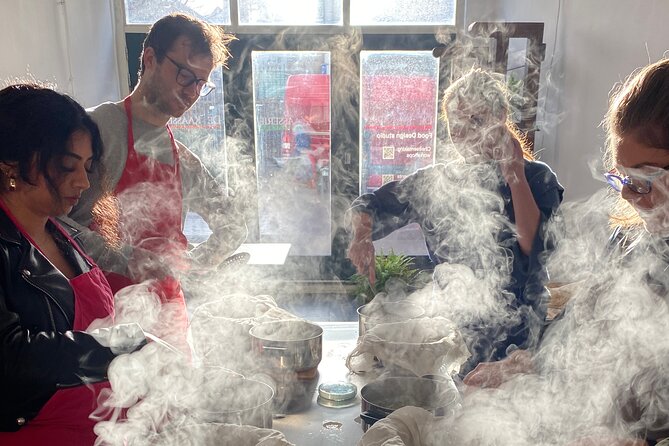
Your two cheeses are yours to take with you. You also receive basic tools and recipes by email, giving you a practical way to repeat the work later.
That follow-up is one of the strongest reasons to consider the price. Many food activities end with a small portion that disappears before the day is over. Here, you leave with both a product and a method. The recipes can help you test the process again at home, while the tools give you a starting point for further experiments.
The experience is described as an open door into making cheese at home. That is a fair way to judge it. You will not leave as a professional cheesemaker after one session, but you will have tried two methods and learned enough to continue exploring.
If you are staying in Amsterdam for several days, pack your cheese carefully and plan your day with that in mind. The information provided confirms that you can take the cheeses with you, but it does not give special storage or transport instructions. Ask the teacher for practical advice before you leave if you have a long journey ahead.
The emailed recipes are also useful for people who cook with friends or family. You can repeat the activity at home, compare your results, and try different herbs or colors. That makes the class more lasting than a simple souvenir.
Why the group size changes the experience
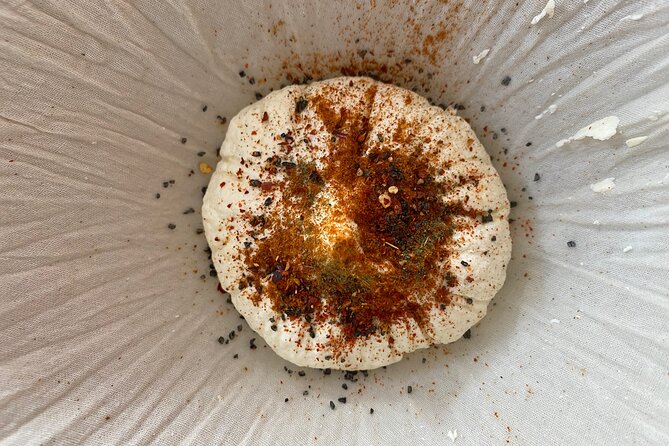
A maximum of eight people is a real advantage here. Cheesemaking involves steps that are easier to understand when you can see the ingredients and handle the materials yourself. A large class could turn this into a demonstration, but a group of eight keeps the focus on participation.
The small format also suits people who want to ask basic questions without feeling self-conscious. The activity is beginner-friendly, and the teacher is described as patient. That is especially helpful if you have no idea what rennet does, how acid changes milk, or when to move from one step to the next.
You should still expect a shared experience, not a private lesson. Other people will be making cheese beside you, and the social element is part of the appeal. If you prefer complete control over the pace, a private cooking session might suit you better, but no private option is specified here.
The group size makes this a good choice for couples, friends, solo food lovers, and small family groups who enjoy learning together. It may also work well for a small celebration, provided the booking arrangement suits your party.
Fitting De Hallen and Ten Katemarkt into your day
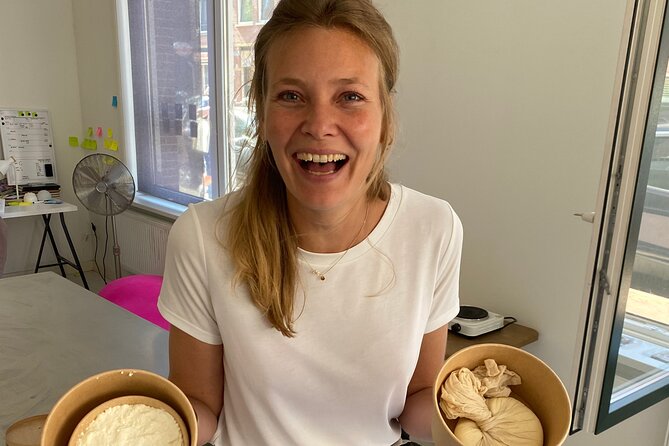
The meeting point is De Kaasserie at Bellamystraat 8, 1053 BL Amsterdam. The class is next to De Hallen, and the listed itinerary also includes Ten Katemarkt.
The supplied details do not set out a long guided walk or explain how much time is spent at each place. I would therefore treat De Hallen and Ten Katemarkt as useful neighborhood context around the workshop, not as a separate sightseeing tour.
You can build a simple food-focused day around the class. Visit the surrounding De Hallen area before or after your session, then explore Ten Katemarkt as part of your time in the neighborhood. Since the activity ends at its starting point, you do not need to arrange transport from a different final location.
The area is near public transportation, which helps if you are coming from another part of Amsterdam. You should still allow enough time to reach Bellamystraat 8, since the class has a fixed start and the practical work begins at the studio.
The location is convenient, but do not choose this activity because you expect a full market tour. Its main subject is cheesemaking. De Hallen and Ten Katemarkt add setting and nearby food interest, while the workshop itself takes center stage.
Is $144.49 a fair price?
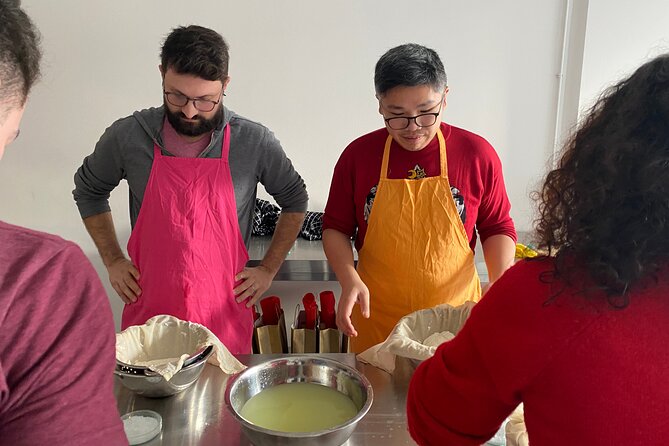
At $144.49 per person, this is not a bargain activity. You are paying for about three hours, instruction in English, ingredients, equipment, two cheeses, basic tools, recipes, a tasting, and a drink.
The value depends on how you measure a food experience. If you compare the cost with a market snack or a standard museum visit, it is expensive. If you compare it with a small-group cooking class that leaves you with a new skill and materials to use later, the price is easier to understand.
I would book it for the learning and participation, not for the amount of food. The two cheeses and tasting are part of the package, but the main purchase is the chance to make them yourself and continue at home.
The small group improves the value. With no more than eight people, you are less likely to spend the session watching from a distance. The patient teaching style described in the feedback also suggests that the class is built around helping beginners succeed.
Still, price-sensitive visitors should think carefully. If your main goal is to taste Dutch cheese, you can find less expensive ways to do that in Amsterdam. This class earns its higher cost only if you want the hands-on lesson, the creative work, and the take-home tools and recipes.
Who should book this workshop?
I would recommend it most strongly to people who cook for fun, enjoy food crafts, or like bringing a useful souvenir home. It also suits anyone who has looked at a cheese counter and wondered how fresh cheese is made.
Couples and friends can make the class a shared activity. Solo visitors should find the small group format welcoming, especially since the session includes conversation and a closing tasting. Families may also enjoy it, though the supplied information does not specify a minimum age, so check before booking with children.
This is less suitable if you want a fast activity, a large meal, or a broad tour of Amsterdam. Three hours is a meaningful commitment, and the price is high for anyone who only wants a taste.
The activity is currently highly rated, with 10 ratings and a 100 percent recommendation rate. That is encouraging, but the number of ratings is still small. I would read the strong response as a good sign about the format and teaching, not as proof that every person will find the price worthwhile.
The workshop is also new enough that you may find only a limited amount of public feedback. That is not automatically a problem, but it means you should judge the experience by its clear details: small group, two methods, hands-on work, tasting, and take-home materials.
Practical details before you reserve
The class lasts about three hours and is offered in English. Confirmation is provided when you book, and mobile tickets are accepted.
Service animals are allowed, and the meeting point is near public transportation. The activity requires a minimum number of participants. If that minimum is not met and the class is canceled, you are offered another date or experience, or a full refund.
Free cancellation is available up to 24 hours before the start time. If you cancel less than 24 hours before the activity, you do not receive a refund, and changes made within that window are not accepted. The cut-off uses Amsterdam local time.
Because you are taking fresh cheese home, I would avoid placing the workshop at the very end of a long travel day unless you can carry your food comfortably. The supplied details do not state special packaging or storage arrangements, so ask about that during the session.
Should you book the cheese-making class?
Book it if you want to spend a focused morning or afternoon learning a real food skill in a calm, small-group setting. The combination of two cheesemaking methods, creative seasoning, a tasting, and take-home recipes gives the experience more substance than a simple cheese sample.
Skip it if $144.49 feels too steep for a three-hour activity or if you mainly want to eat cheese rather than make it. For the right person, though, this is a satisfying Amsterdam souvenir: not a trinket, but a craft you can try again in your own kitchen.
FAQ
Where does the cheese-making workshop begin?
It begins at De Kaasserie, Bellamystraat 8, 1053 BL Amsterdam, Netherlands, next to De Hallen.
How long does the activity last?
The workshop lasts approximately three hours.
How many people can join the class?
The activity has a maximum of eight participants.
Is the workshop offered in English?
Yes. The experience is offered in English.
What kinds of cheese will I make?
You will make two types of fresh cheese. The first uses rennet for coagulation, and the second uses acid.
Can I take anything home?
Yes. You can take home both cheeses, basic tools, and recipes sent by email.
Can I cancel for a full refund?
Yes, if you cancel at least 24 hours before the experience start time. Cancellations made less than 24 hours in advance are not refunded.
Just added around Amsterdam
- Amsterdam: Zaanse Schans E-Bike Tour with Windmills & Cheese★ 4.5 · 12 reviews
- Zaanse Schans & Volendam Private Tour: Windmills and Cheese★ 5.0 · 5 reviews
- Admission to The Story of Edam Cheese Museum★ 4.0 · 9 reviews
- Amsterdam: Experience Edam, a Cheese Tasting, and a Windmill★ 4.5 · 7 reviews
- Zaanse Schans Windmills, cheese and clogs and Volendam tour from Amsterdam★ 5.0 · 14 reviews
- Private Guided Highlights of Holland Tour with Cheese Tasting★ 5.0 · 4 reviews
- Private Keukenhof, Gardens, Windmills, cheese tour from Amsterdam★ 5.0 · 4 reviews
- Private Tour to Tulips, Keukenhof, Windmills & Cheese Farm★ 5.0 · 4 reviews
Amsterdam Cheese Tours, compared.
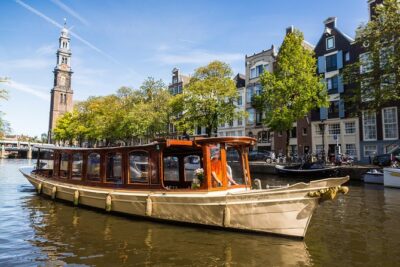
Amsterdam Classic Saloon Boat Cruise with Drinks and Cheese
Read our review →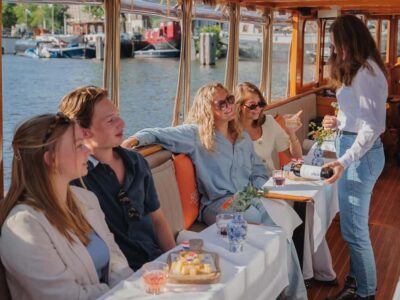
Classic Saloon Boat Cruise with Cheese & Wine
Read our review →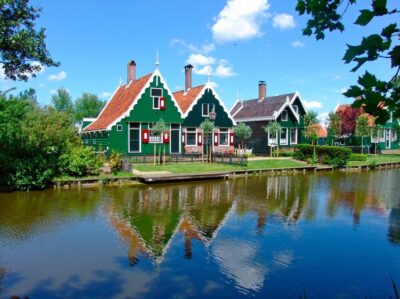
Guided Zaanse Schans, Windmills & Cheese Tour
Read our review →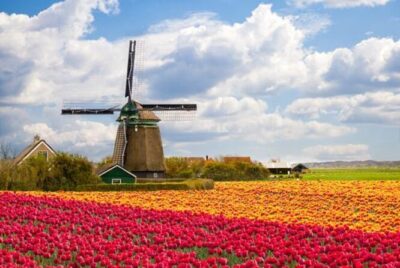
Zaanse Schans Windmills, Clogs and Dutch Cheese Small-Group Tour from Amsterdam
Read our review →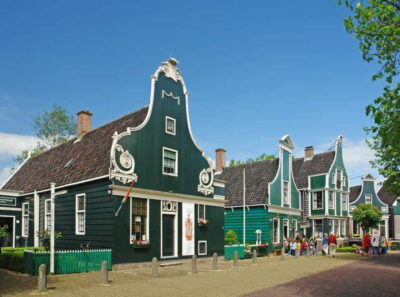

Evening Candle Light Cruise With Wine & Cheese
Read our review →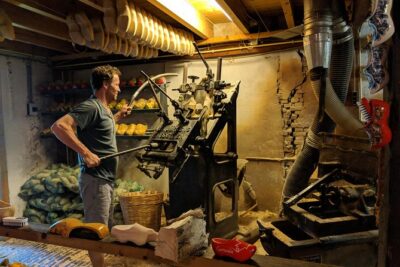
Countryside Bike Tour from Amsterdam: Cheese, Clogs & a Windmill
Read our review →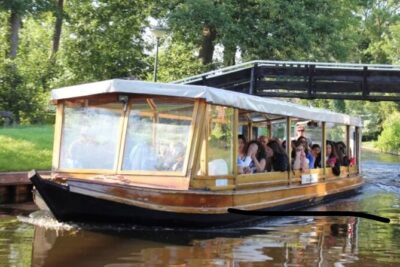
Giethoorn Tour Scenic Cruise, Cheese & Free Time
Read our review →Browse the lists this tour appears in