
REVIEW · PARIS
Paris Art of Pairing Cheese and Wine Tasting in a Cheese Cellar
The memorable part comes first: you put on a protective suit and head downstairs into a cool cheese cellar, where wheels and blocks can weigh up to 77 pounds. I like the small groups of no more than 12 and the chance to taste seven cheeses freshly cut from the block, not prepacked cubes. I also like how the lesson gives you useful pairing ideas for the rest of your Paris meals.
The main consideration is balance. This is as much a lesson in French cheesemaking as it is a wine-pairing class, and some of the time is spent on cheese production and regional traditions. If you want detailed wine instruction above all else, you may find the cheese receives more attention.
Key points at a glance
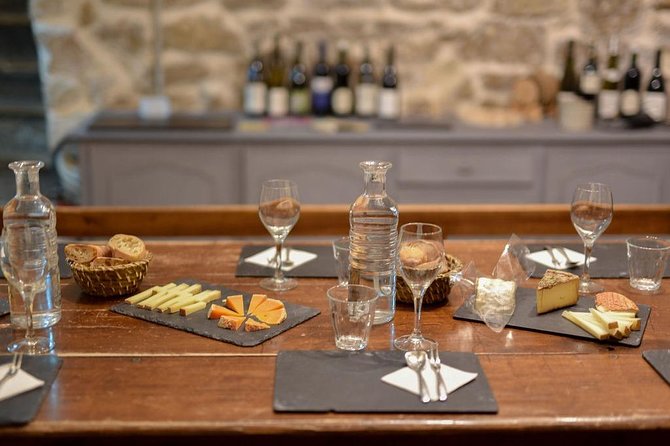
- Seven cheeses and three wines: Taste Gruyère, bôfavre, Camembert, Etivaz, Beaufort, and other selections with matching wines.
- A real aging cellar: Wear the supplied protective suit and see cheeses maturing in a cool room beneath the shop.
- Guides with personality: Hosts including Pierre, Gabriel, Agathe, Paul, Dee, Galina, and Dion bring their own style to the lesson.
- Small-group format: The maximum group size is 12, with occasional very small sessions and more time for questions.
- Useful Paris food advice: You leave with a better sense of how to order, taste, and pair cheese during the rest of your stay.
- Plan for stairs and cold: The cellar is reached by stairs, and warm clothing is a smart choice.
Entering the cheese world on Île Saint-Louis
The experience begins at 39 Rue Saint-Louis en l’Île, in the heart of Paris. This central location makes the tasting easy to fit between sightseeing stops, though you should allow time to find the shop and check your final confirmation for any meeting-point updates.
The listed stop is the Musée Vivant du Fromage, a specialty cheese setting rather than a grand museum hall. That matters. You are close to the product, the tools, the smell, and the people who work with cheese every day. The setting feels more like a working lesson than a formal lecture.
Your guide introduces the basic story of French cheesemaking before leading you toward the cellar. Past sessions have been led by people such as Pierre, Gabriel, Agathe, Paul, Dee, Galina, and Dion. The style can vary by host, but the common thread is clear: expect a friendly teacher who wants you to understand what is on your plate, not simply swallow it with wine.
The guides use the cheese itself as the lesson. You learn how milk, region, aging, and technique affect flavor. That is useful in Paris because menus and cheese boards often assume you already know the difference between a soft-ripened cheese and a firm mountain cheese. After this class, you can approach those menus with fewer guesses.
More Wine and Cheese Tastings in France
- Paris: Montmartre Cheese, Wine & Pastry Guided Walking Tour
★ 4.8 · 2,255 reviews - Private Montmartre Food Tour with Wine, Cheese & Pastries
★ 5.0 · 1,027 reviews - Paris Le Marais Food Tour With 10+ Tastings, Cheese, Wine & More
★ 5.0 · 985 reviews
Why the cellar visit matters
Before tasting, you put on a hygienic protective suit. It may feel slightly comic, but it serves a practical purpose. Cheese is sensitive to its surroundings, and the suit helps protect the cellar’s carefully managed environment.
The cellar is cool, so bring a sweater or light jacket even in warm weather. You descend by stairs, and the cellar is not accessible by another route according to the supplied details. Anyone who has trouble with stairs should consider this before booking.
Inside, you see blocks, rolls, and wheels at different stages of ripening. Some reach about 77 pounds, or 35 kilograms. The size makes the aging process easier to picture. A cheese wheel is not just food waiting behind glass. It is a living product that changes over time, and the cellar is where texture, aroma, and flavor develop.
This is one of the strongest parts of the experience for anyone who likes to know why food tastes the way it does. The cellar gives context before the tasting begins. You are not simply told that a cheese is nutty, creamy, sharp, or earthy. You see the place where those qualities are shaped.
The trade-off is time. A significant part of the 90-minute session may involve cheesemaking methods, regional traditions, and the role of aging. The wine pairing is important, but it is not the only subject. Think of the event as a cheese-centered food class with wine, rather than a sommelier course that happens to include cheese.
Seven cheeses, three wines, and fresh baguette
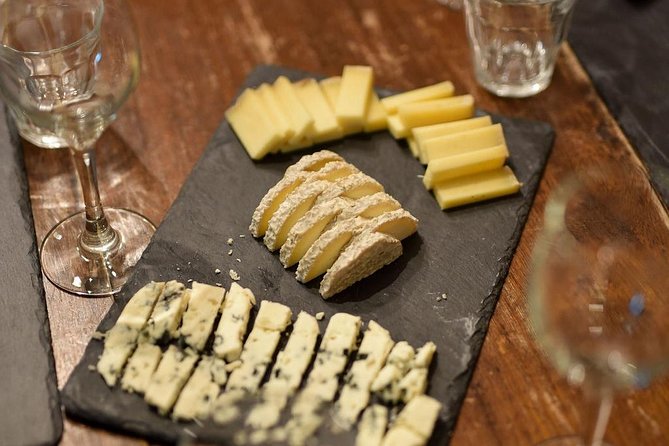
The tasting is built around seven cheeses and three wines, with fresh bread served throughout. The exact selection may change, but examples include Swiss Gruyère, bôfavre from the Jura Mountains, Camembert, Etivaz from the Alps, and Beaufort made from raw cow’s milk.
That gives you a useful range of styles. Gruyère, Etivaz, and Beaufort help you compare firm mountain cheeses. Camembert brings a soft, delicate contrast. Bôfavre adds another hard Swiss cheese with its own regional character. Tasting several styles side by side teaches more than eating a single famous cheese on its own.
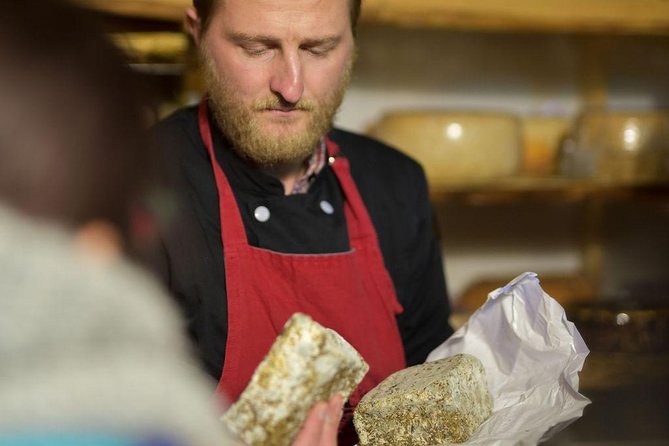
The cheese is cut fresh from the block or wheel. This is a small detail with a big effect. Freshly cut cheese lets you notice differences in aroma and texture more clearly than a piece that has been sitting in a package.
The bread is not an afterthought. Baguette gives you a neutral, familiar base and helps you reset your palate between samples. It also reflects how cheese is commonly eaten in France: as part of a simple combination rather than as an isolated luxury food.
The wine is served to complement the cheese. You alternate bites and sips, looking for ways the flavors change together. A good pairing is not always about making both items taste stronger. Sometimes the wine softens a salty edge, brightens a creamy bite, or gives a firm cheese a cleaner finish.
You should expect the guide to explain the pairings in accessible terms. The strongest value here is practical learning. You can apply it later when choosing cheese in a market, ordering a plate in a restaurant, or deciding which bottle to open at home.
A cheese class first, a wine class second
The title promises the art of pairing cheese and wine, and the session does cover that. Still, the emphasis is usually heavier on cheese than on wine.
You receive three wines, but the available details do not identify the labels, regions, grape varieties, or vintages in advance. That means you should not book this expecting a detailed study of French wine geography. The wines function mainly as partners for the cheeses.
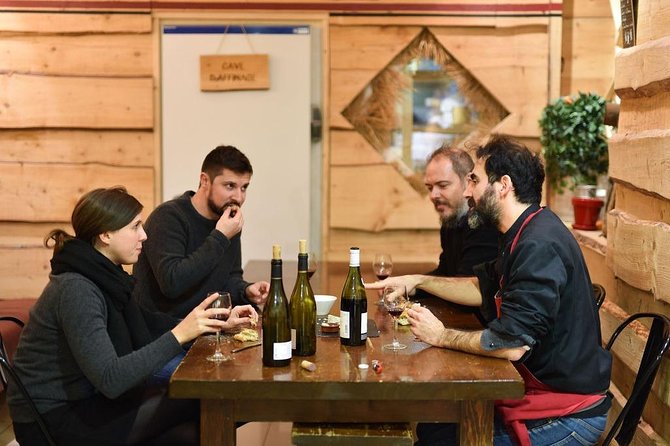
For many people, that is exactly the right approach. The class is relaxed, social, and easy to follow even if you know little about wine. You do not need a developed palate to take part. The guide helps you notice what changes when you eat and drink the two together.
If you already have strong wine knowledge and want technical information about appellations or production methods, the class may feel more basic on the wine side. If you want to stop ordering cheese at random, it delivers more.
I especially like the way the format connects the lesson to the rest of your trip. You can use the new vocabulary immediately. When you see Beaufort, Camembert, or another unfamiliar name on a menu, you have a starting point. The experience also helps with menus in another language, which is one reason it works well early in a Paris visit.
More Wine and Cheese Tastings in Paris
- Paris: Wine and Cheese Lunch
★ 4.9 · 596 reviews - Cheese & Wine Tasting in Montmartre with Local Cheesemonger
★ 5.0 · 470 reviews - French Wine, Champagne And Cheese Tasting Paris SECRET WINE DOOR
★ 5.0 · 464 reviews - Paris Wine Tasting plus Cheese Lunch with an Expert Sommelier
★ 5.0 · 424 reviews
The guides make the difference
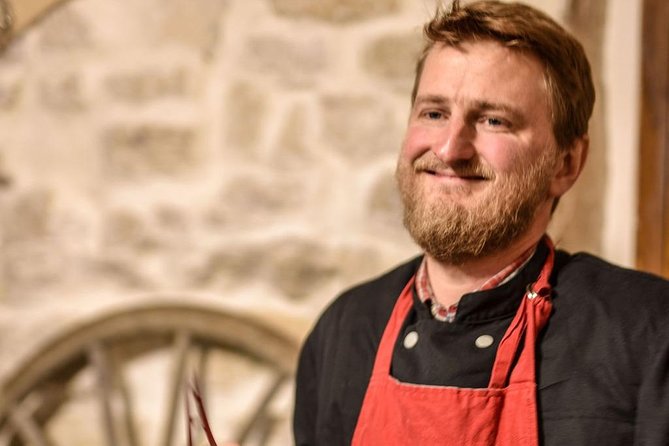
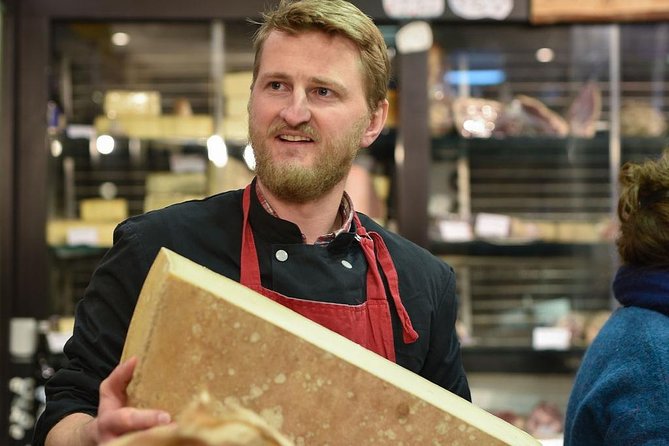
A food class depends heavily on its teacher, and this experience has been led by several named hosts. Pierre is associated with a warm, patient style, while Gabriel is described as an engaging instructor. Agathe brings strong enthusiasm for cheese, and Paul creates a relaxed setting for questions and conversation.
Dee, Galina, and Dion have also led sessions. You cannot choose a particular host unless the provider confirms it, so expect the personality and pacing to vary. That is normal for a class taught by several specialists.
The consistent strength is the human element. The guide does more than recite facts. You get explanations, tasting prompts, and answers to questions about regions, production, and pairings. In very small sessions, including one-person classes, the instruction can become especially personal.
The maximum group size is 12. That is small enough for a guide to keep the session conversational, though the actual group may be smaller or close to the limit. A group of nine or ten still gives you a social experience without turning the tasting into a crowded demonstration.
I would choose this for couples, friends, solo visitors, and families with adults who can legally drink. The minimum drinking age is 18. Since the event involves alcohol, anyone under that age should not expect to take part in the wine portion.
Is $84.69 a fair price?
At $84.69 per person, this is not a cheap snack stop. You are paying for more than the food and wine. The price includes a professional cheese and wine master, access to the cellar, the protective suit, instruction, seven cheese tastings, three wines, and bread.
For a 90-minute activity, the value is strongest if you care about learning as well as eating. A simple cheese plate can cost much less, but it will not show you a working aging cellar or explain how to compare different cheeses. You also avoid having to decode a French menu on your own.
The small group adds value. A maximum of 12 gives the guide a chance to answer questions, and a smaller session can feel almost like a private lesson. You are not paying for a large bus tour with a quick sample at the end.
The value is weaker if you mainly want a large amount of wine or a long meal. This is a tasting, not dinner. The bread completes the menu, but you should not treat it as a full evening meal.
I would book it for the first or second day of a Paris stay if your schedule allows. The pairing advice can shape your later meals, and the lesson gives you confidence when ordering cheese. It also makes a good mid-trip break because you can sit, taste, and listen instead of spending another hour crossing the city.
Practical details that affect your visit
The experience lasts about one hour and 30 minutes. It begins and ends at the meeting point, with no hotel pickup or drop-off. The location is near public transportation, and most people can participate, but the cellar stairs are the key physical point to consider.
Wear something warm underneath your protective suit. The cellar must stay cool for the cheese, so it may feel chilly after you have been walking around Paris.
Use the mobile ticket and read the latest booking message before leaving for the shop. One past location change created confusion for a participant who relied on an older printed ticket and missed the opening portion. The safest approach is to confirm the address on the day of the experience rather than assume an earlier message is still current.
Cancellation is free up to 24 hours before the start time. Within 24 hours, you do not receive a refund, and late changes are not accepted. The activity also requires a minimum number of bookings. If the provider cancels because that minimum is not reached, you are offered another date or experience, or a full refund.
Who should book this Paris tasting?
Book it if you like food with a story, enjoy small-group teaching, or want practical help with French cheese. It is especially useful for people who normally see a cheese list and recognize only Brie and Camembert.
It also suits a first-time Paris visitor who wants a local food activity without committing to a long dinner. The 90-minute format is manageable, and the central meeting point makes it easy to add to a day on Île Saint-Louis.
I would be cautious if stairs are difficult for you, if cold rooms are uncomfortable, or if you want wine to receive equal technical attention. You should also plan a proper meal later if you have a large appetite.
Should you book it?
I would book this experience for the cellar access, the fresh-cut cheeses, and the guide-led comparisons. The most useful result is not simply knowing that French cheese tastes good. You learn how to notice texture, age, region, and pairings, then use that knowledge at the next café or market.
Skip it only if you want a full meal, a serious wine seminar, or a completely self-guided tasting. For a friendly introduction to French cheese with enough wine to make the pairings work, the price is reasonable and the format is easy to fit into a Paris itinerary.
FAQ
Where does the cheese and wine tasting begin?
It begins at 39 Rue Saint-Louis en l’Île, 75004 Paris, France. The activity ends back at the meeting point.
How long does the experience last?
It lasts approximately one hour and 30 minutes.
How many people can join the experience?
The maximum group size is 12 travelers.
What food and drink are included?
The tasting includes seven cheeses, three wines, and fresh bread.
Which cheeses might be included?
Possible selections include Swiss Gruyère, bôfavre, Camembert, Etivaz, and Beaufort. The exact selection may vary.
Is the wine included in the ticket?
Yes. Three wine tastings are included.
Is the cellar accessible by elevator?
No elevator access is provided in the details. The cellar is accessible by stairs.
Should I bring warm clothing?
Yes. The cellar can be cold, so warm clothing is recommended. A hygienic protective suit is provided.
Can I cancel for a full refund?
Yes, if you cancel at least 24 hours before the experience start time. Cancellations within 24 hours are not refunded.
More Cheese Farm Visits in Paris
- Authentic Farm Tour with Pizza, Cheese, Wine & Limoncello Tasting
★ 5.0 · 698 reviews - Sorrento: Farm Tour with Cheese Tasting & Pizza Making Class
★ 5.0 · 503 reviews - Amsterdam: Experience Zaanse Schans Windmills & Cheese Farm
★ 4.1 · 354 reviews - Amsterdam private tour to windmills, cheese farm and villages
★ 5.0 · 262 reviews
Just added around Paris
- Paris: Wine and Cheese Pairing★ 5.0 · 4 reviews
- French Wine and Cheese Master Class Near the Eiffel Tower★ 5.0 · 6 reviews
- Private wine tour to Sancerre vineyards from Paris with Sommelier★ 5.0 · 11 reviews
- Paris Wine with Cheese Pairing & Tasting Small Group Class★ 5.0 · 6 reviews
- Paris Wine and Cheese Tastings Class near Le Marais★ 5.0 · 4 reviews
- Wine & Cheese in Montmartre: A True Taste of France 6-ppl Max★ 5.0 · 6 reviews
- Paris Wine and Cheese Pairing Private Masterclass in a Bistrot★ 5.0 · 7 reviews
- Paris Marché d’Aligre Walking Tour with Chocolate and Cheese Tasting★ 3.5 · 24 reviews
Paris Cheese Tours, compared.
Montmartre Cheese, Wine & Pastry Guided Walking Tour
Read our review →
Private Montmartre Food Tour with Wine, Cheese & Pastries
Read our review →
Paris Le Marais Food Tour With 10+ Tastings, Cheese, Wine & More
Read our review →
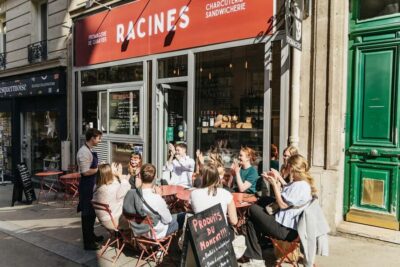
Cheese & Wine Tasting in Montmartre with Local Cheesemonger
Read our review →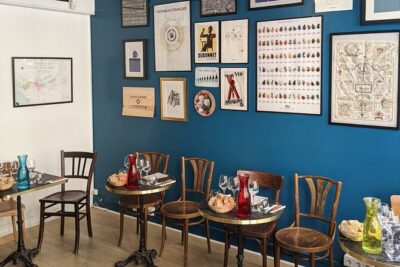
French Wine, Champagne And Cheese Tasting Paris SECRET WINE DOOR
Read our review →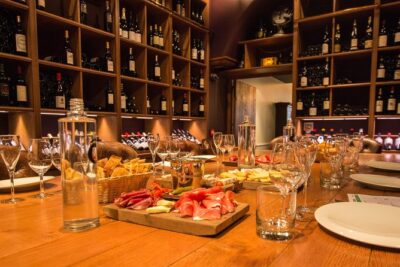
Paris Wine Tasting plus Cheese Lunch with an Expert Sommelier
Read our review →
Paris St Germain Food Tour with Cheeses, Foie Gras, Wines & More
Read our review →Browse the lists this tour appears in