
REVIEW · ITALY
Reggio Food Tour: Parmigiano, balsamic, cured meats & wines
The best part of this Reggio Emilia food tour is seeing how much time and care goes into foods you may normally grab from a shop shelf. You watch Parmigiano Reggiano being made, taste balsamic vinegar aged from three to 25 years, and meet the people who keep these old methods going.
I like the small group limit of five, which makes it easier to ask questions and hear the producers. I also like the easy train-station meeting point, especially if you are staying in Bologna, Modena, or Milan. The main consideration is timing: although the booking information lists eight hours, the working schedule usually runs from 8:30 am until about 1:00 or 1:30 pm, and you need to choose between cured meats and the local wine stop.
Key points to know before booking
- Parmigiano at the source: See the cheese-making process at a dairy and compare wheels of different ages.
- Balsamic with a long clock: Taste traditional vinegar aged from three to 25 years and learn how to use it at home.
- Two possible final stops: Pick a salumificio for cured meats, or a vineyard for Lambrusco and Spergola.
- A practical base: Meet and finish at Reggio Emilia’s central train station, with transport between food producers.
- Small-group attention: The group is limited to five people, with tours offered in English, Italian, or Spanish.
- Plan for a country visit: Comfortable shoes are required, and the tour is not suitable for people with mobility impairments.
Why this is a strong introduction to Emilia-Romagna’s Food Valley
Emilia-Romagna is one of Italy’s best regions for eating with a sense of place. Its food traditions stretch from the Adriatic coast to the Apennine Mountains, with more than 40 traditional products protected by quality certifications.
That label matters here. Parmigiano Reggiano, traditional balsamic vinegar, Prosciutto, salami, coppa, and regional wines are not simply local specialties in the loose sense. Their production follows rules, aging methods, and geographic traditions that help protect the name and the way the food is made.
This tour gives you a useful way to understand that system. Instead of rushing through a market and sampling finished products, you visit producers and see the work behind them. You can then taste the food with a better sense of why one cheese, vinegar, or cured meat costs more than another.
I find the farm-to-table element especially valuable. The food is rooted in modest country cooking, but the quality depends on patience, skill, and strict methods. The day brings those ideas together in a way that is easier to remember than a general food lecture.
More Cheese Walking and Food Tours in Italy
- Florence Food Tour of 10+ Authentic Tastings with Cheeses & Wines
★ 5.0 · 155 reviews - From Parma: Parmigiano and Parma Ham Guided Food Tour
★ 4.8 · 144 reviews - Private Full Day Parma Food Tour: Parmesan Cheese, Parma Ham, Lunch, Vinegar
★ 5.0 · 127 reviews
Starting at Reggio Emilia station at 8:30 am
The morning begins at 8:30 am in Piazzale Guglielmo Marconi, directly in front of Reggio Emilia’s central train station. This is a smart meeting point if you are basing yourself in another city.
Reggio Emilia is reachable by train from Bologna, Modena, and Milan. One direct review of the day notes that the ride from Bologna took less than an hour, making this tour possible as a day trip from there. Still, check train times carefully so you arrive before the group leaves.
Your guide drives you between the stops. Alessandro has led the tour for several guests, and Valentina has also guided the experience. Both are described in the supplied information as friendly, informed local hosts, with Alessandro also sharing background about Reggio Emilia and the surrounding area.
The group limit of five is a real advantage. You are not trying to hear a producer over a large crowd, and there is more room for questions about aging, production, and serving suggestions. The small vehicle format also keeps the day personal rather than turning it into a large coach outing.
Wear comfortable shoes. The tour goes ahead in rain or shine, and the stops are working food-production sites rather than polished city attractions. Bring identification, or a copy of your passport or ID card, as requested in the practical information.
Stop one: Parmigiano Reggiano at the dairy
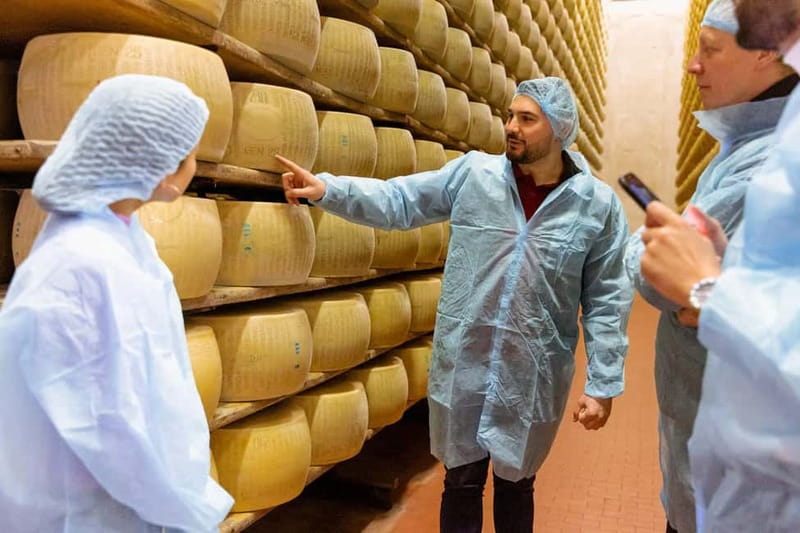
The first visit focuses on Parmigiano Reggiano, often called the king of Italian cheeses. At the dairy, you see the production process and learn what goes into making a single wheel.
This is where the tour earns its price. A finished wedge tells you almost nothing about the scale of the work. At the dairy, you can see the cheese in production and take photographs among large numbers of Parmigiano wheels. The sight of those wheels makes the aging process feel real rather than abstract.
The visit lasts about an hour and a half, including the guided tasting. You sample Parmigiano Reggiano at different ages and train your palate to notice the changes. The point is not only to decide which age you prefer. You learn that time changes the cheese’s texture, strength, and use in cooking.
You might find one age better for eating on its own and another more suited to grating over pasta or serving with other foods. The producer’s explanation helps connect the tasting to the production process.
I particularly like this stop for first-time visitors to Emilia-Romagna. You do not need to know much about cheese before arriving. The comparison of different ages gives you a simple framework for shopping later, when labels and prices can be confusing.
There is a practical limit here. The dairy is a production site, not a long museum visit. If you want a detailed study of every legal rule surrounding Parmigiano Reggiano, this is not that kind of tour. The focus is on seeing the work, meeting the producer, tasting the result, and understanding why the cheese is distinctive.
Stop two: Acetaia Picci and the patient art of balsamic vinegar
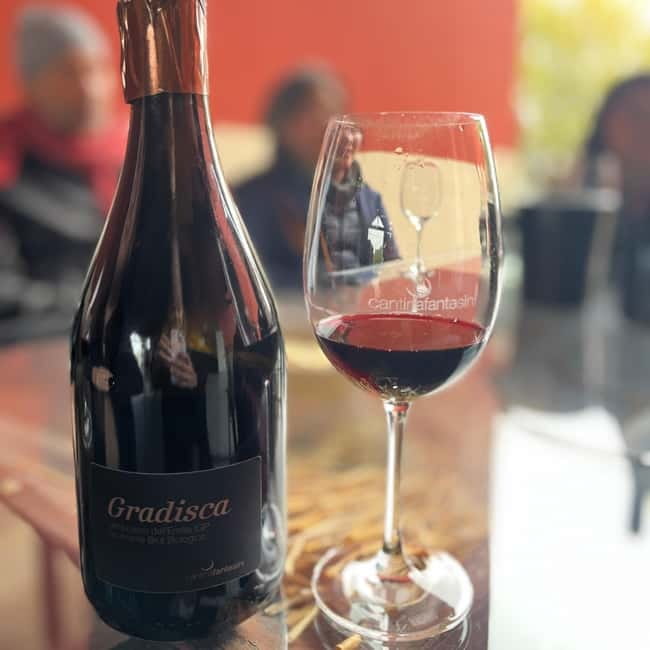
Next comes Acetaia Picci, a balsamic vinegar producer. The visit lasts about an hour and includes an explanation of how traditional balsamic is made, followed by a tasting.
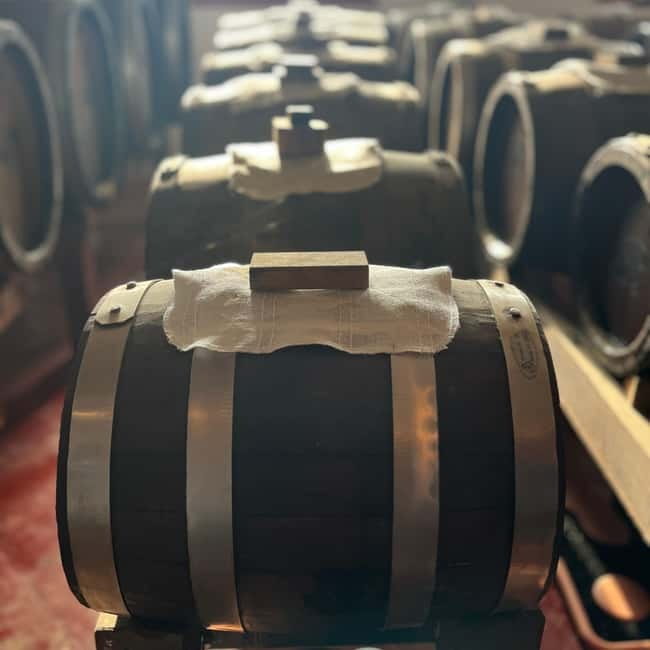
This stop may surprise you more than the cheese dairy. Traditional balsamic vinegar is made from cooked grape must and aged over time in wooden casks. The supplied tasting includes vinegars aged from three to 25 years, which lets you compare the effect of long aging in a clear, memorable way.
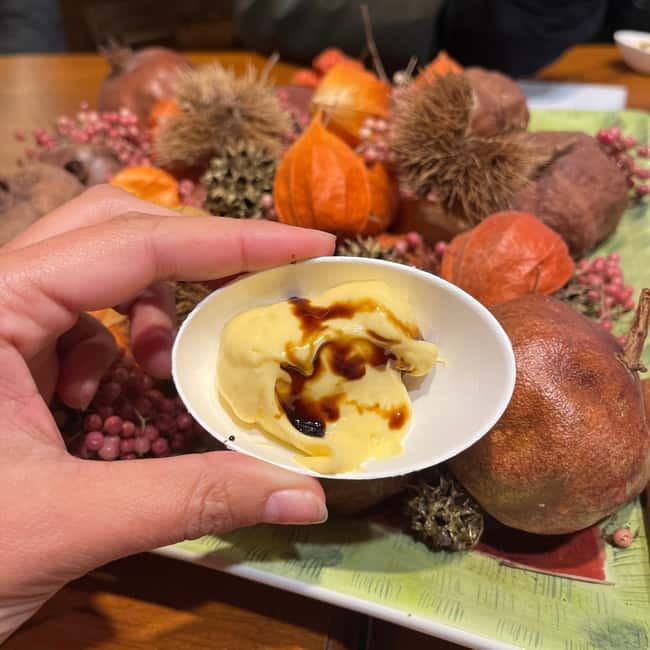
The oldest bottle is not automatically the right choice for every dish. The guide explains how to use balsamic vinegar in your own cooking, which is more useful than simply tasting it from a spoon and moving on. You learn how a small amount can be used to finish food and how to choose a vinegar for different purposes.
A previous visit included buying balsamic from the producer to take home. That makes sense here, but take your time before purchasing. You will have tasted several ages, so you can decide if you want an everyday bottle or a special-occasion product.
The most important lesson is patience. A small bottle of well-aged traditional balsamic represents years of care. That helps explain why authentic products can cost far more than supermarket vinegar with a similar dark color.
Acetaia Picci is also a good contrast to the dairy. The first stop shows a busy food-making operation with many cheese wheels. The vinegar visit shifts your attention to small amounts, wood, time, and careful aging. Together, the two stops show different sides of the region’s food culture.
More Wine and Cheese Tastings in Italy
- Authentic Farm Tour with Pizza, Cheese, Wine & Limoncello Tasting
★ 5.0 · 698 reviews - Cooking class with Pasta, mozzarella and Tiramisu with wine
★ 5.0 · 549 reviews - Amalfi: Make Fresh Pasta, Mozzarella & Tiramisù with wine
★ 5.0 · 503 reviews - Amalfi: Make Fresh Pasta, Mozzarella, & Tiramisù with Wine
★ 5.0 · 305 reviews
Stop three: Choose cured meats or local wines
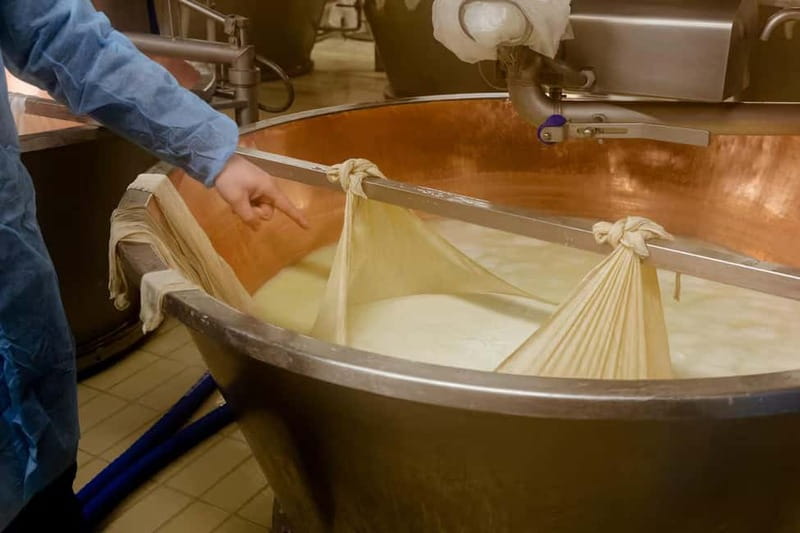
The final food stop depends on the option you select. You can visit a salumificio for cured meats, or a vineyard for Lambrusco and Spergola. This choice changes the character of the day, so think about what you most want to learn before booking.
The cured-meat option at Salumificio Ca’ Bianca
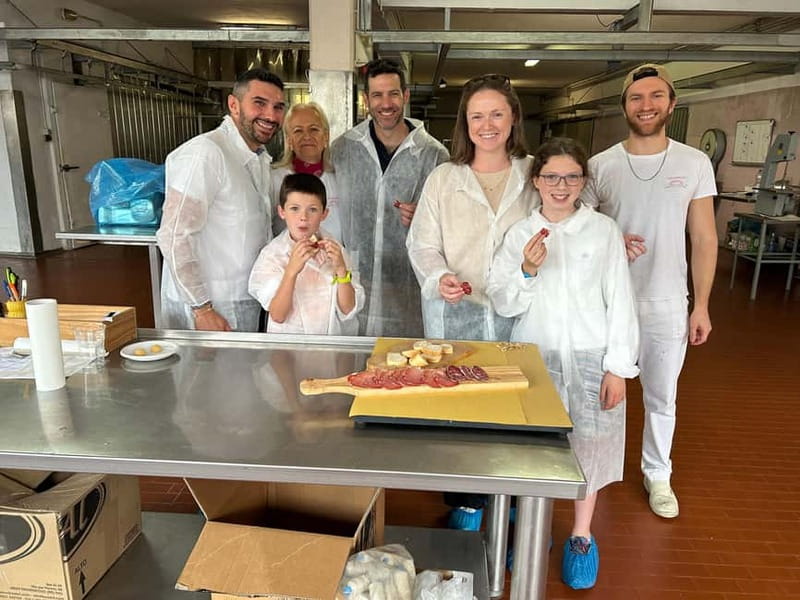
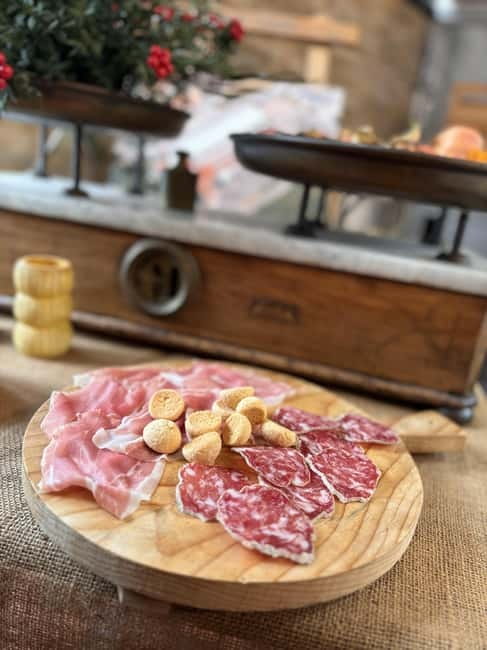
At Salumificio Ca’ Bianca di Catellani Denis, you learn how regional meats such as salami, coppa, and Prosciutto are produced and aged. The tasting includes different meats based on seasonal availability.
This is the best choice if you want a broader picture of Emilia-Romagna’s everyday table. The tasting is not limited to one famous product. You compare several styles and hear about the methods used to process and age them.
The stop lasts about an hour. The producers are described as welcoming, and their explanations cover which foods pair well together. That makes the visit useful beyond the tasting itself. You gain ideas for building a simple plate of cured meats and for understanding why texture and aging differ from one product to another.
Seasonal availability is important. The exact selection is not fixed, so do not book this option expecting a particular cut or brand. The changing selection is part of visiting a working producer, but it means you should arrive ready to taste what is available that day.
The Lambrusco and Spergola option
The wine alternative takes you to a vineyard for a tasting of three wines with small bites. The focus is on Lambrusco, a sparkling red, and Spergola, a sparkling white.
This is a good pick if wine helps you understand a region. Lambrusco is often treated casually outside Italy, yet tasting it in its home area gives you a better feel for how it fits with local food. Spergola adds a white-wine contrast and keeps the tasting from becoming a single-variety stop.
The wine option may suit you better if you have already visited salumerie elsewhere in Italy, or if you want a lighter final stop. It is also a natural match for the cheese and balsamic visits, since you can think about how the wines work with the foods tasted earlier.
The information does not specify the exact vineyard or the particular wines served. That means you should choose this option for the regional tasting and producer visit, not for a guaranteed vintage or label.
What the timing and transport really mean
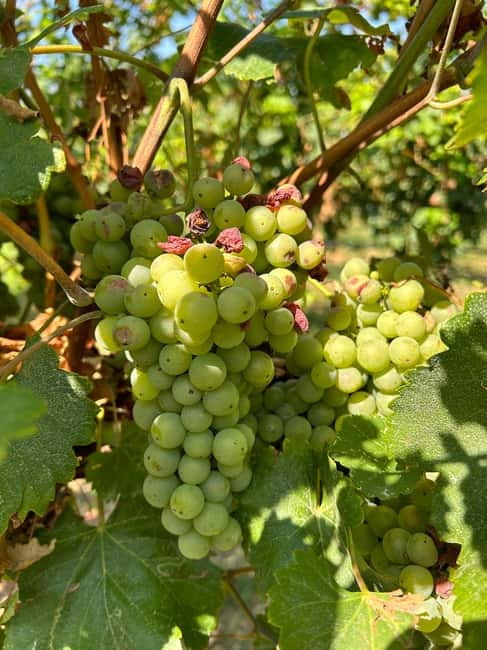
The published duration is eight hours, while the detailed schedule says the tour generally runs from 8:30 am to 1:00 or 1:30 pm and takes around five to six hours. I would treat the morning and early afternoon schedule as the useful planning guide, but confirm the exact timing when you check availability.
Transport from and back to Reggio Emilia station is included. This removes the need to rent a car or work out connections between rural producers. It also means you can enjoy the tastings without worrying about driving afterward.
At the end, you return to the station near the city center. The guide can suggest traditional restaurants for lunch or places to visit in Reggio Emilia. Lunch itself is not included, so this advice is handy if you want to keep eating after the tour.
The tour runs in all weather. Plan for a country outing, not a flexible indoor program. Comfortable shoes are important, and the experience is not suitable for people with mobility impairments.
Is the $260.56 price fair?
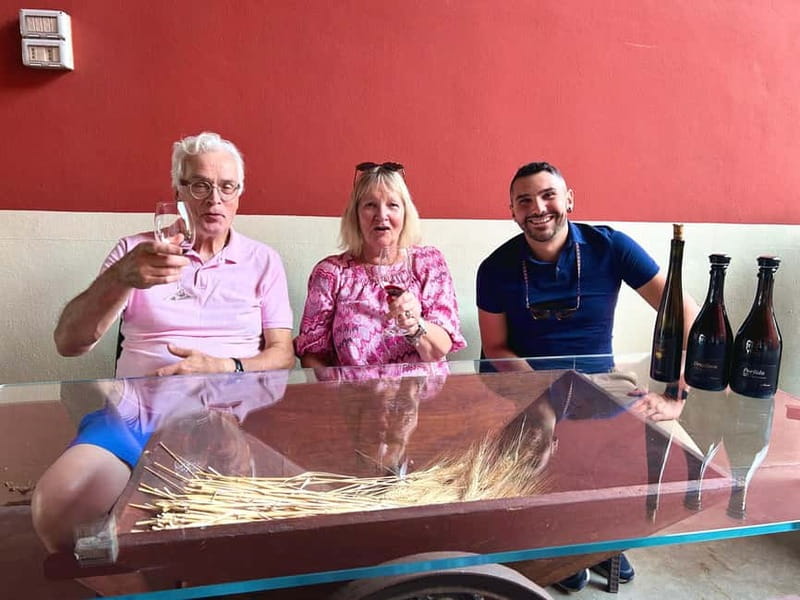
At $260.56 per person, this is not a cheap tasting. The price makes more sense when you count what is included: transport from the station, a local guide, producer explanations, admission to the dairy and acetaia, guided tastings at both, and your selected third stop with either cured meats or three wines and nibbles.
You are also paying for access to working producers rather than just a plate assembled in a city center. The small group limit of five adds value because you can ask questions and hear the explanations without a large crowd.
The value depends on your interests. If you only want to eat a quick plate of cheese and salami, you can spend less at a market or restaurant. If you want to understand how these foods are made, taste different ages, and avoid the hassle of rural transport, the cost is easier to justify.
The tour is also strongest for people who want several food experiences in one morning. You get cheese, balsamic, and either cured meats or wine without arranging three separate visits. The drawback is that you do not get a full lunch, and the exact third-stop products can vary.
Free cancellation is available up to 24 hours before departure, and you can reserve now and pay later. Those terms are useful if your route through northern Italy is still changing.
Who should book this food tour?
I would recommend it to first-time visitors who want to understand why Emilia-Romagna is so important to Italian food. It works especially well for couples, friends, and small families who prefer direct contact with producers over a large organized outing.
It is also a strong choice for anyone staying in Bologna or Modena without a car. The train-station meeting point and included local transport keep the day simple.
Choose the cured-meat option if you want to explore salami, coppa, and Prosciutto in more detail. Choose the wine option if Lambrusco and Spergola interest you more, or if you want three regional wines with nibbles.
I would hesitate to recommend it if you have mobility limitations, dislike early starts, or want a relaxed lunch built into the schedule. The tour packs three production visits into a half-day and expects you to move through working sites in comfortable shoes.
Should you book it?
Book this tour if you want to see the people and processes behind Parmigiano Reggiano and traditional balsamic, not just taste the finished products. The different cheese ages, balsamic samples, and choice of cured meats or wine give you plenty to compare, while the five-person limit keeps the day personal.
The strongest reason to go is the combination of access and convenience. You can reach Reggio Emilia by train, meet at the central station, and let the guide handle the rural driving. Just plan for an early start, confirm the final stop you want, and leave room for lunch after you return.
FAQ
Where does the tour start?
It starts at 8:30 am at Reggio Emilia’s central train station, in Piazzale Guglielmo Marconi, in front of the main entrance.
Where does the tour end?
The tour ends back at the same meeting point, Reggio Emilia’s central train station.
Can I reach the meeting point by train?
Yes. Reggio Emilia is reachable by train from Bologna, Modena, Milan, and other major cities in the area.
How long does the tour take?
The booking information lists a duration of eight hours, while the detailed schedule says the tour usually lasts about five to six hours and ends around 1:00 or 1:30 pm. Check availability for the exact timing.
Which languages are available?
The tour is offered in English, Italian, and Spanish.
What are the food stops?
The tour includes a Parmigiano Reggiano dairy and a traditional balsamic vinegar producer. For the third stop, you choose between a cured-meat producer and a vineyard serving Lambrusco and Spergola.
What should I bring?
Bring a passport or ID card, or a copy, and wear comfortable shoes.
Can I cancel the booking?
You can cancel up to 24 hours in advance for a full refund. You can also reserve now and pay later.
More Parmesan and Balsamic Tours in Italy
- Tour Parmigiano Reggiano dairy and Parma ham
★ 5.0 · 601 reviews - Parma: Parmigiano Production and Parma Ham Tour & Tasting
★ 4.9 · 554 reviews - Guided group tour TastyBus: Parmesan Cheese and Parma Ham
★ 5.0 · 241 reviews - From Parma: Parmesan, Parma Ham & Balsamic Vinegar Tour
★ 4.9 · 187 reviews
Just added around Italy
- Wine Tasting with Cured Meats & Cheeses in Florence★ 5.0 · 2 reviews
- Vico Equense: Tour in the dairy “Mozzarella Experience”★ 5.0 · 19 reviews
- Tuscany: Ripalte Design Winery Wine and Cheese Tasting Tour★ 4.7 · 15 reviews
- From Parma/Cinque Terre: Truffle & Parmesan Picnic (Tasting)★ 5.0 · 2 reviews
- Turin: Gastronomy tasting through oil, wine and cheese★ 5.0 · 2 reviews
- The Valpolicella food & wine driving tour: cheese factory+ winery★ 5.0 · 6 reviews
- Prosecco Hills Wine and Cheese Gourmet Discovery★ 5.0 · 6 reviews
- Premium Cheeses and Gins Tour in the Prosecco hills. Full lunch!★ 5.0 · 3 reviews
Italy Cheese Tours, compared.
Authentic Farm Tour with Pizza, Cheese, Wine & Limoncello Tasting
Read our review →
Sorrento Farm by Tuk Tuk: Cheese, Limoncello & Hands-On Pizza
Read our review →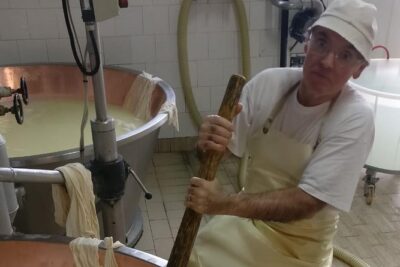
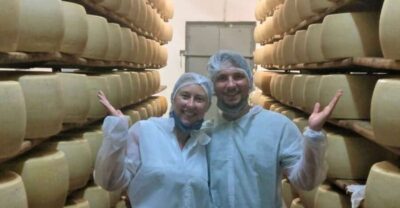
Parmigiano Production and Parma Ham Tour & Tasting
Read our review →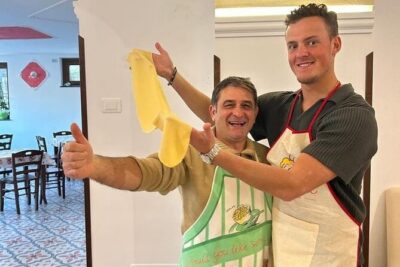
Cooking class with Pasta, mozzarella and Tiramisu with wine
Read our review →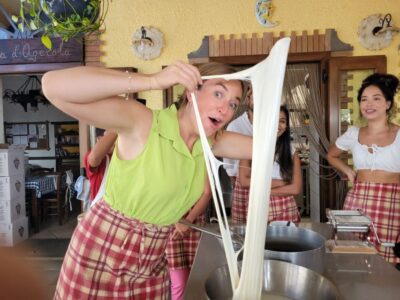
Make Fresh Pasta, Mozzarella & Tiramisù with wine
Read our review →
Make Fresh Pasta, Mozzarella, & Tiramisù with Wine
Read our review →Browse the lists this tour appears in