
REVIEW · BORDEAUX
Tasting of 6 Bordeaux wines and pairing charcuterie & cheese
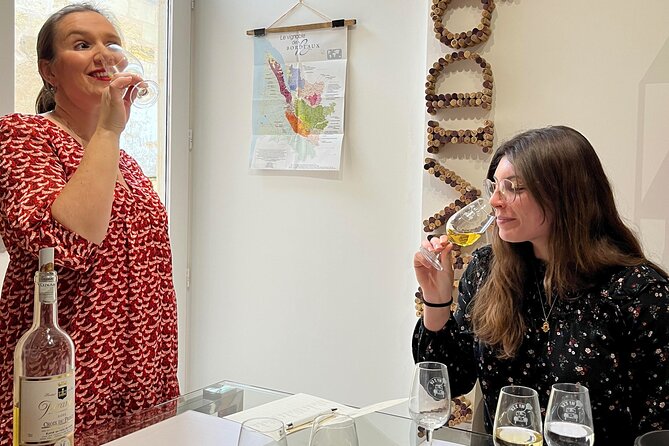
Bordeaux wine makes more sense when you stop treating it as a list of grand château names and start tasting the difference between the left and right banks. This compact session does exactly that, pairing six wines with a practical lesson on soil, grape varieties, blends, labels, and French classifications.
I especially like the tiny group size, capped at six, and the way Mathilde and Cécilia use aroma exercises to help you put words to what is in your glass. I also like the mix of family estates using organic farming and Grands Crus Classés, so you are not tasting only famous, costly labels.
The main thing to consider is the food pairing. Charcuterie and cheese are included, but portions are tasting-size, and the food may be served as a small selection rather than alongside every wine. The advertised lineup also describes one mystery wine, two dry whites, three reds, and one sweet wine, which appears to total seven pours, so it is sensible to confirm the exact sequence when booking.
Key points at a glance
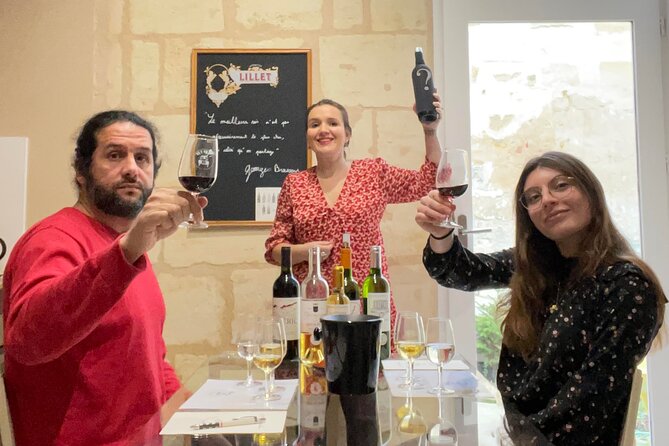
- Six Bordeaux wines: Expect a mystery wine, dry whites, reds, and a sweet style, with the exact lineup worth confirming.
- Left Bank versus Right Bank: The tasting explains how soil, grapes, and blending shape Bordeaux’s contrasting styles.
- Mathilde and Cécilia lead the session: Both are trained at the University of Wine and host in clear English.
- A small, personal setting: The maximum group size is six, with the tasting held in a courtyard, cellar, or furnished room.
- Charcuterie and cheese included: The pairings show how food changes wine, though portions are light.
- Useful for a short Bordeaux stay: The session lasts about 1 hour and 15 minutes and ends where it begins.
Why this tasting is a smart first step in Bordeaux
Bordeaux can feel needlessly complicated at first. French labels often emphasize the estate or appellation rather than the grape variety, and the same broad region produces dry whites, structured reds, rosé, and sweet wine.
This tasting gives you a framework before you start buying bottles or planning a vineyard excursion. You learn how Bordeaux is divided, how the banks differ, why blending matters, and how the local growing conditions affect what you taste.
I like that the lesson is built around actual glasses rather than a long talk followed by a token sample. You compare wines while the information is fresh. A dry white from one side of the Gironde can be set against one from the other side, then the reds show how blends and soil influence body, fruit, and structure.
The session is also useful if you already drink wine. You may know your favorite styles, but Bordeaux labels can still be hard to read. The guide explains French labeling and classification in plain terms, helping you recognize what you are buying later.
More Wine and Cheese Tastings in France
- Professional – Bordeaux Wine and Cheese Tasting with a walking tour
★ 5.0 · 218 reviews - Bordeaux: Wine Masterclass with Cheese and Charcuterie Board
★ 4.9 · 184 reviews - Introduction to Bordeaux wines paired with cheeses & charcuterie
★ 5.0 · 175 reviews
Meeting Mathilde or Cécilia near Av. Thiers
The meeting point is 25 Av. Thiers, Bordeaux, and the activity returns there at the end. You receive confirmation when you book, and a mobile ticket makes arrival straightforward.
The address is near public transportation, which matters because Bordeaux’s center is easy to reach from other parts of the city. Still, pay close attention to the starting time if you are arriving by train, ship transfer, or a long regional connection.
One booking ran into a difficult schedule. The arrival train took almost two hours, and the last return connection left soon after the scheduled tasting. The host agreed to begin early, but the presentation had to be shortened to about 40 minutes. That is not a fair way to experience a tasting built around comparison and conversation.
If your day involves a cruise ship, make the timing your first check. An earlier session at 11:30 is available, and that may work better than a later start. Do not assume the host can change the time at short notice.
What the 75-minute session covers
The tasting lasts about 1 hour and 15 minutes. That is enough time for a useful introduction, six glasses, food pairing, questions, and some informal advice, but it is not a full vineyard visit or a leisurely meal.
The sequence begins with the basic language of Bordeaux wine. You learn about:
- Bordeaux’s appellations
- Left Bank and Right Bank geography
- Terroir and soil
- Main grape varieties
- Blending
- French classifications
- How to read a French wine label
- How to identify aromas and tastes
A mystery wine adds a small game to the lesson. Rather than being told everything in advance, you use your nose and palate first, then discuss what you noticed. This helps you understand that tasting is not about producing fancy words. It is about paying attention and making comparisons.
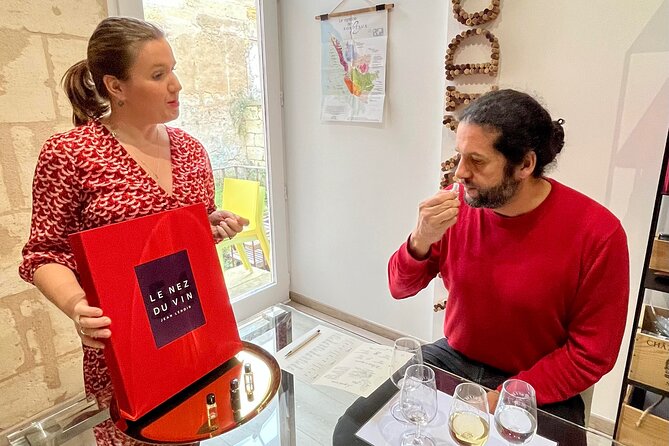
The hosts also use aroma exercises. You smell separate aromas before returning to the wine, which gives you a practical way to identify fruit, floral, earthy, or spice notes. If wine vocabulary usually feels slippery, this part can make it more concrete.
Mathilde and Cécilia are trained at the University of Wine. Their style, based on the available feedback, is friendly and clear rather than stiff. Cécilia is particularly good at explaining the difference between the banks, while Mathilde is praised for making label reading, blending, and regional differences easy to follow.
Other hosts have also led individual sessions, including Ilona and Ilo, so the person assigned may vary. The common thread is a local, educational approach rather than a scripted tasting designed for a large crowd.
Comparing Bordeaux’s white wines
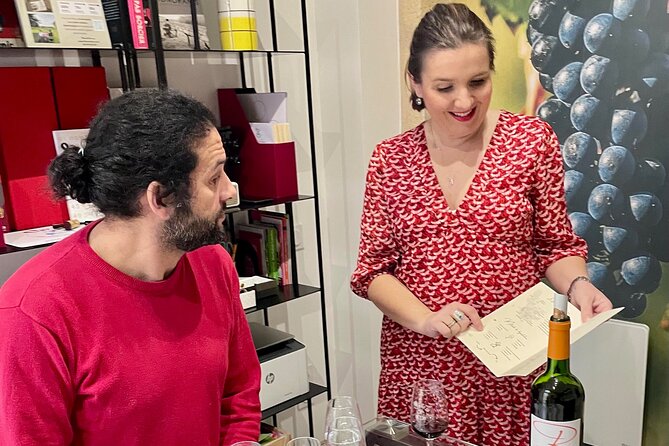
The dry white portion is one of the more useful parts for anyone who thinks of Bordeaux as a red-wine-only region. The tasting includes dry whites from the left and right banks, allowing you to compare styles within the same broad region.
The point is not simply to decide which glass you like best. You see how location, grapes, and blending can change freshness, texture, aroma, and finish. This is especially helpful when you shop for Bordeaux white wine later and need more than a familiar grape name to guide you.
The exact serving order may change, and the supplied description has a counting inconsistency. It says six wines, but lists one mystery wine, two dry whites, three reds, and one sweet wine. Some of the tasting feedback also describes variations such as two whites, two reds, a rosé, and a Sauternes-style sweet wine.
That means you should treat the lineup as a representative Bordeaux selection rather than a fixed bottle list. If a particular style matters to you, ask before booking.
More Cheese and Charcuterie Boards in Bordeaux:
- Bordeaux Wines Masterclass paired with cheeses & charcuterie
★ 5.0 · 110 reviews - Tasting of Bordeaux red wines, wine and charcuterie pairings
★ 5.0 · 24 reviews - Budapest: Wine, Cheese, and Charcuterie Tasting
★ 4.9 · 647 reviews - Hungarian Wine Tasting (with Cheese and Charcuterie) in Budapest
★ 5.0 · 531 reviews
The red wine lesson: blends, banks, and personal taste
The red wines form the heart of the Bordeaux lesson. You compare wines from both banks and learn why Bordeaux is famous for blending rather than relying on one grape in every bottle.
This is where the teaching becomes personal. One participant discovered a preference for bold wines, while another found more appeal in fruitier styles. The host connected those preferences to left and right bank characteristics, soil, and the makeup of the blend.
You do not need prior wine knowledge. The tasting encourages you to notice what you like before worrying about whether your answer is technically correct. If you prefer a fuller, firmer red, say so. If you want softer fruit, say that instead. The guide can then explain the regional and winemaking reasons behind your response.
I find this approach more useful than being told which wine is best. Bordeaux is not one flavor. Your own taste is the deciding factor, and the session gives you a way to identify it.
The selection may include bottles from family estates practicing organic farming as well as Grands Crus Classés. That range helps you compare prestige and style without making the lesson all about price. A famous classification can be interesting, but it does not guarantee that every bottle will suit your palate.
The sweet wine and the food pairing
The sweet wine gives the tasting a broader finish. Bordeaux is known not only for dry reds and whites but also for prized sweet wines, and the final glass shows how sweetness, acidity, and food can work together.
Charcuterie and cheese are included as snacks, with the goal of showing how food changes your impression of wine. A bite can soften acidity, bring out fruit, or make a wine seem fuller.
Keep your expectations in check. This is a tasting board, not lunch. The portions are described as bite-sized, and the selection may be limited to a couple of cheeses and meats. One session had food served toward the end rather than matched with every glass, while another included pairings with individual wines.
If you are vegetarian, state that clearly at booking and remind the host at the start. A vegetarian request was not properly honored in one case, so this is worth checking rather than assuming the board will be adjusted.
A picnic lunch with local products is available by reservation, but it is not included in the $54.44 price. That option may suit you if you want something more substantial before or after the tasting.
Courtyard, cellar, or furnished tasting room
The setting changes with the season. You might sit in a private courtyard, a cellar, or a furnished room. That flexibility gives the experience a more personal feel than a large commercial tasting hall, but it also means you should not book expecting one specific backdrop.
The small room is part of the appeal. With no more than six people, the host can adapt the explanation to your level. Beginners can ask basic questions without feeling out of place, while experienced drinkers can spend more time on blending, classification, or buying advice.
The informal setup also encourages local recommendations. Mathilde and Cécilia have helped people choose a bottle to take home and suggested places to eat or visit in Bordeaux. Wines tasted during the session are available for purchase.
That can be convenient if you want to leave with a bottle but do not know how to read the label. One person found an appealing bottle for about €15 after receiving advice from the host. Prices and stock can change, but the point is useful: the tasting can help you buy with more confidence.
What $54.44 buys you
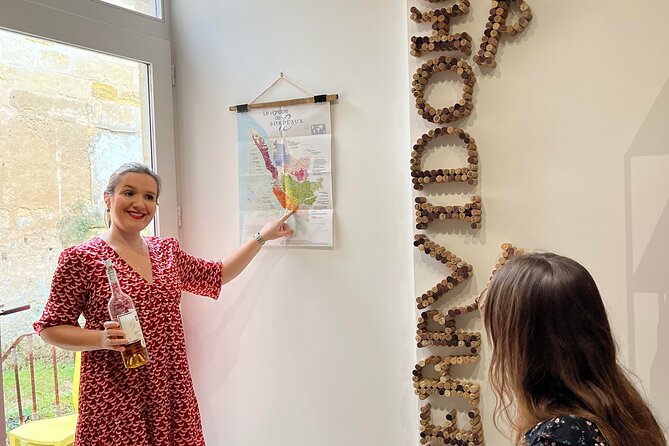
At $54.44 per person, this is not the cheapest way to drink wine in Bordeaux. You can always order a glass at a bar for less. The value here comes from the instruction, comparison, small group, and access to a host who can explain what is in front of you.
You receive six glasses of wine, a food pairing, and a tasting booklet to take home. The booklet turns the session into something you can continue using when you open a bottle later.
The price makes more sense if you are short on time. A vineyard excursion takes much longer and requires transport outside the city. This session gives you a working introduction in roughly 75 minutes, without sacrificing a half-day.
It also suits someone who wants to buy Bordeaux wine but feels lost in the shops. The lesson on labels and classifications may save you from choosing a bottle based only on an impressive-looking name.
The weaker value comes if you expect a full meal or generous pours. The food is light, and one tasting felt rushed because the group included both French and English speakers. If you want a slow evening with a large cheese board, this is not that experience.
Language, group size, and timing tips
The experience is offered in English, and the hosts are described as speaking clearly. A mixed French and English group can make the session harder to pace, especially in a 75-minute format, so ask about the language arrangement if that matters to you.
The maximum group size is six. That is small enough for questions and personal recommendations, but it does not guarantee that every minute will be tailored to your interests. If the full group arrives late or needs translation, the session may feel compressed.
Spanish-language classes are not available from August 14 through August 24. If you need Spanish, check the dates before paying.
Most people can participate, and service animals are allowed. The meeting point is near public transportation. Free cancellation is available up to 24 hours before the start time, while changes or cancellations inside that window are not accepted and are not refunded.
Who should book this Bordeaux tasting?
I would choose this for a first visit to Bordeaux, especially if you want a clear introduction before visiting wine shops or booking a vineyard trip. It is also a good fit for solo visitors, couples, and small groups who prefer conversation over a large tour.
You will get the most from it if you enjoy learning while you taste. The session asks you to smell, compare, and think about why a wine tastes as it does. It is not just a succession of pours.
It may be less suitable if you want a full meal, a long cellar visit, or a fixed list of prestigious château wines. The lineup can vary, portions are not designed as dinner, and the session moves at a fairly brisk pace.
If you already know Bordeaux well, consider asking for a red-only or white-only specialty tasting. If you are new to the region, I would choose the mixed tasting first. The contrast between white, red, and sweet wine gives you a more useful overview.
Should you book it?
Book this tasting if you want to understand Bordeaux rather than simply drink Bordeaux. The strongest features are the six-person limit, the clear explanation of left and right bank styles, the aroma practice, and the chance to ask Mathilde or Cécilia what to buy next.
Before booking, confirm the exact wine lineup, food arrangements, language, and start time. Arrive with enough time for the full 75 minutes, especially if you need to catch a train or return to a ship.
For $54.44, it offers solid value as a compact wine lesson with real tasting material. Just think of the charcuterie and cheese as a modest pairing, not lunch, and you will arrive with the right expectations.
FAQ
Where does the Bordeaux wine tasting start?
It starts at 25 Av. Thiers, 33100 Bordeaux, France.
Where does the experience end?
The activity ends back at the meeting point.
How long does the tasting last?
It lasts approximately 1 hour and 15 minutes.
How many people can join?
The maximum group size is six travelers.
How many wines are included?
The experience includes six glasses of wine. The detailed description lists a mystery wine, two dry whites, three reds, and one sweet wine, so confirm the exact lineup because those categories appear to total more than six.
What types of wine might be served?
The tasting covers dry white wines, red wines from the left and right banks, blended wines, a mystery wine, and a sweet wine. The exact selection can vary.
Is food included?
Yes. Charcuterie, cheese, and a food and wine pairing are included as snacks. A larger picnic lunch with local products requires a separate reservation.
Is the tasting offered in English?
Yes, English is an available language. Spanish-language classes are not available from August 14 through August 24.
Can I cancel for a full refund?
Yes, if you cancel at least 24 hours before the experience start time. Cancellations or changes made less than 24 hours before the start are not accepted and are not refunded.
More Wine and Cheese Tastings in Bordeaux
- Bordeaux Gourmet Experience: Cheese & Wine Tasting
★ 4.6 · 169 reviews - Bordeaux Gourmet Experience : tasting of French cheeses & wines
★ 4.5 · 71 reviews - Bordeaux Afternoon Food Tour : Sweets, Wine and Cheese
★ 5.0 · 38 reviews - Blind Tasting: 4 Bordeaux Natural Wine + Cheese experience
★ 4.8 · 35 reviews
Just added around Bordeaux
- Wine Masterclass & Cheese Tasting Workshop in Bordeaux★ 5.0 · 2 reviews
- Tasting of Bordeaux red wines, wine and charcuterie pairings★ 5.0 · 24 reviews
- Wines and Cheeses: Learning to combine perfectly★ 4.5 · 7 reviews
- Highlights of Bordeaux Walking Tour + Wine & Cheese Tasting★ 4.5 · 5 reviews
- Wine Masterclass & Cheese Tasting Workshop in Bordeaux★ 5.0 · 29 reviews
- Tasting of Bordeaux White Wines Wine and Cheese Pairing★ 5.0 · 10 reviews
- Bordeaux Night Walk Ending with Delicious wine & cheese Tasting★ 5.0 · 10 reviews
- Bordeaux Food Tour : Sweets, Cheese & Wine pairing workshop★ 5.0 · 8 reviews
Bordeaux Cheese Tours, compared.
Professional – Bordeaux Wine and Cheese Tasting with a walking tour
Read our review →
Wine Masterclass with Cheese and Charcuterie Board
Read our review →
Introduction to Bordeaux wines paired with cheeses & charcuterie
Read our review →
Bordeaux Gourmet Experience: Cheese & Wine Tasting
Read our review →
Bordeaux Wines Masterclass paired with cheeses & charcuterie
Read our review →
Bordeaux Gourmet Experience : tasting of French cheeses & wines
Read our review →
Bordeaux Afternoon Food Tour : Sweets, Wine and Cheese
Read our review →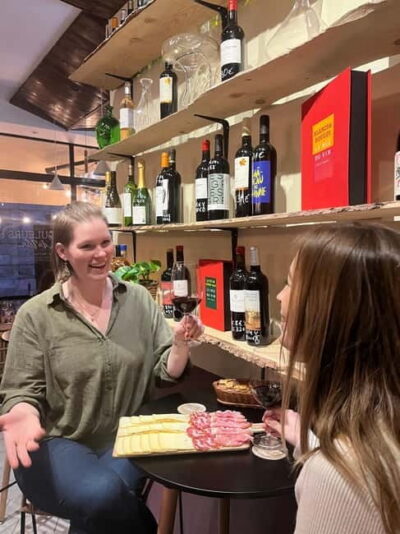
Blind Tasting: 4 Bordeaux Natural Wine + Cheese experience
Read our review →Browse the lists this tour appears in