REVIEW · PARMA
Parma Food Tour with Sightseeing and Parmesan Tasting
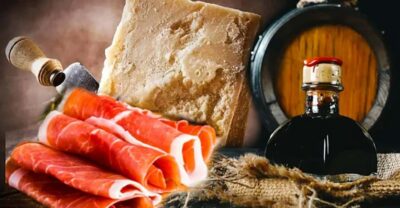
Parma’s best introduction may be a short walk that moves from frescoed palaces and Romanesque monuments to three ages of Parmigiano Reggiano, a local pastry, and Parma ham with wine. This tour makes food part of the city story rather than treating it as a separate activity.
I like the compact route and the personal scale, with no more than 10 people. I also like the balance: Giada, the guide named in the tour details, has been praised for making Parma’s history clear and entertaining while leaving time for the food. The main drawback is the short two-hour schedule. You will see the city center and sample its specialties, but this is an introduction, not a leisurely feast or a full museum tour.
Key points at a glance
- Three Parmigiano Reggiano tastings: Compare cheese at different ages and learn why time changes its texture and flavor.
- A useful first look at Parma: The route includes the Duomo, octagonal Baptistery, Teatro Regio, La Pilotta, and central palaces.
- A real local food spread: Expect a pastry, Parma DOP Ham, other cured meats, focaccia or panini, and one full glass of local wine.
- A small group capped at 10 people: The size should make it easier to ask questions and keep the food explanations personal.
- Vegetarian participation is possible: Ask for the vegetarian option in advance rather than waiting until the tour begins.
- A central start and finish: Begin by Palazzo Dalla Rosa Prati and finish at Panino d’Artista on Strada Luigi Carlo Farini.
Why this short Parma tour works
Parma is easy to underestimate. It is not only a name attached to cheese and ham. Its center gathers a cathedral, a remarkable baptistery, an opera house, former ducal buildings, and elegant streets within a fairly small area.
That makes a two-hour food and sightseeing tour a sensible way to get your bearings. You can see the principal landmarks while learning how food shapes everyday life in Emilia-Romagna. Instead of spending two hours on a single tasting counter, you move through the city and connect the products to the place that made them famous.
The tour costs $78.19 per person. That is not a bargain basement food walk, but the price includes several distinct tastings, a full glass of wine or a non-alcoholic drink, a local guide, and sightseeing. It is good value if you want a guided first taste of Parma and would otherwise pay separately for a pastry, cheese tasting, cured meats, and a drink.
The value is weaker if you already know Parmigiano Reggiano and Parma ham well, or if you want generous portions. This is designed for sampling and explanation. Think of it as a polished introduction that can help you decide where to return for a longer meal.
More Cheese Walking and Food Tours in Italy
- From Parma: Parmigiano and Parma Ham Guided Food Tour
★ 4.8 · 144 reviews - Private Full Day Parma Food Tour: Parmesan Cheese, Parma Ham, Lunch, Vinegar
★ 5.0 · 127 reviews - Private Half Day Parma Food Tour: Parmesan Cheese, Parma Ham, Lunch
★ 5.0 · 44 reviews
Starting at Palazzo Dalla Rosa Prati
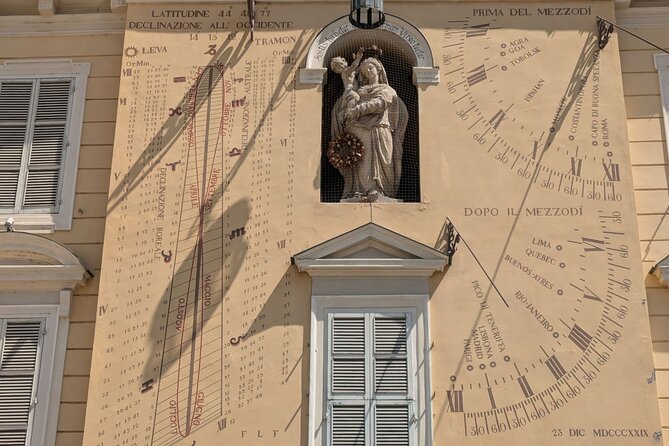
The meeting point is Palazzo Dalla Rosa Prati at Strada Duomo 7, right in the center of Parma. The 18th-century building was once a noble residence and retains the formal character of an Italian palazzo, with a restored façade, frescoed ceilings, and antique furnishings.
The brief opening stop gives the tour a graceful beginning. You are not simply meeting beside a random street corner. You start among the architecture of old Parma, close to the city’s main religious monuments.
Do not expect a long palace visit here. The listed stop lasts about five minutes and has no admission charge. Its role is to place you in the historic center before the food and sightseeing begin.
Parma’s Duomo and its octagonal Baptistery
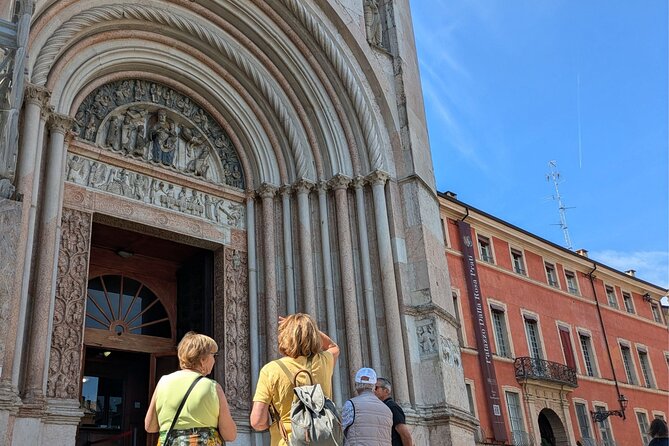
The route then reaches the Battistero di Parma, beside the cathedral in Piazza del Duomo. Built between 1196 and 1270, the Baptistery is famous for its unusual octagonal form and detailed marble exterior.
It is one of those buildings that rewards a guide’s explanation. From the outside, the shape alone catches your eye. The marble façade also shows how much care went into the religious center of medieval Parma.
Next comes Parma Cathedral, the city’s Romanesque Duomo. Its 12th-century façade and stone carvings give the square a strong sense of place. The cathedral is one of the tour’s important sightseeing moments, and it is also the stop most likely to make this feel like more than a food crawl.
The supplied tour information does not promise a full interior visit or a set amount of free time inside either monument. Plan on seeing these landmarks as part of the guided route, with the exact sightseeing time shaped by the group and the day.
A sweet stop at Pasticceria Giacomazzi
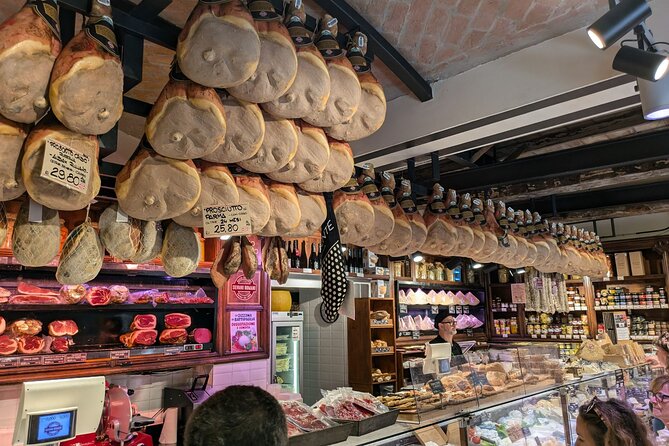
Pasticceria Giacomazzi has operated since 1968 and is included as the tour’s pastry stop. You get about 15 minutes here, enough for a sweet taste and a quick look at the role of bakeries in Parma’s daily food culture.
This stop matters because a food tour should not reduce Parma to cheese and ham. Bread and pastry are part of ordinary life in the city, and traditional recipes vary from one bakery to another. A local pastry also gives the tasting a change of pace before the aged cheese and cured meat later on.
The stop includes admission, though the exact sweet item is not specified. If you have a serious allergy or dietary concern, ask before booking so you know if the included pastry can be adjusted.
More Cheese Walking and Food Tours in Parma
- Discover Parma’s Flavors: Parmigiano & Prosciutto Food Tour
★ 4.5 · 17 reviews - Parma Food Tour: Parmigiano Reggiano & Prosciutto di Parma
★ 5.0 · 2 reviews
Teatro Regio and Parma’s musical side
The Teatro Regio di Parma opened in 1829 and is known for its neoclassical design and acoustics. It remains closely tied to Parma’s opera tradition and gives the route a useful change of subject.
The listed visit lasts about 10 minutes and has no admission charge. That tells you what to expect: a guided look at the theater and its place in the city, not a performance or a full backstage tour.
This brief stop helps explain why Parma feels culturally substantial despite its manageable center. The city’s food identity is powerful, but music, noble families, and the old duchy also shaped its public life.
A glimpse of the Glauco Lombardi collection
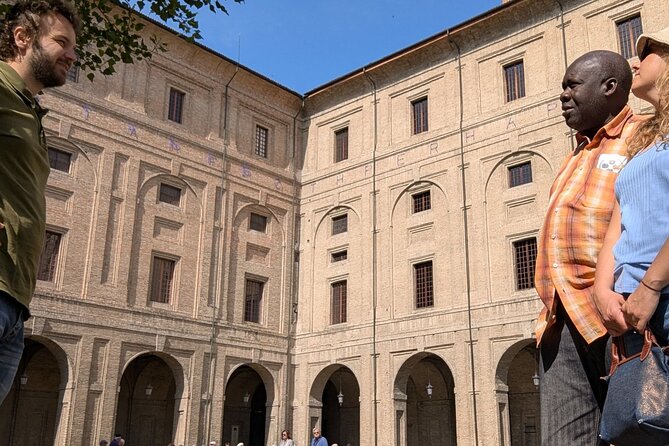
The Museo Fondazione Glauco Lombardi focuses on Parma’s past, especially the city’s noble families and the Duchy of Parma. It was founded by Glauco Lombardi, a historian and collector devoted to preserving Parma’s historical material.
The museum is part of the sightseeing sequence, but the supplied schedule does not list a separate admission or a long visit here. You should treat it as a passing point or an introduction rather than expect a full museum tour.
That is not necessarily a flaw. In two hours, a guide can point out several places you might return to later. If the museum catches your interest, note its location and save it for a quieter afternoon.
The main tasting at Casa del Parmigiano Reggiano
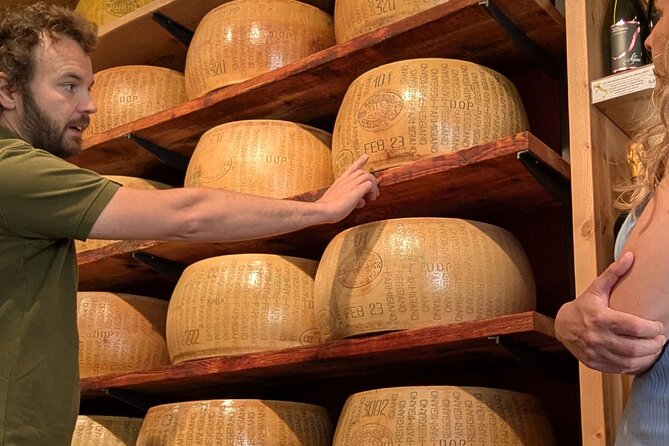
This is the food center of the experience. At Casa del Parmigiano Reggiano, you take part in a workshop and taste cheese at three stages of aging.
That comparison is more useful than a single cheese sample. Younger Parmigiano Reggiano tends to offer a different texture and flavor from a more mature piece, and tasting several ages side by side gives you a practical way to notice the change. The guide explains the production process and the long tradition behind this hard cheese.
You receive three Parmesan tastings explained by a local guide. The information provided does not give the exact ages, so do not book expecting a particular 12-month, 24-month, or 36-month lineup. The important point is that the tasting is comparative, not just one small cube handed over without context.
This is also where the tour earns much of its price. Parmigiano Reggiano is not a generic regional cheese. Its name is tied to a strict production method and a defined area, so the explanation can help you shop more intelligently later. You will have a better sense of why pieces vary in price and why age matters.
Passing La Pilotta and the Farnese legacy
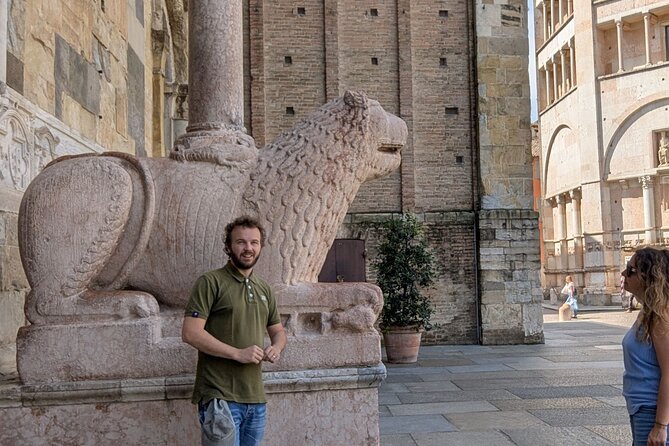
La Pilotta was built for the Farnese family in the 16th century as a grand court and administrative complex. Its name comes from the wooden structure once used for ball games on the grounds.
The building helps broaden the city story. Parma’s food traditions developed alongside court life, trade, and the institutions of the duchy. Seeing La Pilotta on the same route as the cathedral and opera house gives you a quick sense of the city’s changing roles over time.
Again, the itinerary does not promise entry or a full art collection visit. If you want to explore La Pilotta’s museums in depth, set aside separate time. On this tour, its value is as a major landmark and a reminder that Parma’s identity reaches beyond the dining table.
Ending with Parma ham at Panino d’Artista
The final stop is Panino d’Artista at Strada Luigi Carlo Farini 19/B. Here the focus shifts to panini, focacce, Parma DOP Ham, and other local cured meats.
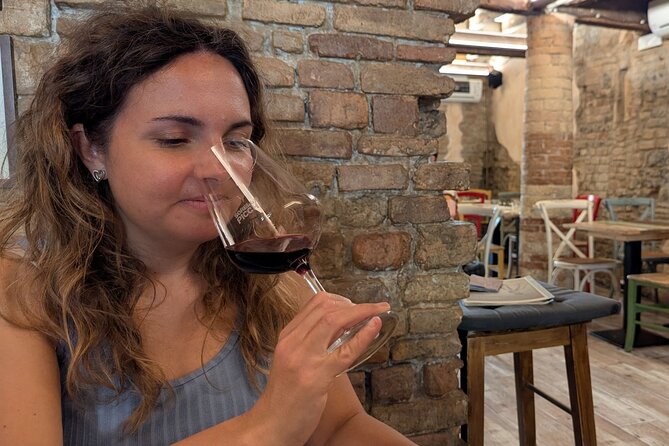
You receive a selection of cured meat, including Parma ham, along with a full glass of Lambrusco or Malvasia. You can choose a non-alcoholic drink instead. The tour ends at this local bar, where the food gives you a relaxed way to finish the route and talk through what you have seen.
The drink choice is a nice regional touch. Lambrusco is associated with Emilia-Romagna and offers a lively contrast to salty cured meat. Malvasia gives you another local direction. The tour does not specify the exact producer or pour, so consider this a regional tasting rather than a dedicated wine lesson.
The final stop lasts about 30 minutes, making it the longest food stop. It should leave you with a better idea of how Parma residents pair ham, cheese, bread, and wine. Additional food tastings are not included, so anything beyond the planned selection costs extra.
What the guide adds
The strongest praise in the supplied feedback centers on Giada. She is described as clever, well prepared, entertaining, friendly, and good at offering recommendations. Those qualities matter here because the tour moves quickly between subjects.
A good guide has to explain Romanesque architecture, the Duchy of Parma, opera, pastry, cheese aging, and cured meat without turning the morning into a lecture. The positive comments suggest Giada handled that mix well and made the tour feel personal when the group was small.
The maximum group size is 10. That is large enough for a social outing but small enough for questions. One couple happened to have a private experience when other participants did not arrive, but you should not book expecting a private tour. The published limit is small group, not one-on-one.
The tour is offered in English. Confirmation arrives at booking, and the route is near public transportation. The start and finish are in central Parma, so check both addresses carefully when planning the rest of your day.
Who should book this experience
I would choose this for a first visit to Parma, especially if you have only a morning or afternoon available. It gives you the city’s central landmarks, a pastry, a serious cheese tasting, local ham, and wine without requiring a full day.
It also suits people who are new to food tours. The sightseeing prevents the experience from feeling like a series of restaurant stops, while the tastings give the architecture and history a clear local connection.
Families need to note the alcohol rule. The experience is for adults 18 and older when alcoholic drinks are served. Participants under 18 receive non-alcoholic drinks, but the tour is not presented as a children’s-only activity.
Vegetarians can participate if they request the suitable option in advance. Since the standard final tasting centers on Parma ham and other cured meats, advance notice is important.
You should look elsewhere if your priority is a full meal, a working dairy visit, an opera performance, or extended museum access. The tour introduces these subjects, but it does not replace a dedicated cheese-production excursion, restaurant meal, or cultural visit.
Practical details before you go
The experience lasts about two hours. Wear shoes suitable for moving around the city center and avoid scheduling a tight connection immediately afterward. The route begins at Palazzo Dalla Rosa Prati and finishes at Panino d’Artista, so you do not return to the starting point.
The tour is often booked well ahead, with an average booking window of about 75 days. That does not mean every date sells out, but it is a useful warning if your Parma visit falls during a busy season or you have only one free day.
You can cancel for a full refund up to 24 hours before the local start time. Changes or cancellations inside that window are not accepted for a refund.
At 4.6 out of 5, with 93 percent recommending it, the experience has a strong record. The small number of published ratings means I would treat those numbers as encouraging rather than absolute proof of a perfect outing. The repeated strengths are clear, though: the balance of city sights and food, the quality of the guidance, and the Parmesan tasting.
Should you book the Parma food tour?
Book it if you want a well-paced introduction to Parma and prefer tasting local products while you see the city’s main center. The combination of the Duomo, Baptistery, Teatro Regio, La Pilotta, pastry, three Parmesan ages, Parma ham, and regional wine gives you a useful first chapter in about two hours.
Skip it if you want large portions, a slow lunch, or a specialist cheese tour. For most first-time visitors, the price is reasonable because it combines several paid food experiences with a guide and central sightseeing. I would book early, request vegetarian arrangements in advance if needed, and leave yourself time afterward for a proper Parma meal.
FAQ
How long does the Parma food tour last?
The tour lasts approximately two hours.
Where does the tour begin?
It begins at Palazzo Dalla Rosa Prati, Strada Duomo 7, 43121 Parma.
Where does the tour end?
It ends at Panino d’Artista, Strada Luigi Carlo Farini 19/B, 43121 Parma.
What food is included?
The experience includes three Parmigiano Reggiano tastings with explanations, a sweet treat at a local pastry shop, and a selection of cured meats including Parma DOP Ham.
Is a drink included?
Yes. You receive one full glass of local wine, choosing between Lambrusco and Malvasia, or a non-alcoholic drink.
Are vegetarian options available?
Yes. Vegetarian options are available, but you must request them in advance.
Can people under 18 drink alcohol on the tour?
No. Alcoholic drinks are for participants aged 18 and older. Minors receive non-alcoholic drinks instead.
More Parmesan and Balsamic Tours in Parma
- Tour Parmigiano Reggiano dairy and Parma ham
★ 5.0 · 601 reviews - Parma: Parmigiano Production and Parma Ham Tour & Tasting
★ 4.9 · 554 reviews - Guided group tour TastyBus: Parmesan Cheese and Parma Ham
★ 5.0 · 241 reviews - From Parma: Parmesan, Parma Ham & Balsamic Vinegar Tour
★ 4.9 · 187 reviews
Just added around Parma
- Parmesan and Ham Factory Tour★ 4.5 · 21 reviews
- Parmigiano and Culatello Private Tour with Lunch and Farm Visit★ 5.0 · 2 reviews
- Parmigiano Cheese Factory Visit and Tasting★ 5.0 · 22 reviews
- Parmigiano Reggiano Parma Ham and Castle Private Tour & Tasting★ 5.0 · 9 reviews
- Parmigiano Reggiano and Parma ham tour★ 5.0 · 9 reviews
- Parmigiano-Reggiano Cheese Factory Small group Tour From Parma★ 3.5 · 15 reviews
- From Parma: Parmigiano,Prosciutto and winery Tour and tasting★ 4.5 · 8 reviews
- Parmigiano-Reggiano Tour and tastings★ 4.5 · 6 reviews
Parma Cheese Tours, compared.
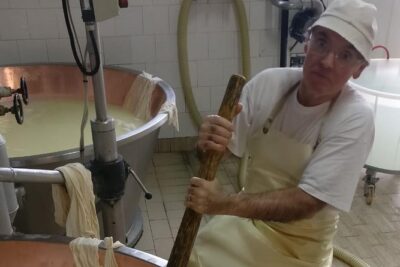
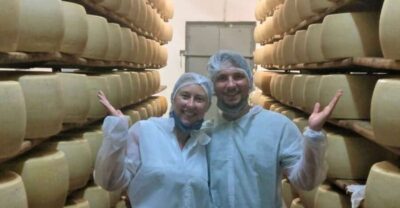
Parmigiano Production and Parma Ham Tour & Tasting
Read our review →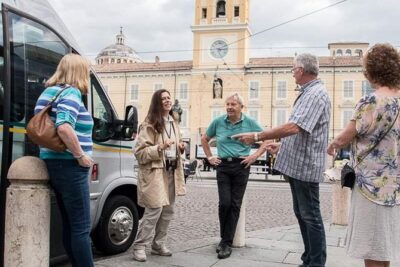
Guided group tour TastyBus: Parmesan Cheese and Parma Ham
Read our review →