
REVIEW · NETHERLANDS
Volendam: 2.5-Hour Cheesemaking Workshop & Clog Making Tour
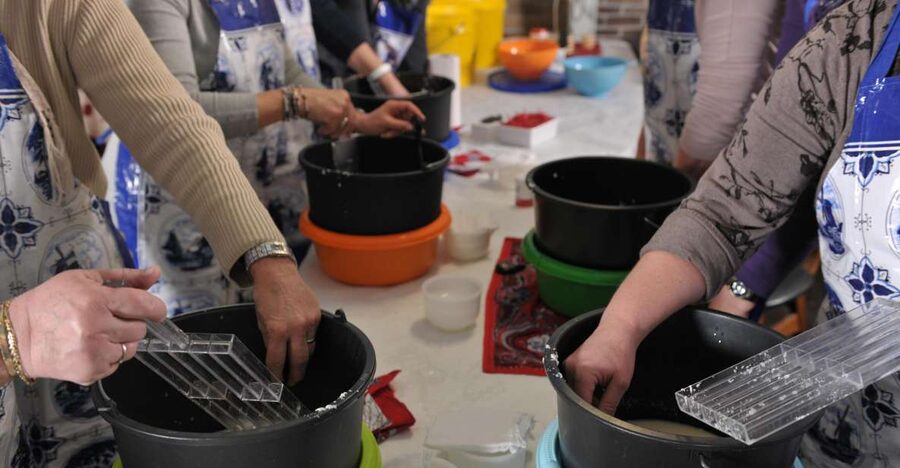
Making cheese in the Dutch countryside is the heart of this experience. At Simonehoeve, near Volendam, you work through mixing, heating, and pressing milk, then take home a small farmer’s cheese. During the waiting periods, a clog-making demonstration shows how a block of wood becomes traditional Dutch footwear.
I like the hands-on cheese process and the generous tasting time, which includes Gouda, Edam, biscuits, and local fruit wine. I also like the practical setting: a cheese farm and wooden shoe factory, not a museum display built only for tourists. The main caution is that you may not finish a fully mature Gouda during the 2.5-hour session. Your cheese may need to be completed or ripened at home, and one unhappy participant found transporting it difficult.
Key points at a glance
- Make a small farmer’s cheese: You work with local cow’s milk through several basic cheesemaking steps.
- Expect a clog demonstration: While your cheese is pressed, you see how wooden shoes are shaped from a piece of wood.
- Taste Dutch specialties: Gouda, Edam, Dutch biscuits, fruit wine, and other cheeses are part of the visit.
- Take cheese home: Your homemade cheese can be vacuumed for eating young or covered for home ripening.
- Plan the bus carefully: Bus 316 leaves from Amsterdam Central Station, and cash is not accepted.
- Allow for a hands-on lesson with limits: The workshop teaches the process, but you may not complete a mature Gouda yourself.
A cheese lesson built around waiting time
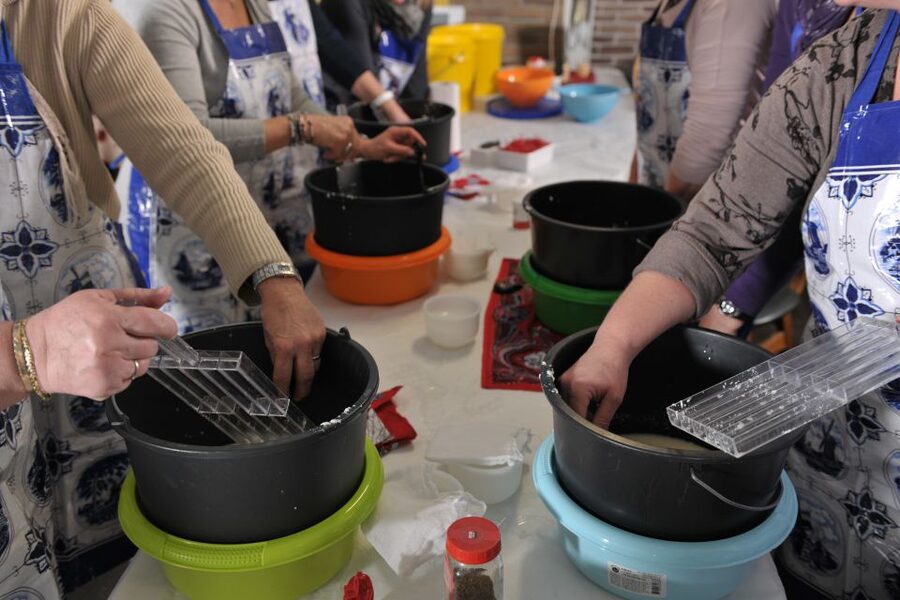
The clever part of this workshop is the timing. Cheese needs time to heat, press, and settle, so you are not left staring at a vat. The waiting periods become chances to taste Dutch food and visit the wooden shoe factory.
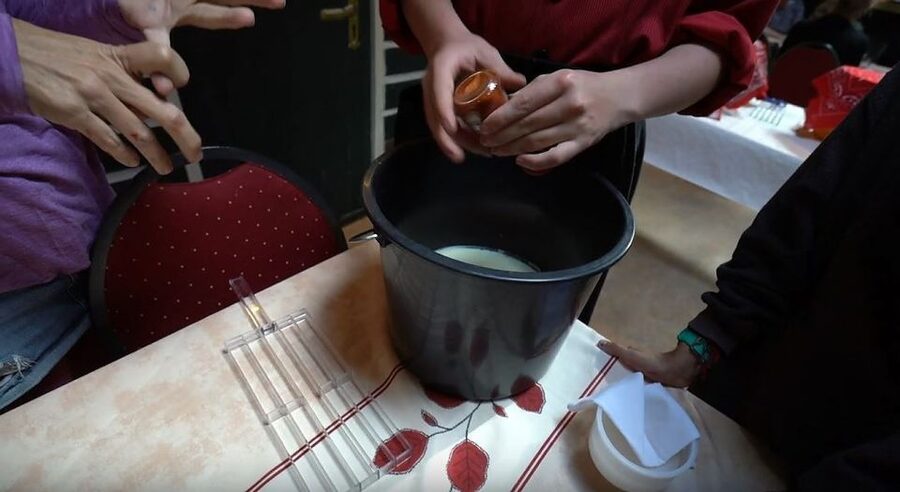
You begin with milk from local cows and learn the main stages of cheesemaking. The process includes mixing, heating, and pressing. You then make a small farmer’s cheese of your own.
This is not presented as a full professional cheesemaking course. It is a short introduction that shows you the basic work behind a familiar Dutch food. You get to handle the process, but the staff may take care of some of the more technical steps.
That distinction matters. One participant expected to make Gouda from start to finish and felt disappointed when the instructor did much of the work and asked the group to finish the cheese at home. I would book this expecting a practical demonstration with participation, not a complete dairy apprenticeship.
The cheese you make is a young farmer’s cheese. You can have it vacuumed and eat it soon, or you can take it home to ripen. The instructions mention liquid plastic as a covering for home ripening. A separate participant hoped to enjoy the cheese after about four weeks, so ask the guide exactly how your cheese should be stored and when it will be ready.
More Windmill and Cheese Tours in the Netherlands:
- Amsterdam: Guided Zaanse Schans, Windmills & Cheese Tour
★ 4.4 · 4,826 reviews - Zaanse Schans Windmills, Clogs and Dutch Cheese Small-Group Tour from Amsterdam
★ 4.5 · 2,369 reviews - From Amsterdam: Volendam and Zaanse Schans Tour with Cheese
★ 4.6 · 1,993 reviews
What you actually make at Simonehoeve
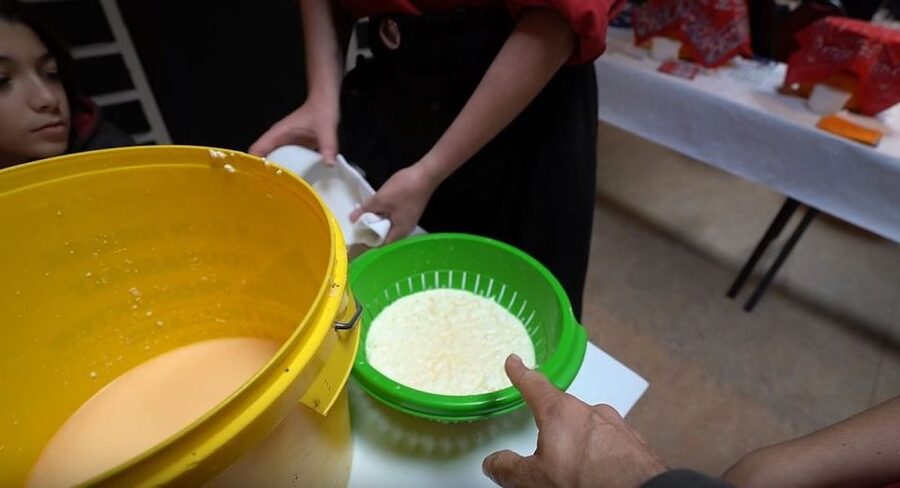
The homemade cheese is the main reason to choose this activity. You do not just watch someone slice a wheel and explain the ingredients. You take part in the basic work.
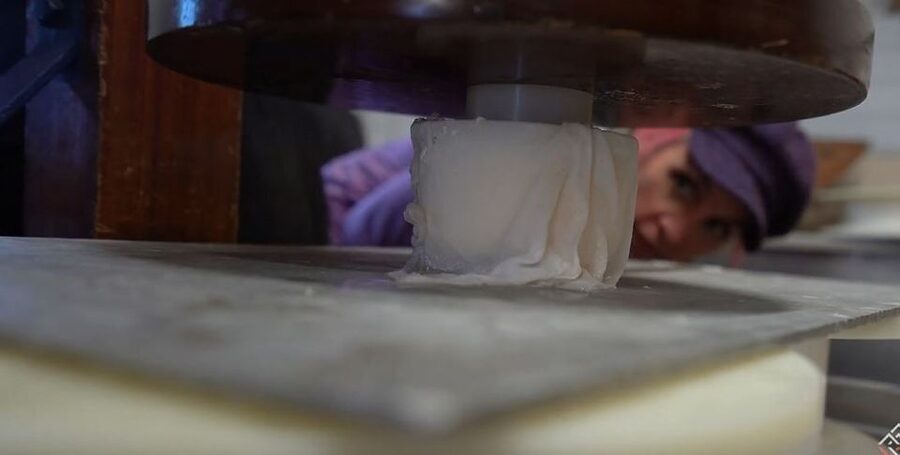
The lesson begins with local cow’s milk. You learn how the milk changes as it is mixed and heated, then see how pressing removes moisture and gives the cheese its shape. The description is simple, but that simplicity is useful: you can follow the process without needing a background in food production.
The finished product is a small farmer’s cheese, not necessarily a mature Gouda. Gouda is the best-known Dutch cheese, but the cheese made in class is described as young. You should not expect the same firmness, flavor, or aging time as a shop-bought wheel that has spent months maturing.
I like that the cheese comes home with you. It gives the workshop a physical result, though it also creates a practical problem. If you are carrying luggage or flying soon after the class, keep the cheese secure and cool if the staff advises it. One person reported that the cheese was ruined in a suitcase, which is a useful warning to ask about packing before you leave.
The lesson also teaches you why waiting matters. Pressing and ripening are not quick steps, and the class uses those pauses for the other parts of the visit. That makes the 2.5 hours feel varied rather than repetitive.
Gouda, Edam, biscuits, and fruit wine
Tasting is a major part of the visit, and it helps put the workshop in context. You can sample real Dutch Gouda and Edam, along with other cheeses. Dutch cheese can range from mild and creamy to firm and more pronounced, depending on age, so tasting several kinds gives you a better sense of what the homemade cheese might become.
Dutch biscuits are also served, including stroopwafel. These thin, sweet waffles with syrup in the middle are a classic snack, and they make a natural match for coffee or tea, though the activity information specifically mentions tasting them rather than promising a full meal.
You can also taste a local fruit wine. Additional drinks and food are not included, so treat the tasting as part of the visit rather than a substitute for lunch. If you arrive hungry, plan accordingly.
The shop offers more cheeses and souvenirs. This is useful if you want to buy a finished cheese instead of waiting for your own to ripen. It is also where the experience shifts from workshop to farm shop, so budget a little restraint if you are tempted by Dutch food gifts.
The tasting adds value to the $145 price, but the value depends on what you want. If your goal is a polished museum tour, the price may feel high for 2.5 hours. If you want a private, participatory food activity with a take-home item, tastings, and a clog demonstration, it makes more sense.
From a block of wood to a Dutch clog
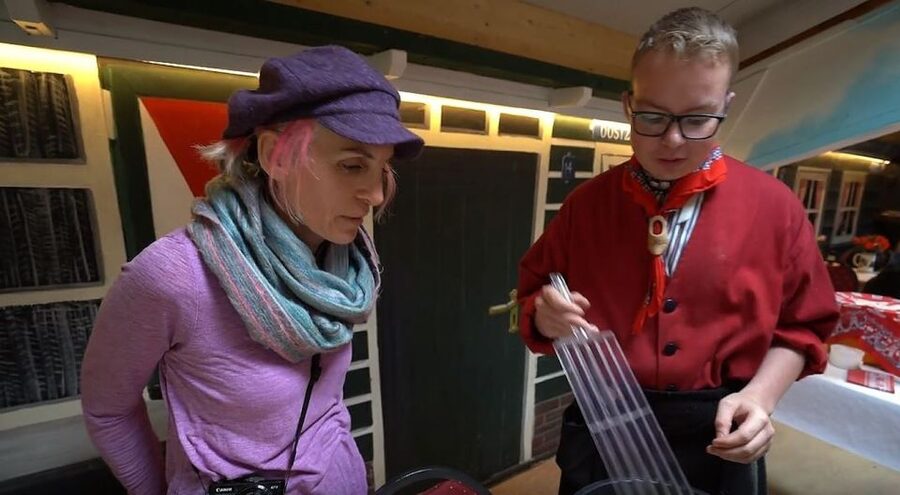
While your cheese is being pressed, you visit the wooden shoe factory. The demonstration shows how a piece of wood becomes footwear, and you see clog styles from older designs to modern versions.
This is more than a quick photo stop. The clog section explains a second Dutch craft that is often reduced to souvenir-shop displays. Seeing the transformation from raw wood to shoe gives you a better sense of the skill involved.
The timing also works well. You get a change of subject while the cheese needs attention, then return to the food part of the class. The two crafts belong together in this setting: both are traditional rural products, and both have changed from everyday necessities into symbols of the Netherlands.
Do not expect to spend the whole 2.5 hours making a pair of clogs. The cheese workshop is the active part, while the shoe portion is a guided visit and demonstration. The factory includes historical and modern varieties, so you can compare how the footwear has changed.
The shop afterward carries souvenirs, which may include wooden shoe items and other Dutch products. The information does not specify exactly what is in stock on a given day, so think of it as an opportunity rather than a promised shopping list.
More Cheese Making Workshops in the Netherlands:
- Volendam: 2-Hour Clogmaking Workshop and Cheese Tour
★ 3.9 · 17 reviews - Cheese making workshop next to De Hallen, heart of Amsterdam
★ 5.0 · 10 reviews - Private Farmhouse Cheesemaking Workshop
★ 3.5 · 2 reviews - Paris Cheesemaking Workshop including Wine and Cheese Tasting with an Expert
★ 5.0 · 141 reviews
The setting near Volendam
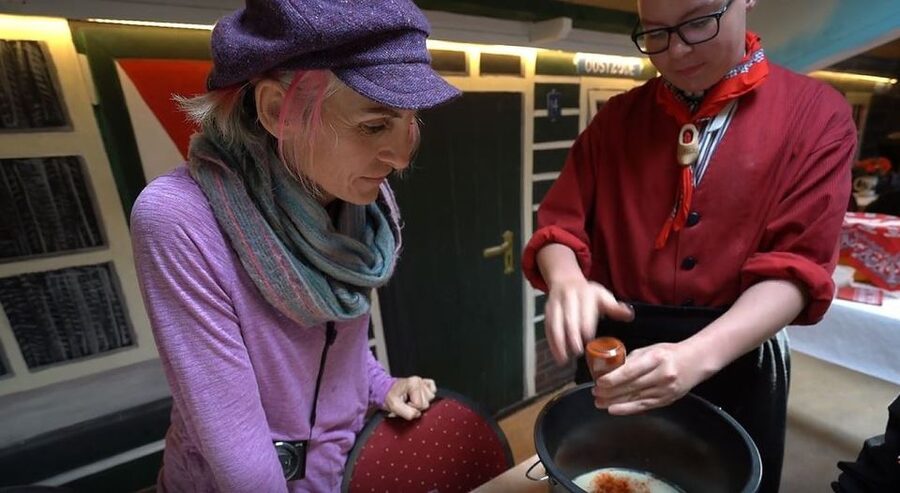
Simonehoeve is at Wagenweg 2 in Katwoude, close to Volendam. The meeting point is easy to identify by a mini-windmill near the cheese farm and clog factory.
From Amsterdam, take bus 316 from Amsterdam Central Station, using the IJzijde side of the station. You can buy a ticket at the station or from the driver, but cash is not accepted. Get off at the Hotel Volendam stop. The cheesefarm and clog factory are only a few meters away.
That short walk is helpful if you are bringing children, mobility equipment, or shopping bags. The activity is listed as wheelchair accessible, though you should still confirm any specific needs when booking.
You are asked to arrive preferably between 9:00 AM and 3:00 PM. Since the duration is 2.5 hours, check the available start times before planning a full day in Volendam. You do not want to squeeze this between fixed transport connections without leaving room for delays.
The location is near Volendam rather than in the center of Amsterdam. That is part of the appeal, but it means you should account for the bus journey in both directions. The activity information identifies the meeting point clearly, so use the exact address instead of relying only on the town name.
Guides, language, and group style
The activity is offered in Spanish, Dutch, English, French, German, and Italian. That makes it accessible to many visitors, and the guide can explain both the cheese and clog sections in your chosen language when available.
One guide named Fred received especially warm praise for being entertaining and creating a fun atmosphere. That is worth noting because the tone of a practical workshop depends heavily on the person leading it. A lively guide can make the pauses, tasting, and demonstrations feel connected rather than like separate sales stops.
The booking is for a private group. The available information does not give a maximum group size, so ask if you need a very small session or have a particular party arrangement in mind. Private group status can make the activity more comfortable for families and groups of friends, but it does not automatically mean every step will be done individually by each participant.
This is also a good choice if your group has mixed interests. One person can focus on food, another on traditional crafts, and children can watch the clog-making demonstration. The setting gives you more variety than a cheese-only class.
The raw milk issue
The most important health and food detail is easy to miss: raw, non-pasteurized milk is the main ingredient in the cheese you make.
If you are pregnant, immunocompromised, allergic to dairy, or simply cautious about raw-milk products, ask the provider how the cheese will be handled and whether tasting it young is suitable for you. Do not assume that the cheese is pasteurized simply because it is made in a supervised workshop.
The activity information does not provide a separate medical policy, so personal dietary decisions are up to you. You can still enjoy the explanations and the clog demonstration, but clarify what you will be expected to taste before starting.
The same point matters when taking the cheese home. Ask whether it should be eaten young, stored, or ripened, and make sure you understand the covering and timing instructions. The cheese is part of the experience, but it is also a perishable food item.
Is $145 a fair price?
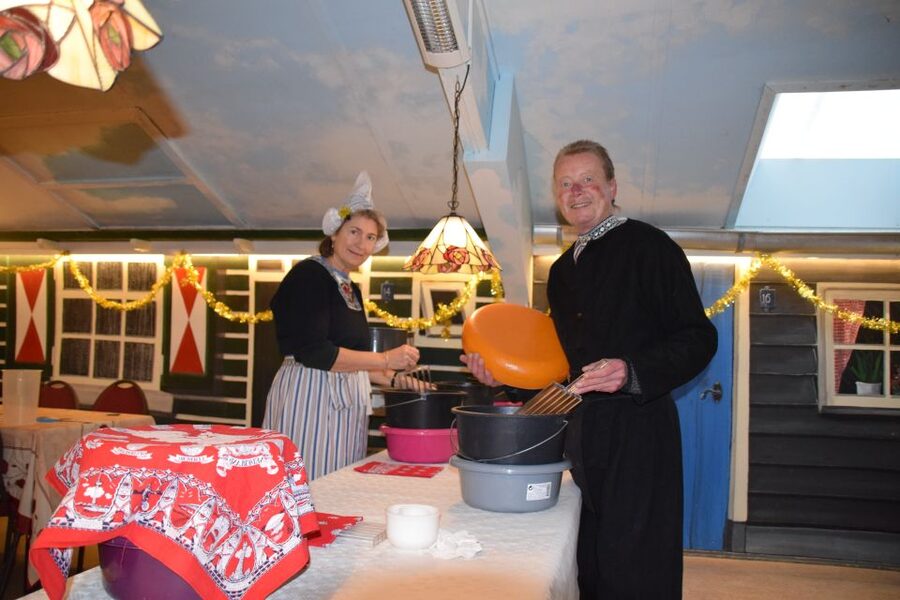
At $145 per person, this is not a cheap add-on. You are paying for a private-group activity lasting 2.5 hours, a guided cheesemaking lesson, a homemade cheese, a clog-factory visit, and tastings.
I see the value if you want a structured cultural activity outside Amsterdam. You are not just buying cheese in a shop. You are learning how it is made, seeing a related Dutch craft, sampling local products, and leaving with something you helped produce.
The price is harder to justify if you mainly want to see a mature Gouda being made or if you expect to complete a full wheel yourself. The workshop cheese is small and young, and some of the process may be handled by the guide. The experience is best understood as an introduction rather than an advanced class.
The take-home cheese adds charm but also requires planning. If you are moving on immediately, carrying food in a suitcase may be awkward. If you have room in a day bag and can follow the storage instructions, it becomes a pleasant souvenir with a story attached.
Free cancellation up to 24 hours before the activity and the reserve-now, pay-later option make the booking less rigid. Those terms are useful if your Amsterdam plans are still changing, but check the exact conditions at booking.
Who should book this workshop?
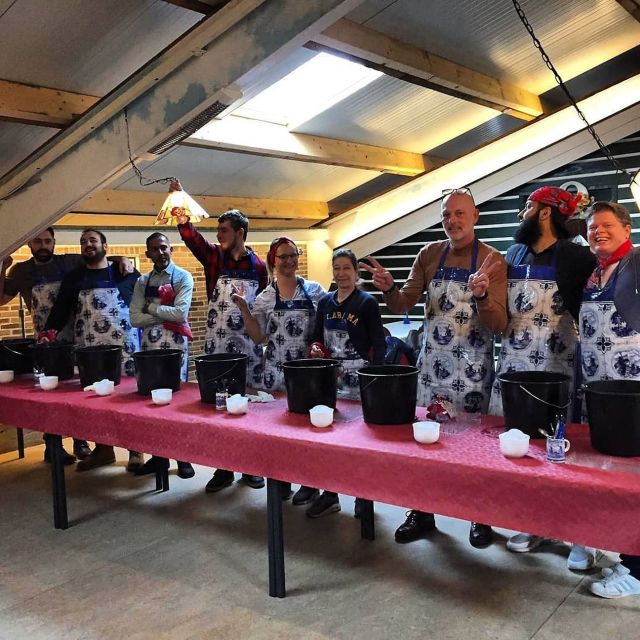
I would recommend it to families, couples, food lovers, and small private groups who want an activity that mixes making, tasting, and local craft. It works especially well for someone who has already seen Amsterdam’s main sights and wants a short outing near Volendam.
It also suits visitors who enjoy taking home edible souvenirs. The homemade cheese gives you a direct connection to the lesson, provided you can transport and store it properly.
I would be more cautious if you need a fully hands-on class where every participant completes every stage. Ask in advance how much of the mixing, heating, and pressing you will personally do. Also think carefully about the raw milk and the need to finish or ripen the cheese at home.
The clog section makes the experience more appealing for people who are less interested in food. You get two traditional Dutch crafts in one visit, and the tasting breaks keep the schedule moving.
Final call: book it for the setting and the variety
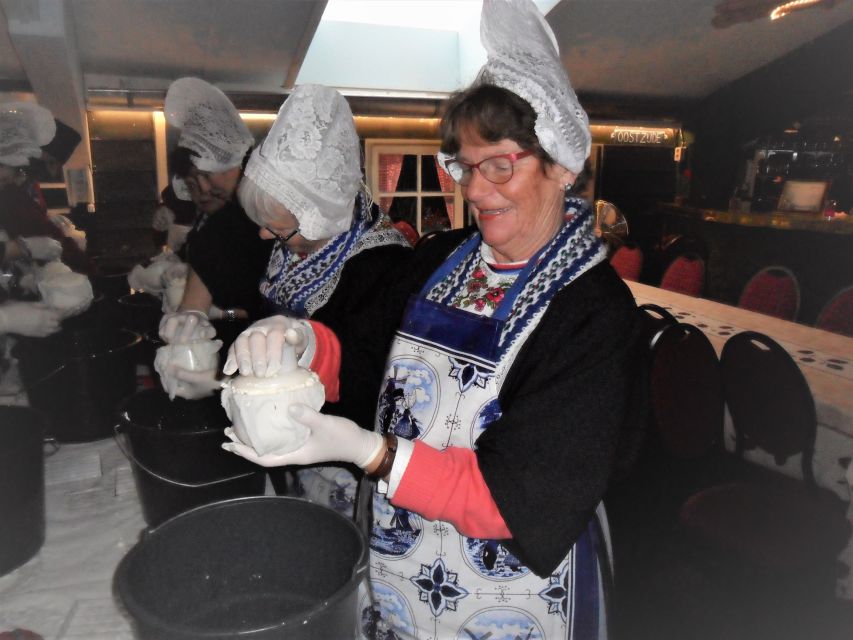
Book this tour if you want an entertaining introduction to Dutch cheese, a look at clog-making, and a private outing near Volendam. The best parts are the variety, the tastings, the friendly guide style associated with Fred, and the chance to take home your own young cheese.
Skip it if your only goal is to make a finished Gouda entirely by yourself. The class may not meet that expectation, and raw milk plus home ripening require a little care.
For the right visitor, $145 buys more than a tasting flight. It buys a short lesson in Dutch food and rural craft, with a souvenir you have a hand in making. Just arrive with realistic expectations, a plan for the bus, and a safe way to carry the cheese.
FAQ
How long does the cheesemaking and clog-making activity last?
The activity lasts 2.5 hours.
Where does the activity meet?
The meeting point is Simonehoeve at Wagenweg 2, 1145 PW Katwoude/Volendam, near the Hotel Volendam bus stop and a mini-windmill.
How do I get there from Amsterdam?
Take bus 316 from Amsterdam Central Station, departing from the IJzijde side. Tickets can be purchased at the station or from the driver, but cash is not accepted.
What kind of cheese will I make?
You will make a small young farmer’s cheese using local cow’s milk. It can be vacuumed and eaten young, or ripened at home using liquid plastic as a covering.
Is the cheese made with pasteurized milk?
No. Raw, non-pasteurized milk is the main ingredient in the cheese you make.
Is the activity offered in English?
Yes. The listed languages are English, Dutch, Spanish, French, German, and Italian.
Just added around the Netherlands
- Amsterdam: Zaanse Schans E-Bike Tour with Windmills & Cheese★ 4.5 · 12 reviews
- Zaanse Schans & Volendam Private Tour: Windmills and Cheese★ 5.0 · 5 reviews
- Volendam: 2-Hour Clogmaking Workshop and Cheese Tour★ 3.9 · 17 reviews
- Rotterdam & Gouda Private Daily Walking Tour★ 5.0 · 3 reviews
- Private tour from Rotterdam to Windmills of Kinderdijk & Gouda Cheese Experience★ 5.0 · 3 reviews
- Rotterdam- Kinderdijk -Cheese Farm Experience min 4 max 100 PP★ 4.0 · 9 reviews
- Haarlem Cheese and Wine Cruise★ 4.5 · 7 reviews
- Self-Guided Walking Tour of Gouda: Canals, Colonies, and Cheese★ 5.0 · 3 reviews
Netherlands Cheese Tours, compared.
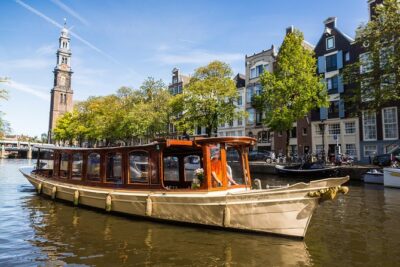
Amsterdam Classic Saloon Boat Cruise with Drinks and Cheese
Read our review →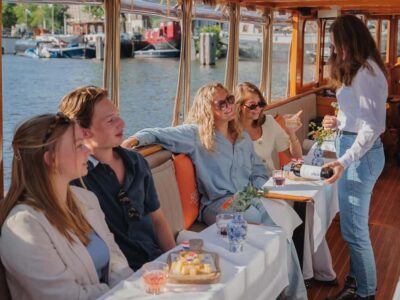
Classic Saloon Boat Cruise with Cheese & Wine
Read our review →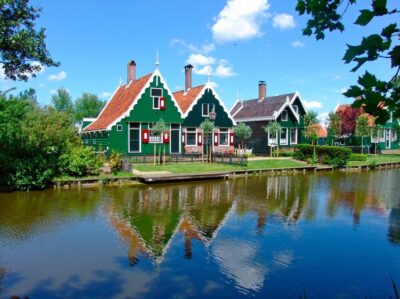
Guided Zaanse Schans, Windmills & Cheese Tour
Read our review →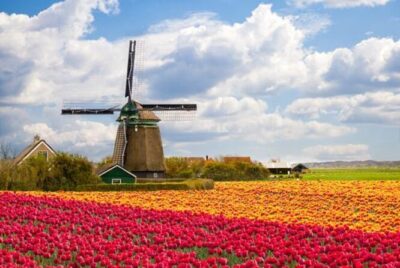
Zaanse Schans Windmills, Clogs and Dutch Cheese Small-Group Tour from Amsterdam
Read our review →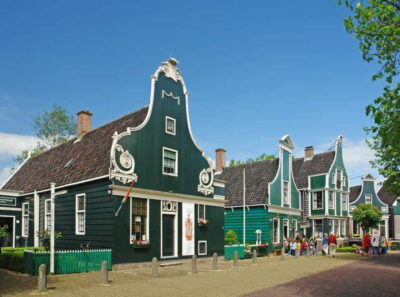
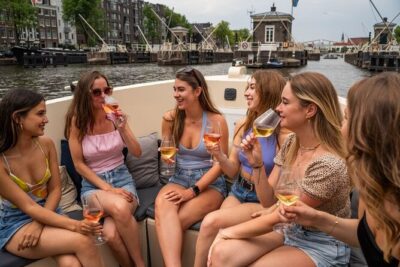
Evening Candle Light Cruise With Wine & Cheese
Read our review →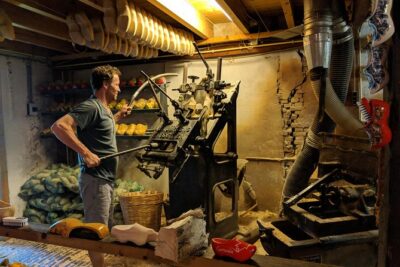
Countryside Bike Tour from Amsterdam: Cheese, Clogs & a Windmill
Read our review →
Giethoorn Tour Scenic Cruise, Cheese & Free Time
Read our review →Browse the lists this tour appears in