
REVIEW · PARMA
Tour Parmigiano Reggiano dairy and Parma ham
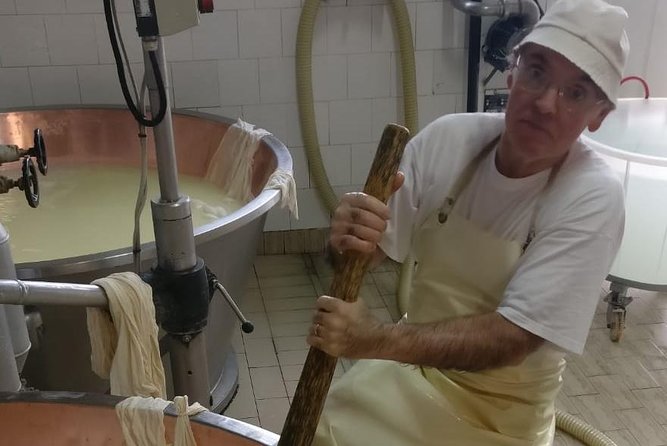
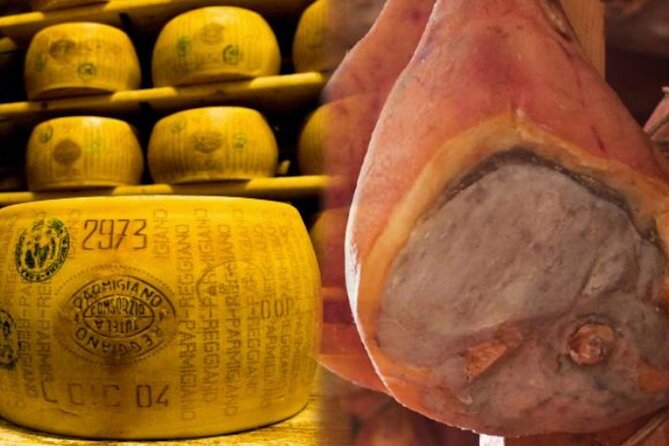
The best part of this Parma food tour is that you see the products being made before you taste them. At the dairy, cheese comes from milk vats, then moves through cooking, shaping, salting, and long storage. In the hills near Langhirano, you see how pork legs become sweet, delicate Parma ham.
I like the close look at working producers, not a polished museum display. I also like the generous tastings: several ages of cheese, balsamic vinegar, bread, 24-month ham, Fortana, Lambrusco, and sparkling Malvasia. The main drawback is the strict meeting time. A delayed train or bus can mean a no-show and no refund, so arrive early.
Key points
- Two famous foods in one half-day: Visit a Parmigiano Reggiano dairy and a Prosciutto di Parma producer.
- Cheese at three ages: Taste Parmigiano Reggiano aged 12, 24, and 36 months with balsamic vinegar and Fortana red wine.
- A real curing operation: See the seasoning rooms and natural aging process for Parma ham in the Langhirano hills.
- Comfortable country transport: Ride between the Parma pickup point and the producers in a minivan.
- Strong guiding team: Sergio, Loris, and Daniela are praised for clear explanations, humor, and personal attention.
- Plan carefully: The tour lasts about four to five hours, accepts up to 30 people, and does not admit animals.
Why Parma’s cheese and ham belong together
Parma is one of Italy’s best places to understand how food, time, and place work together. Parmigiano Reggiano and Prosciutto di Parma are not simply local versions of common supermarket foods. Their names refer to tightly defined production areas and methods.
That matters when you taste them. A piece of Parmigiano Reggiano aged 12 months is quite different from one aged 36 months. The younger cheese is softer and more milky. Older cheese becomes firmer, more crumbly, and stronger in flavor. The same idea applies to Parma ham, where salting, air, time, and careful selection shape the final result.
I like this tour because it connects the label on the package to the people and rooms behind it. You are not only told that the food is special. You see the vats, storage rooms, curing spaces, and slicing table, then taste the result while the details are still fresh in your mind.
The tour costs $151.16 per person. That is not a cheap food tasting, but it includes transportation between the two producers, an English-speaking guide, factory visits, and several food and wine pairings. If you tried to arrange both visits independently, you would still need to solve the transport problem between Parma and the countryside.
More Parmesan and Balsamic Tours in Parma:
- Parma: Parmigiano Production and Parma Ham Tour & Tasting
★ 4.9 · 554 reviews - Guided group tour TastyBus: Parmesan Cheese and Parma Ham
★ 5.0 · 241 reviews - From Parma: Parmesan, Parma Ham & Balsamic Vinegar Tour
★ 4.9 · 187 reviews
Meeting in Parma and heading into the countryside
The tour begins at Viale Giovanni Falcone, 48a, in Parma. It ends at the same point, which keeps the day simple if you are staying in the city or arriving by train. The drive to the dairy takes about 30 minutes, and the countryside provides a useful change from Parma’s streets and piazzas.
The minivan is an important part of the experience. These producers are outside the city, and the tour moves on to Langhirano after the cheese visit. You do not need to find a rental car, work out rural bus connections, or worry about drinking wine before driving.
The group can reach 30 people, so this is not a private farm visit. Still, the supplied details describe a comfortable vehicle with room for the group, and the visits themselves take place at relatively small producers. The size may vary from one date to another, but you should expect a shared tour rather than a personal appointment.
Your guide sets the tone. Sergio, Loris, and Daniela are among the guides associated with this experience. The strongest guiding qualities are clear English, good humor, and a willingness to explain the small points that make the food different. Sergio is also a prosciutto maker on his own farm, which gives him a useful connection to the craft.
The dairy: watching Parmigiano Reggiano take shape
The first main stop is a traditional Parmigiano Reggiano dairy in the province of Parma. Plan on about an hour and a half here, including the tasting.
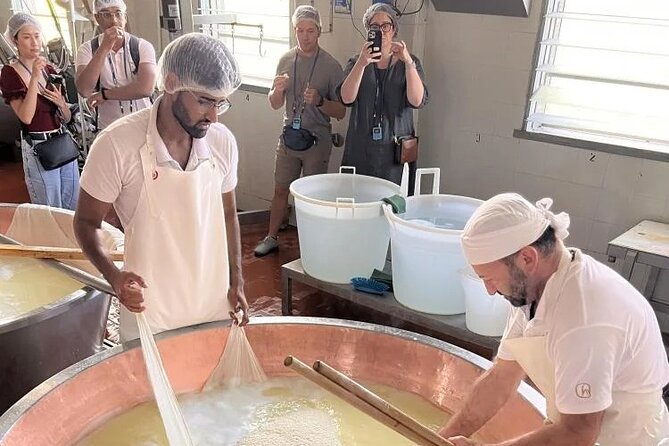
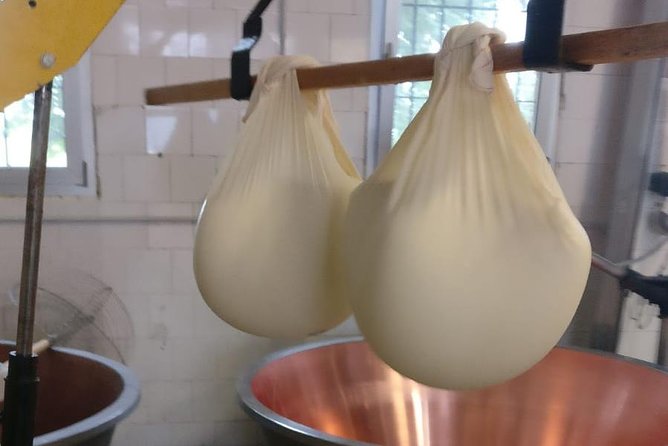
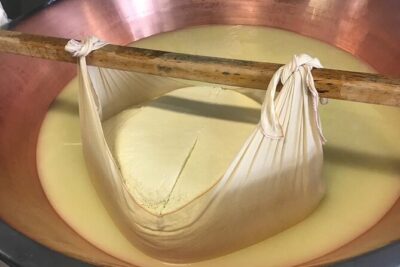
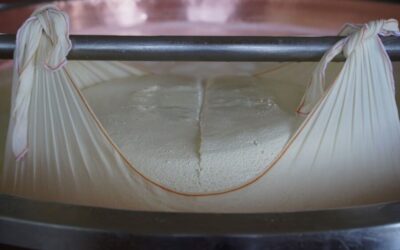
The visit begins with production rather than presentation. You see fresh milk in large vats and follow the process as the cheese is cooked and formed. The cheese is then salted and placed into storage for aging. The work is physical and careful, and the scale is large enough to show the real operation while still feeling close to the process.
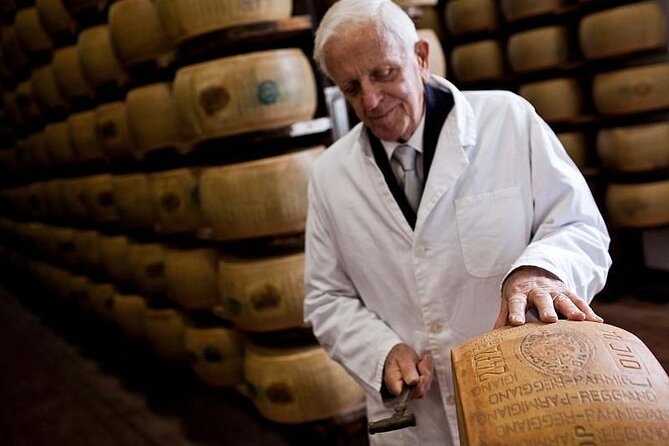
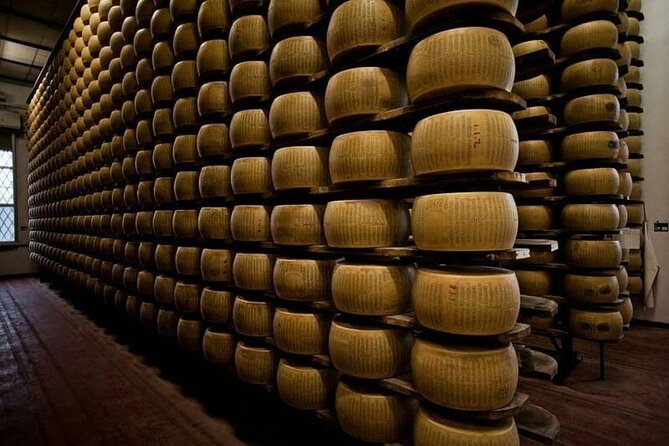
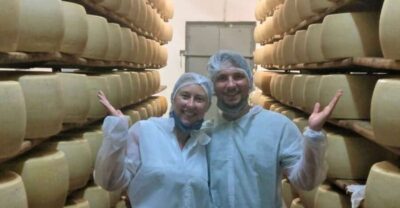
The storage room is one of the most memorable parts. Rows of cheese wheels rest while time does its work. This is where the price begins to make more sense. A wheel is not ready after one afternoon of production. It must be handled, stored, checked, and left to develop over many months.
The guide explains what the different aging periods do to the cheese. At the tasting, you sample Parmigiano Reggiano at 12, 24, and 36 months. Pay attention to the change in texture as much as the flavor. The older pieces are generally harder and more crumbly, with a longer finish.
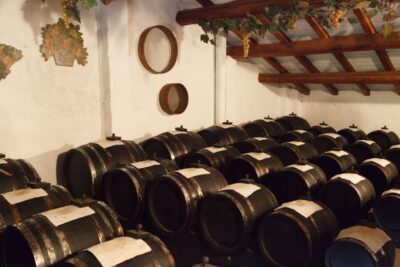
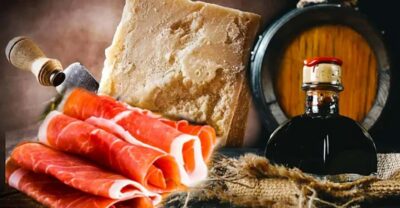
The cheese comes with balsamic vinegar and local wine. Fortana, a red wine from the area, is listed with the cheese pairing. This is more useful than tasting the cheese alone because it shows how local foods are meant to work at the table.
You should expect the dairy to smell and feel like a working food facility. This is not a staged kitchen where every surface is arranged for photographs. That is part of its value, though it also means you should listen closely and follow the guide’s instructions.
From cheese wheels to Langhirano’s ham rooms
After the dairy, the minivan makes a short country drive toward Langhirano. The area is known for Prosciutto di Parma, and the next visit focuses on salting, curing, and natural maturation.
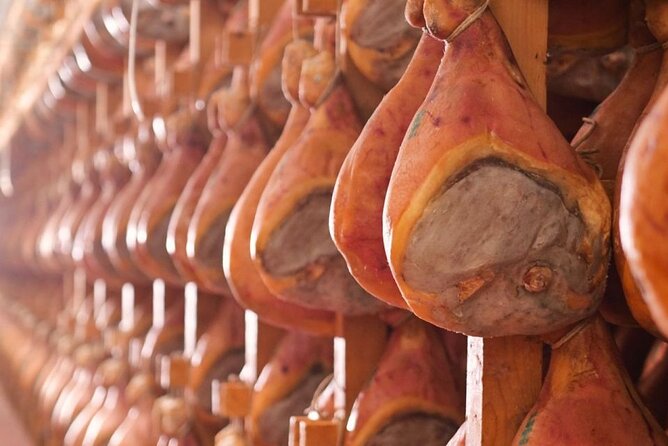
The ham producer has seasoning and aging rooms where pork legs spend time developing their flavor. The air carries the smell of curing ham, and the rooms show why climate and patience matter. Here, the craft is less about a quick recipe than about controlling salt, air, and time.
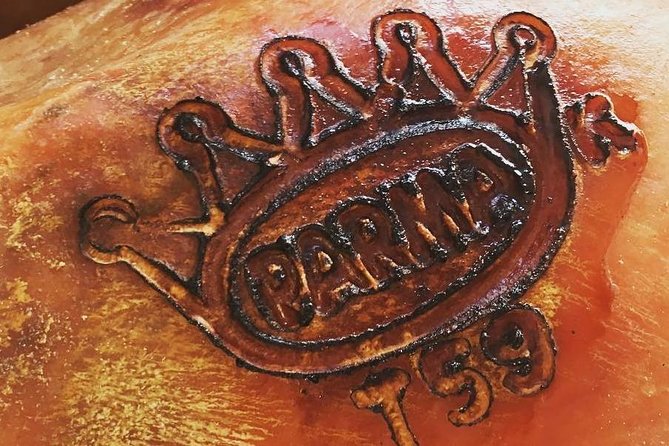
You learn how the hams are selected and how the best examples are prepared for the protected Parma name. The tour also explains the difference between simple cured pork and Prosciutto di Parma made under the region’s rules.
This visit can feel more personal than the dairy because the operation may be small enough for you to meet the owner or ham specialist. Christophe, the owner at one of the producers, is known for speaking directly about the process and slicing the tasting portions himself. That kind of contact gives the stop a family-run feel, although the exact host can vary.
The tasting centers on 24-month Parma ham. It is served with local bread and wine, including Lambrusco. Other pairings may include sparkling white Malvasia, a crisp match for the ham’s soft texture and gentle sweetness.
Watch the slicing if you can. Thin cuts show off the ham better than thick chunks, and the way the meat folds on the plate tells you something about its texture. This is a small detail, but it helps you understand why skilled slicing is part of the final presentation.
A few more cheese tours around Parma worth a look
- Parma: Traditional Cheese Factory Visit with Tasting
★ 4.9 · 225 reviews - Parmigiano Cheese, Parma Ham and Balsamic
★ 5.0 · 166 reviews - From Parma: Parmigiano and Parma Ham Guided Food Tour
★ 4.8 · 144 reviews - Parma: Cheese, Ham, & Balsamic Vinegar Tour with Tastings
★ 4.9 · 143 reviews
The tastings are generous, not an afterthought
Food tours can disappoint when the tasting is a token bite at the end. That is not the design here. The samples form a large part of the half-day.
At the dairy, you taste three aging levels of Parmigiano Reggiano. The balsamic vinegar adds sweetness and acidity, while Fortana gives you a local red wine pairing. At the ham producer, you get 24-month Parma ham, bread, and local wine, with Malvasia listed as another pairing.
The portions are described as generous, and you may find yourself with enough cheese or ham to buy products for later. This is worth remembering when comparing prices. The tour is not only a guided walk through production rooms. It is also a substantial tasting meal, though you should not book it as a full lunch or dinner replacement unless you know your appetite is modest.
The wine pairings are also part of the lesson. Local wine shows how these foods fit into Emilia-Romagna’s everyday table culture. You are not simply sampling expensive products in isolation. You are trying them in combinations that make practical culinary sense.
If you do not drink alcohol, the provided details do not specify nonalcoholic alternatives. You can ask the guide, but do not assume a replacement is guaranteed.
What the guides add to the visit
The food production is the reason to book, but the guide determines how much you understand. The strongest comments about this experience focus on guides who explain clearly, keep the mood light, and make room for questions.
Sergio is described as a prosciutto maker himself, which can add a farmer’s view of the work. Loris is associated with a humorous, attentive style. Daniela is praised for clear English and an engaging explanation of the region. These names do not guarantee who will lead your particular departure, but they show the sort of guiding style the operator aims for.
A good guide can also explain what you are seeing in real time. At the dairy, that might mean pointing out why the curds are handled in a certain way or how wheels are stored. At the ham producer, it might mean explaining the role of salt, air, and age.
You should feel free to ask about buying cheese or ham. The people running these producers know their products well, and the tasting gives you a chance to compare before taking anything home. If you have room in your luggage, locally sourced products can be a practical souvenir.
Time, group size, and the strict start
The full experience takes about four to five hours, including the drives. The listed schedule allows roughly 30 minutes to reach the dairy, 90 minutes at the dairy, a short drive to Langhirano, an hour at the ham producer, and 30 minutes back to Parma.
That makes this a manageable half-day rather than an all-day food expedition. You still have time to see Parma’s historic center, visit another museum, or continue to another town.
The main planning warning is the start time. The meeting point is near public transportation, but the operator states that arriving late because of a train or other transport delay counts as a no-show. Late arrivals cannot be accommodated, and the booking is not refundable or reschedulable in that situation.
I would build in a generous buffer, especially if you are coming into Parma by train. Do not plan to step off a train shortly before departure and expect the timing to work. The meeting point is at Viale Giovanni Falcone, 48a, so check the route before the morning of the tour and arrive early.
The normal cancellation policy is more forgiving: you can cancel up to 24 hours before the start for a full refund. Changes or cancellations inside that 24-hour window are not accepted.
Who will get the most from this tour
You do not need to be a food expert. The guides explain the basics, and the production visits make the information concrete. The tour suits anyone curious about how familiar foods are made, especially if you enjoy tasting several versions of the same product.
It is particularly good for:
- Cheese and cured-meat fans who want to understand quality and aging
- Couples looking for a food-focused half-day outside Parma
- Families with older children who can follow a production visit
- Visitors without a car
- Anyone planning a wider Emilia-Romagna trip and wanting regional context
Most people can take part, according to the supplied information. Animals are not admitted, so do not plan to bring a pet.
The tour is less suitable if you want a private experience, dislike scheduled group transport, or need a fully flexible start time. A group of up to 30 can also feel less intimate than a small private visit, even though the producers themselves may be modest in size.
Is $151.16 a fair price?
At $151.16, this costs more than a simple market tasting. The value comes from putting several pieces together: transport from Parma, an English-speaking guide, access to two working producers, explanations of the production methods, and a substantial set of tastings with wine.
The hardest part to arrange independently is the connection between the dairy and the Langhirano ham producer. If you rent a car, you would still need to identify suitable producers and arrange visits at times that line up. If you do not have a car, the tour becomes more appealing because the minivan solves the rural transport issue.
The 98 percent recommendation rate and 4.9 rating from 601 reviews suggest a consistently strong experience, but price remains personal. I would consider it good value if you plan to buy Parmigiano Reggiano or Parma ham, care about production methods, and want more than a generic city food walk.
Should you book the Parmigiano and Parma ham tour?
Book it if you want to see the real work behind two of Parma’s signature foods. The cheese aging rooms, the ham curing spaces, the local wine pairings, and the chance to meet producers give the half-day a strong sense of place.
I would especially recommend it for a first visit to Parma, for anyone traveling without a car, and for people who like learning through taste. Arrive early, keep your schedule open for the full four to five hours, and remember that the tour is about working food producers, not a luxury showroom.
Skip it if you need a private tour, cannot commit to the strict departure time, or are looking only for a quick snack. For most food-focused visitors, though, the combination of access, instruction, transport, and generous samples makes this one of the more useful ways to spend half a day in the Parma area.
FAQ
Where does the tour begin?
The tour begins at Viale Giovanni Falcone, 48a, 43122 Parma PR, Italy.
Where does the tour end?
The tour ends back at the meeting point in Parma.
How long does the experience last?
The tour lasts approximately four to five hours, including the drives between Parma, the dairy, the ham producer, and the return meeting point.
What foods and drinks are included?
You taste Parmigiano Reggiano aged 12, 24, and 36 months with balsamic vinegar and Fortana red wine. The Parma ham tasting includes 24-month Prosciutto di Parma, local bread, and local wine such as Lambrusco or sparkling white Malvasia.
Is the tour offered in English?
Yes. The experience is offered in English.
How many people can join?
The tour can have a maximum of 30 participants.
What happens if I arrive late?
Late arrival after the scheduled meeting time is treated as a no-show, including delays caused by trains or other transportation. The booking is non-refundable and cannot be rescheduled in that situation, so plan to reach the meeting point early.
Just added around Parma
- Parmesan and Ham Factory Tour★ 4.5 · 21 reviews
- Parmigiano Reggiano Parma Ham and Castle Private Tour & Tasting★ 5.0 · 9 reviews
- Parmigiano and Culatello Private Tour with Lunch and Farm Visit★ 5.0 · 2 reviews
- Parmigiano Cheese Factory Visit and Tasting★ 5.0 · 22 reviews
- Parmigiano Reggiano and Parma ham tour★ 5.0 · 9 reviews
- Parmigiano-Reggiano Cheese Factory Small group Tour From Parma★ 3.5 · 15 reviews
- Parma Food Tour with Sightseeing and Parmesan Tasting★ 4.5 · 14 reviews
- Parmigiano-Reggiano Tour and tastings★ 4.5 · 6 reviews
Parma Cheese Tours, compared.
Parmigiano Production and Parma Ham Tour & Tasting
Read our review →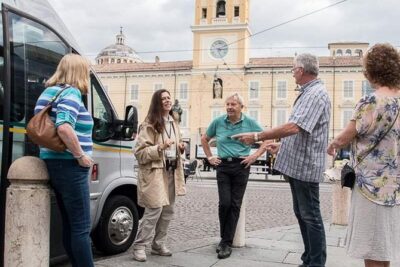
Guided group tour TastyBus: Parmesan Cheese and Parma Ham
Read our review →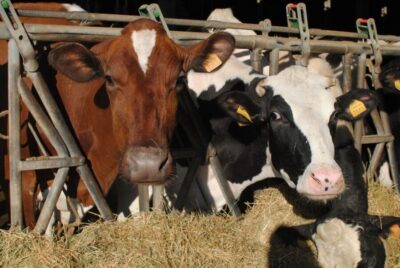
Cheese, Ham, & Balsamic Vinegar Tour with Tastings
Read our review →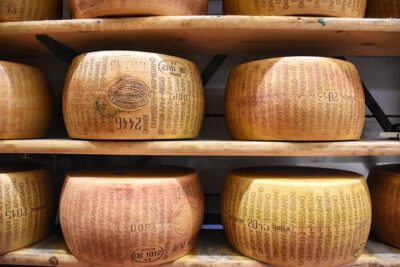
Private Full Day Parma Food Tour: Parmesan Cheese, Parma Ham, Lunch, Vinegar
Read our review →Browse the lists this tour appears in